Article: The Smart Shopper's Handbook for Choosing 18k Diamond Earrings
The Smart Shopper's Handbook for Choosing 18k Diamond Earrings
How to Choose 18k Diamond Earrings With Confidence
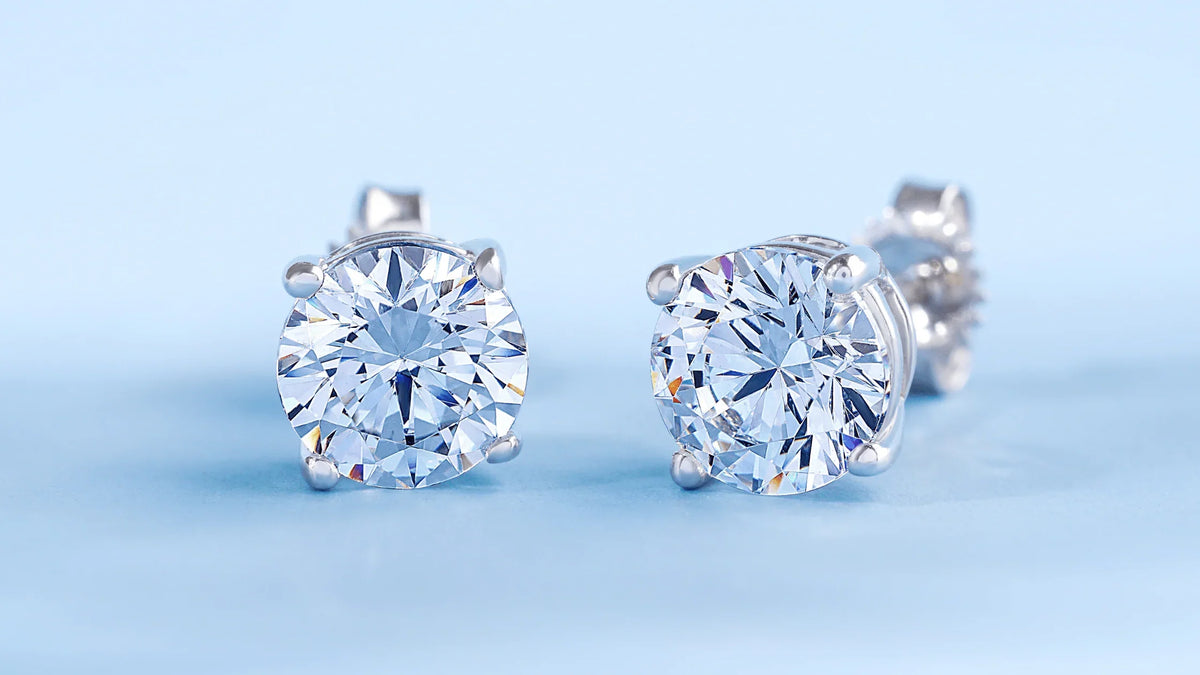
Start with the gold, diamonds, and fit. Look for an 18k or 750 gold mark, ask for clear details about the diamonds, and check that the settings and backs feel secure. Then choose a style you will wear often: studs for everyday use, or hoops and drops for a more noticeable look. Set your budget before comparing pairs so you can focus on the details that matter to you.
18k gold is 75% pure gold, blended with other metals to make it more practical for jewelry. Its rich color is appealing, but the gold mark alone does not prove the diamonds' quality.
At White Diamonds, our experience designing fine jewelry and custom rings shapes how we think about choosing 18k diamond earrings. We favor clear details and pressure-free decisions that fit your budget and timeline.
What Are 18k Diamond Earrings and Why Choose 18 Karat Gold?
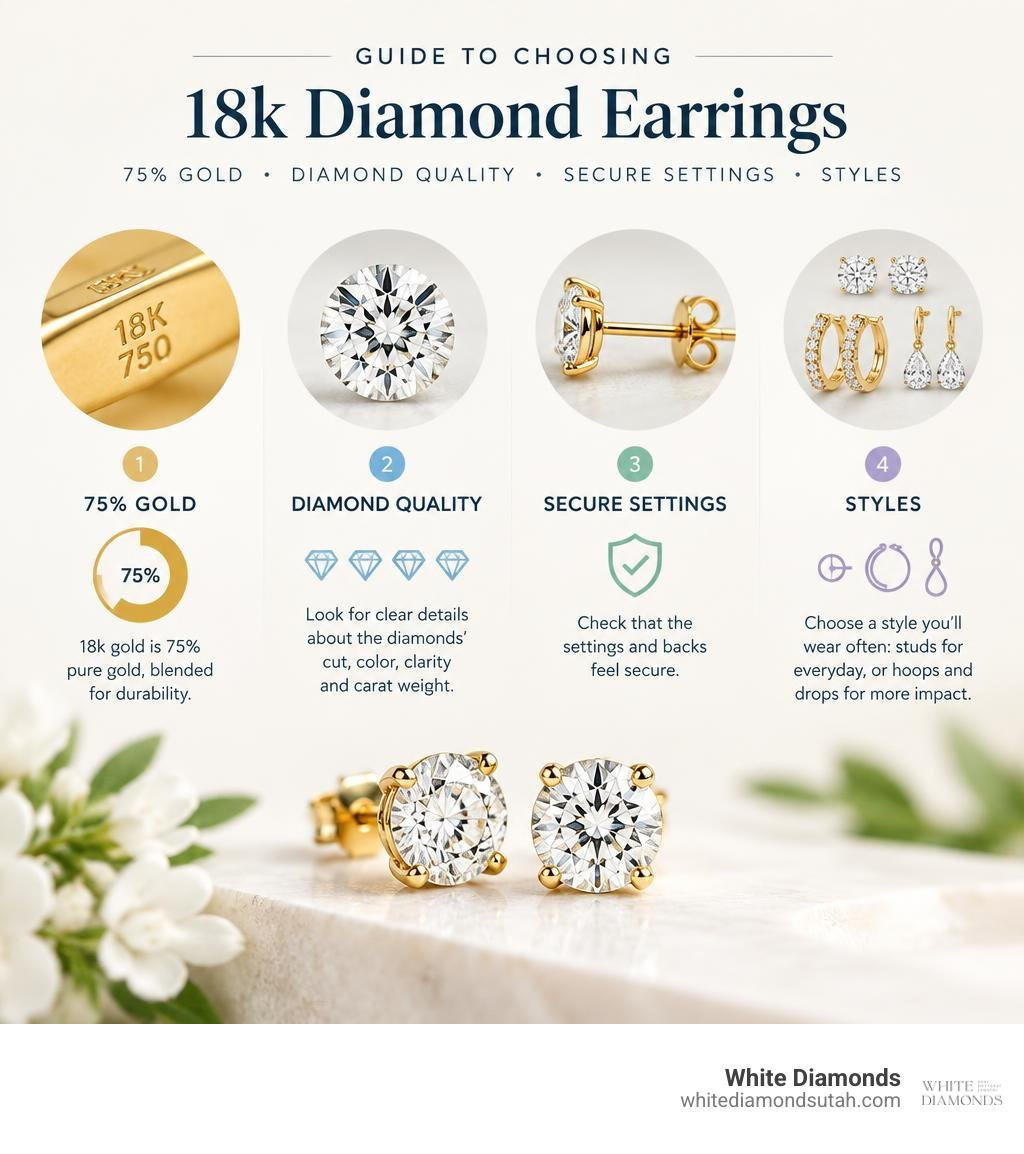
Diamond earrings are the second most popular diamond jewelry purchase after engagement rings, accounting for roughly 25% of all diamond jewelry sales. They are also the single most gifted diamond jewelry item—with about 40% of diamond earrings purchased as thoughtful gifts for birthdays, anniversaries, and holidays. When selecting a setting worthy of holding precious stones, 18k gold stands out as the worldwide benchmark for luxury fine jewelry.
At its core, 18 karat gold is composed of 75% pure gold, mixed with 25% other metals like copper, silver, or zinc. Pure 24-karat gold is naturally too soft for fine jewelry; it bends, scratches, and cannot securely grip diamond prongs over years of wear. By alloying pure gold with strengthening metals, jewelers achieve the perfect balance of structural integrity and prestigious metal purity.
Choosing 18k gold offers several distinct benefits:
- Hypoallergenic Comfort: Because 18k gold contains 75% pure gold and very few base metal fillers (such as nickel), it is gentle on sensitive ears and reduces the risk of skin irritation.
- Rich, Saturated Color: An 18k yellow gold piece delivers a deep, warm glow that lower-karat golds cannot replicate. In white gold alloys, 18k offers a sleek, bright canvas, while 18k rose gold produces a soft, romantic blush thanks to its refined copper blend.
- Superior Value Retention: High-purity jewelry retains its value well, with resale value typically around 70-80% of the original purchase price for fine pieces based on intrinsic metal and gemstone worth.
| Metal Karat | Gold Purity | Durability Profile | Luster & Color Richness | Hypoallergenic Level |
|---|---|---|---|---|
| 18k Gold | 75% Pure Gold | High (Ideal balance of strength & precious metal) | Deep, luminous, rich yellow/warm tones | Very High (Skin-safe for sensitive ears) |
| 14k Gold | 58.3% Pure Gold | Very High (Slightly harder due to higher alloy mix) | Lighter, subtle gold hue | Moderate (Higher alloy content) |
| 10k Gold | 41.7% Pure Gold | Maximum Hardness | Paler, muted tone | Lower (May cause irritation for sensitive skin) |
Craftsmanship and Setting Methods
The setting of your earrings is what keeps your diamonds safe and determines how light interacts with every facet. In our curated collection of diamond earrings, you will discover several classic setting techniques crafted to showcase brilliance while ensuring total security:
- Prong Settings: The classic three-prong martini or four-prong basket lifts the stone to allow maximum light entry from all sides, creating brilliant sparkle.
- Bezel Settings: A smooth rim of 18k gold encircles the diamond's perimeter. This offers a modern, sleek look while protecting the diamond's girdle from accidental bumps.
- Pavé Settings: Tiny diamonds are set closely together with subtle beads of gold, creating a continuous carpet of shimmer along hoops or drop motifs.
Beyond the front-facing setting, the earring back is your first line of defense against loss. While standard push backs (friction backs) are convenient for lightweight pairs, heavy or high-value diamond earrings benefit from screw backs or locking mechanism backs (such as La Pousette), which grip threaded posts securely.
Key Factors That Determine the Value of 18k Diamond Earrings

Understanding what drives the price of diamond earrings allows you to allocate your budget effectively. The average price of 18k diamond stud earrings ranges from $500 to $5,000, depending primarily on diamond carat weight, cut, color, and clarity. To better understand these tiers, explore our guide to 1 carat solitaire earrings price.
The value of the diamonds themselves relies on the internationally recognized 4Cs:
- Cut: The most important factor for sparkle. An excellent or ideal cut ensures light bounces straight back to the eye rather than leaking out the bottom of the gem.
- Color: Graded from D (colorless) to Z (light yellow/brown). For earrings, stones in the near-colorless range (G to J) provide an icy white appearance while delivering exceptional value.
- Clarity: Measures natural internal inclusions. Because earrings are viewed from a conversational distance rather than under a jeweler's loupe, eye-clean stones in the VS1 to SI1 range offer stunning beauty without paying a premium for invisible perfection.
- Carat Weight: That earring carat weight is usually stated as Total Carat Weight (CTW), which represents the combined weight of both earrings (e.g., a 1.00 CTW pair contains two 0.50 ct diamonds).
The weight of the 18k gold mounting also contributes to the total value, as heavier solid gold baskets and sturdy posts carry measurable precious metal worth.
Natural vs. Lab-Grown Diamonds
Modern shoppers have the flexibility to choose between mined natural diamonds and lab-created diamonds. Both options share identical physical, chemical, and optical properties:
- Natural Diamonds: Formed deep within the Earth over billions of years, natural diamonds represent geological history and traditional rarity.
- Lab-Grown Diamonds: Cultured in cutting-edge laboratories using advanced technology that replicates the Earth's natural pressure and heat. Choosing lab diamond earrings or exploring lab grown earrings allows you to maximize carat size and diamond quality within your desired budget.
Both natural and lab-created stones receive independent certification from reputable gemological laboratories, confirming cut, clarity, and color standards.
Popular Styles and Design Options
Earrings frame your face and effortlessly tie your look together. Finding the right silhouette depends on your wardrobe, lifestyle, and face shape:
- Round Faces: Elongated drops and angular shapes (like princess cuts) help lengthen the facial profile.
- Square or Angular Faces: Soft, round brilliant studs and circular hoops soften strong jawlines.
- Oval Faces: Almost every design pairs beautifully with balanced oval proportions, from timeless stud earrings to bold geometric shapes like princess cut diamond earrings.
Classic Solitaire Studs
Solitaire studs are the quintessential jewelry staple. A matched pair of 1 carat diamond solitaire earrings offers an understated elegance that transitions effortlessly from the gym to a black-tie gala.
Shoppers seeking a modern alternative can look to lab diamond stud earrings or geometric 1 carat princess cut earrings. When selecting your setting, a three-prong martini setting allows the diamond to sit snug against the earlobe, while a four-prong basket provides a structured, balanced profile.
Hoops, Huggies, and Drops
For added movement and flair, hoops and huggies bring elevated dimension to any jewelry wardrobe:
- Diamond Huggies: Small, snug hoops lined with diamonds that hug the earlobe closely—ideal for everyday luxury and comfortable sleep.
- Classic Diamond Hoops: Ranging from delicate micro-pavé styles to dramatic inside-out designs where diamonds line both the front exterior and inner back. Explore our gold hoop earrings, 14k gold hoop earrings, and modern lab grown diamond hoop earrings.
- For a deeper look at sizing and hoop styles, check out our 1ct diamond hoops guide.
How to Style 18k Diamond Earrings for Every Occasion
- Casual Daily Wear: Pair classic 0.50–1.00 CTW round studs with denim and a crisp white shirt for an effortless touch of shine.
- Corporate Setting: Wear sleek bezel-set studs or tailored 18k gold huggies that add polish without distracting.
- Formal & Bridal: Opt for cascading diamond drops or complement your earrings by matching your metals with an 18k gold wedding ring.
- Curated Ear Stacks: If you have multiple ear piercings, create a graduated stack by placing your largest diamond hoop or stud in the first lobe piercing, followed by smaller diamond huggies or minimalist gold studs higher up the ear.
How to Verify Authenticity and Maintain Your Jewelry
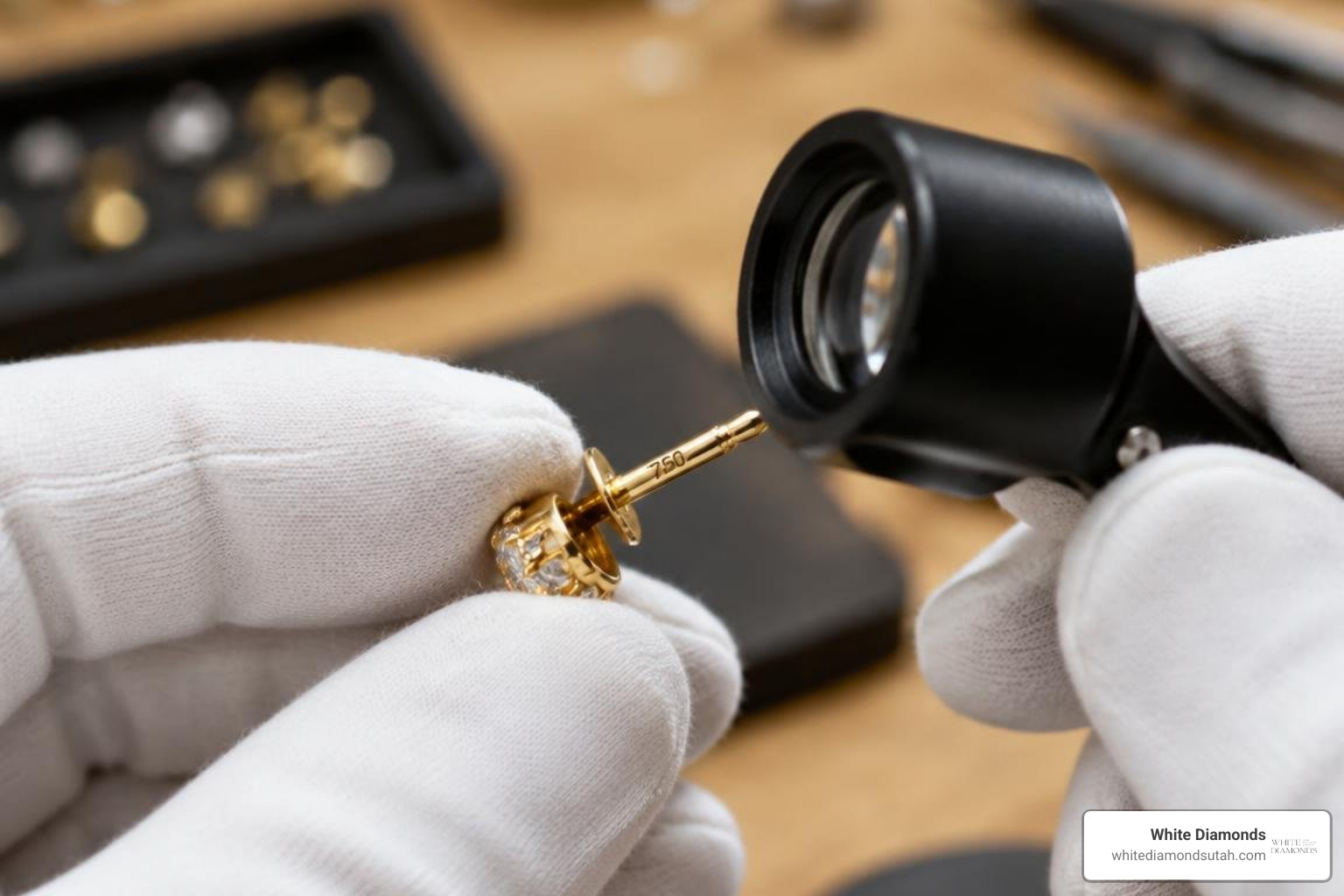
When buying luxury jewelry, verifying metal purity and diamond authenticity gives you complete peace of mind:
- Check the Hallmark: Authentic 18k gold pieces are stamped on the post or setting with "18K", "18KT", or the metric hallmark "750" (representing 750 parts pure gold per 1,000).
- Review Diamond Certification: Ensure your diamonds come with independent grading documentation verifying their cut, clarity, and origin.
- Regular Cleaning Routine: Soak your earrings in warm water with a few drops of mild dish soap, gently clean around the basket and prongs using a soft-bristled toothbrush, and rinse thoroughly.
- Professional Maintenance: Bring your earrings in once a year for an ultrasonic cleaning and a professional prong inspection to ensure your stones remain tightly secured.
Current Design Trends in 18k Diamond Earrings for 2026
The jewelry landscape in 2026 embraces warm, intentional aesthetics and personalized designs:
- Rich Yellow Gold Revival: Warm 18k yellow gold settings have surged in popularity, providing a rich contrast against crisp white diamonds.
- Protective Bezel Settings: Sleek, low-profile bezel studs and huggies cater to active lifestyles looking for snag-free wear.
- Fancy Diamond Shapes: Pear, emerald, and marquise cuts are taking center stage in asymmetrical pairings and floating drop earrings.
- Chunky Huggie Hoops: Substantial 18k gold hoops set with bold accent diamonds deliver high-impact everyday style.
Frequently Asked Questions About 18k Diamond Earrings
Are 18k diamond earrings durable enough for everyday wear?
Yes. While pure 24k gold is soft, 18k gold is alloyed with 25% strengthening metals (such as silver and copper), giving it the durability required for daily wear. Because earrings experience less direct friction than rings, 18k diamond earrings will maintain their beauty and hold stones securely for generations.
What does the 750 stamp on 18k diamond earrings mean?
The "750" stamp is an international hallmark indicating that the metal alloy contains 750 parts pure gold per 1,000 parts total weight (or 75% pure gold). It is the standard metric marking for authentic 18-karat gold.
How do 18k gold diamond earrings hold their resale value?
Due to their high pure gold content and the timeless demand for diamonds, 18k diamond earrings retain value exceptionally well—typically retaining around 70-80% of their base market value. High-quality craftsmanship and certified stones ensure your earrings remain valuable family heirlooms.
Conclusion
Investing in 18k diamond earrings means choosing fine jewelry that delivers exceptional shine, everyday comfort, and lasting value. Whether you prefer minimalist solitaire studs or bold inside-out hoops, finding the perfect pair comes down to quality craftsmanship, secure settings, and an honest shopping experience.
At White Diamonds in Ogden, Utah, we believe fine jewelry shopping should always be enjoyable and pressure-free. We invite you to schedule a personalized design consultation where you can explore model settings, compare diamond options, and create custom jewelry tailored to your exact budget and timeline. To learn more about selecting the perfect pair, dive into our comprehensive diamond earrings buying guide.