How to Choose the Perfect 1 Carat Diamond Solitaire Earrings
Why 1 Carat Diamond Solitaire Earrings Are Worth Every Penny
Quick answer: Here's what to know before you buy:
| Factor | Best Choice for Most Buyers |
|---|---|
| Carat weight | 0.50 ct per ear (1 ct total weight) |
| Cut | Round brilliant or princess cut |
| Color | G or H (near-colorless) |
| Clarity | SI1 or SI2 (eye-clean) |
| Metal | 14K white gold or platinum |
| Diamond type | Lab-grown for budget; natural for resale value |
| Certification | GIA or AGS certified |
1 carat diamond solitaire earrings are one of the most timeless and versatile jewelry purchases you can make. They work dressed up or dressed down. They suit everyday wear and special occasions. And at the 1-carat mark, they hit a sweet spot — noticeable sparkle without feeling overdone.
But with prices ranging from under $700 to well over $10,000, the options can feel overwhelming fast. The difference between a $700 pair and a $5,000 pair isn't always obvious at first glance — but it matters enormously in quality, longevity, and value.
This guide cuts through the noise. You'll know exactly what to look for, what to skip, and how to get the best pair for your budget.
At White Diamonds, we're a custom jewelry studio specializing in crafting personalized diamond pieces — including 1 carat diamond solitaire earrings — for clients who want quality without the pressure. We'll help you make a confident, informed choice.
Understanding 1 Carat Diamond Solitaire Earrings: Carat Weight and Distribution
When shopping for 1 carat diamond solitaire earrings, the first thing to understand is how jewelers measure and label carat weight.
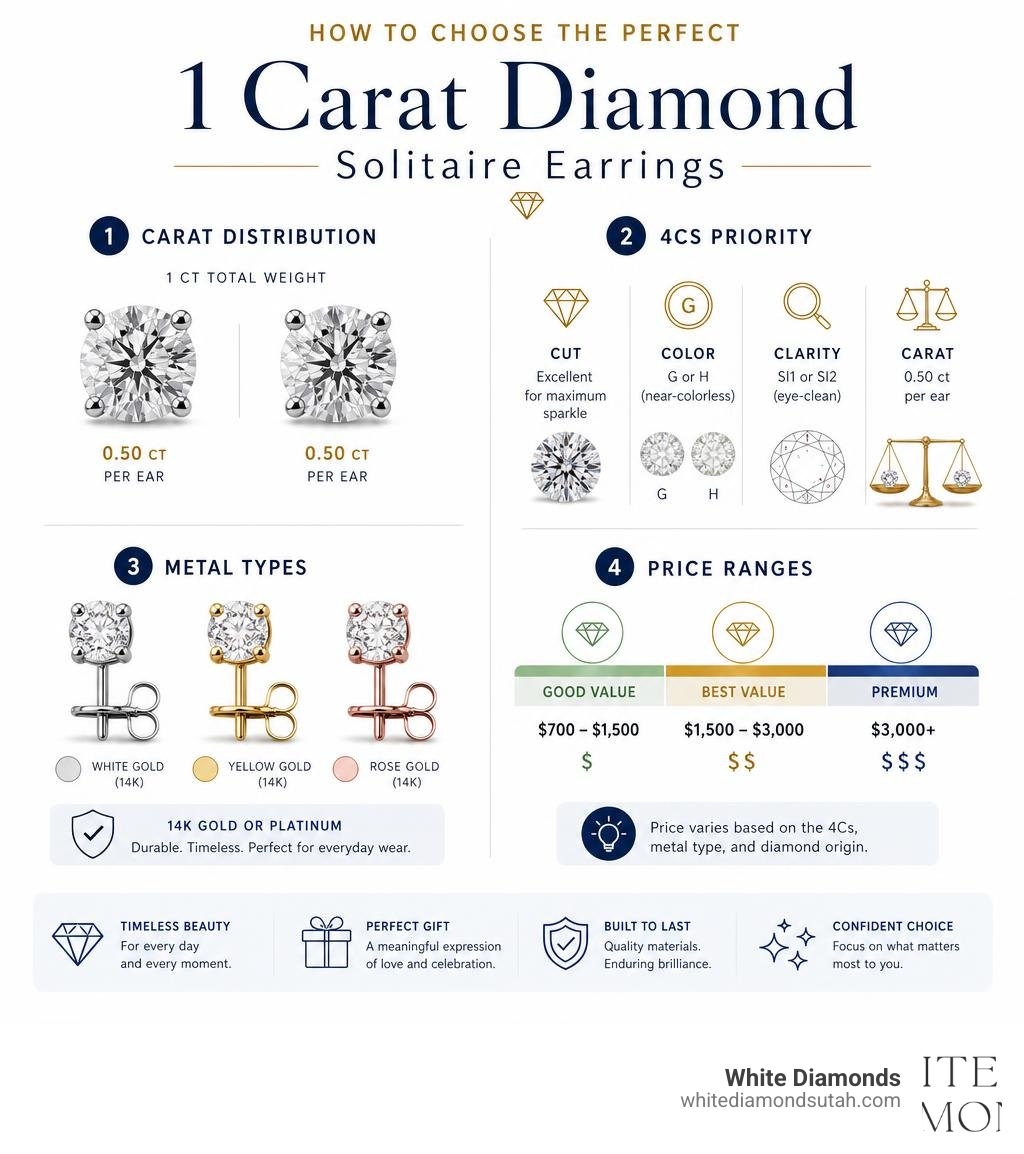
In the jewelry world, earrings are almost always sold by Carat Total Weight (ctw) or Total Carat Weight (ct. tw.). This means the weight listed is the combined weight of both earrings, not the weight of each individual stone.
Therefore, a pair of 1 carat diamond solitaire earrings consists of two diamonds that weigh approximately 0.50 carats each.
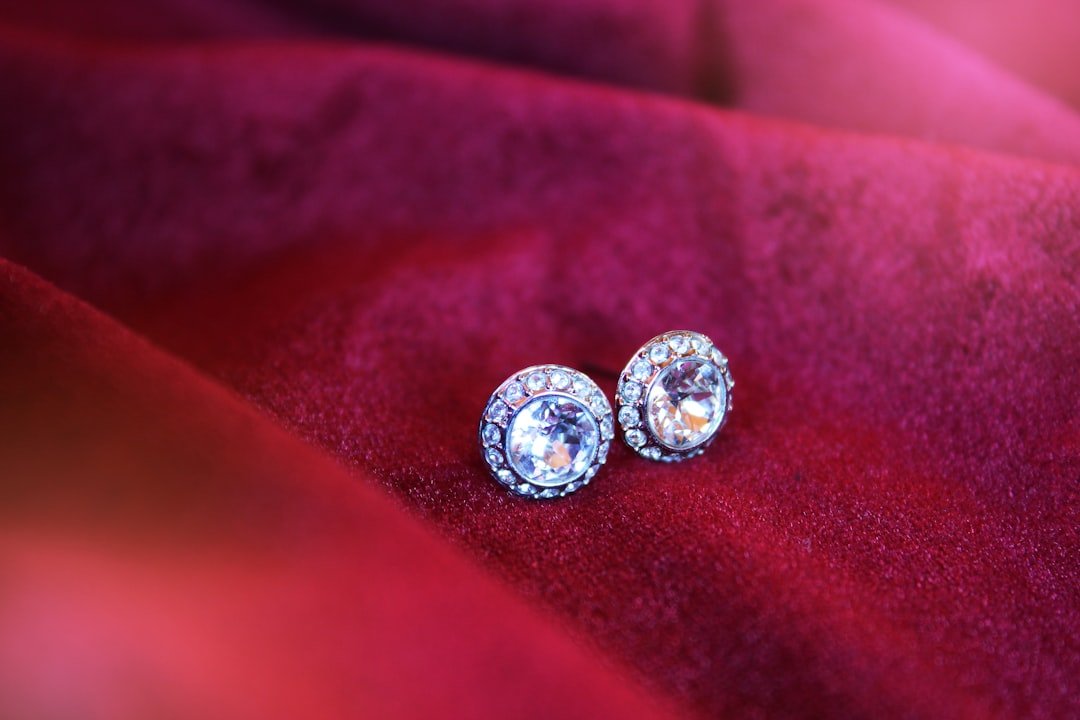
A true "solitaire" design features a single, stunning diamond set into a metal mounting. This simple architecture places all the focus on the natural beauty of the stone.
While some brands offer "solitaire-look" cluster earrings — which fuse several smaller diamonds (like marquise and princess cuts) together to mimic a single stone — nothing matches the clean elegance and light performance of a true solitaire.
If you are curious about how carat weight translates to physical size and visual impact, our Ultimate 1 ct Diamond Engagement Ring Guide offers an in-depth breakdown of diamond dimensions that applies beautifully to earrings as well.
The 4Cs of 1-Carat Diamond Studs: Prioritizing Cut, Color, and Clarity
When buying an engagement ring, you want to be incredibly picky about every single one of the 4Cs (Cut, Color, Clarity, and Carat). But when it comes to diamond studs, you can actually play the system a little bit to save money without sacrificing visual beauty.
Why? Because people look at your earrings from a distance, usually under moving light. They aren’t pulling out a jeweler's loupe to inspect your earlobes!
Here is how you should prioritize the 4Cs for earrings compared to a ring:
| The 4Cs | Engagement Ring Priority | Earring Priority | Why It Matters for Studs |
|---|---|---|---|
| Cut | High | Crucial | Cut determines the sparkle. A poorly cut diamond looks dull and lifeless, even on your ears. |
| Color | High | Medium | You can easily drop to near-colorless (G-H or even I-J) without anyone noticing a yellow tint. |
| Clarity | High | Low | Look for "eye-clean" stones (SI1 or SI2). Tiny inclusions won't be visible from a conversational distance. |
| Carat | High | High | 1 ctw (0.50 ct per ear) is the ultimate sweet spot for everyday presence. |
To learn more about how diamond grading works on a technical level, you can explore the GIA Diamond Grading Guide.
Choosing the Best Cut and Shape for 1 carat diamond solitaire earrings
The shape of your diamond defines its overall personality. While there are many fancy shapes available, a few classic options dominate the market:
- Round Brilliant Cut: This is the undisputed champion of sparkle. Round brilliant diamonds are cut to maximize light reflection, making them incredibly forgiving if you choose slightly lower color or clarity grades. They offer a timeless look that never goes out of style.
- Princess Cut: With their sharp, square corners and contemporary lines, princess-cut diamonds offer a modern, architectural edge. They have fantastic brilliance and often cost slightly less per carat than round diamonds because cutters waste less of the rough stone during the cutting process.
- Oval and Emerald Cuts: For those who want something unique, oval cuts offer an elongated shape that can make the diamond appear larger, while emerald cuts offer a sophisticated "hall of mirrors" step-cut look that highlights pure clarity over raw sparkle.
Color and Clarity Guidelines for 1 carat diamond solitaire earrings
To get the most visual impact for your budget, we recommend aiming for the "sweet spot" of color and clarity:
- Color (G to I): Diamonds in the G-I range are classified as "near-colorless." When set in white gold or platinum, they look icy and bright. If you prefer yellow or rose gold, you can even drop to a J or K color grade, as the warm metal naturally masks any slight warmth in the diamond.
- Clarity (SI1 to SI2): "Slightly Included" diamonds have tiny natural birthmarks. However, at 0.50 carats per ear, these inclusions are almost always invisible to the naked eye. Opting for an eye-clean SI1 or SI2 pair allows you to allocate more of your budget toward a superior cut.
By focusing on these balanced specifications, you can ensure your near-colorless, eye-clean stones perform beautifully in real-world settings without paying a premium for invisible grading differences.
Metal Options and Setting Styles for Solitaire Studs
The metal you choose for your settings does more than just hold your diamonds in place; it influences the durability, weight, hypoallergenic properties, and overall color presentation of your earrings.
- 14K White Gold: The most popular choice for diamond studs. It is highly durable, affordable, and coated in rhodium to give it a bright, reflective white finish that enhances the diamond's colorlessness.
- 18K Yellow Gold: Offers a rich, classic golden hue. It is slightly softer than 14K gold but highly luxurious and perfect for warm-toned skin.
- Platinum: The ultimate luxury option. Platinum is naturally hypoallergenic, incredibly secure, and has a heavy, premium feel. It won't wear away over decades of use, making it the safest home for your diamonds.
- Rose Gold: A romantic, vintage-inspired choice that looks stunning on warm skin tones and adds a unique twist to a classic design.
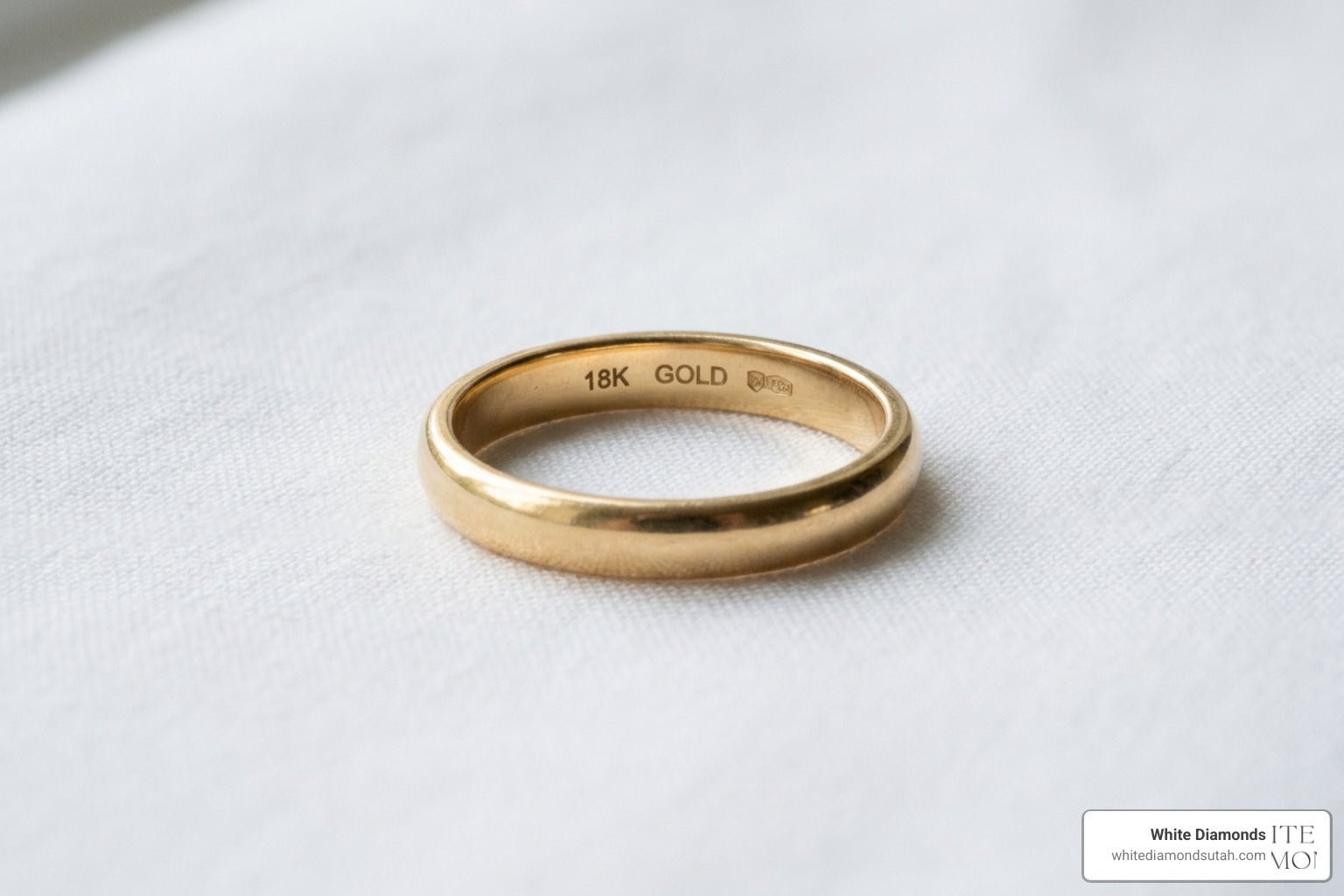
For a deeper dive into how metal choices and prong configurations alter the look of your jewelry, take a look at our guide on Diamond Setting Style. A classic warm metal like yellow gold presents a beautiful, traditional look that naturally complements near-colorless diamonds.
Prong vs. Bezel Settings
How your diamond is mounted plays a massive role in both security and style:
- Four-Prong Setting: This is the traditional look. It frames the diamond in a subtle square shape, offering excellent security and a classic silhouette.
- Three-Prong Martini Setting: Named because the side profile looks like a martini glass. This setting sits flush and low against the earlobe, preventing the earring from drooping forward. It uses less metal, allowing more light to enter the diamond for maximum sparkle.
- Bezel Setting: A modern, sleek choice where a solid collar of metal wraps completely around the edge of the diamond. It is incredibly secure, prevents snagging on clothing or hair, and can make the diamond appear slightly larger than its actual carat weight.
Natural vs. Lab-Grown Diamonds: Quality, Ethics, and Cost
One of the biggest choices you will make in 2026 is deciding between natural (earth-mined) and lab-grown diamonds.

It is important to know that lab-grown diamonds are real diamonds. They possess the exact same chemical, physical, and optical properties as mined diamonds. They are not cubic zirconia or moissanite; they are pure carbon crystals grown in a controlled environment.
Here is how they compare for a 1 ctw pair of studs:
- Cost: Lab-grown diamonds cost a fraction of the price of natural diamonds. You can often purchase a premium 1 ctw lab-grown pair for $500 to $900, whereas an equivalent natural pair will range from $2,000 to $4,500.
- Ethics & Environment: Lab-grown diamonds offer a transparent, conflict-free supply chain with a lower environmental footprint.
- Resale & Sentimental Value: Natural diamonds carry a sense of rarity and history. They hold their market value better over time, making them a preferred option for heirloom gifts.
If you are weighing these two options, we break down the science, ethics, and long-term value of both in our comprehensive guide on Lab vs Mined Diamonds.
Pricing, Certification, and Smart Buying Strategies
The price of 1 carat diamond solitaire earrings varies wildly depending on diamond origin, quality, and where you buy them.
- Budget Tier ($500 - $1,000): Typically features high-quality lab-grown diamonds or lower-grade natural diamonds (with visible inclusions or warmer color grades) in 10K or 14K gold.
- Mid-Range Tier ($1,500 - $3,500): Consists of beautiful, eye-clean natural diamonds (SI1-SI2 clarity, G-H color) or top-tier certified lab-grown diamonds in premium 14K/18K gold or platinum settings.
- Luxury Tier ($4,000 - $10,000+): Features flawless or near-flawless natural diamonds with perfect cuts, colorless grades (D-F), and prestigious GIA certifications.
To protect your investment, always look for independent grading reports from recognized gemological laboratories like the GIA (Gemological Institute of America) or AGI (Antwerp Gemmological Institute). A certificate ensures that you are getting exactly what you pay for in terms of cut, color, and clarity.
While mass-market retailers offer various pricing structures, they often come with significant markups. If you want to avoid these markups and design a pair tailored specifically to your budget, working with a local custom jeweler is always the smartest strategy.
Frequently Asked Questions about Diamond Solitaire Studs
Are 1-carat diamond studs suitable for everyday wear?
Absolutely! In fact, 1-carat diamond studs (0.50 ct per ear) are widely considered the perfect size for daily wear. They are lightweight, comfortable, and subtle enough for a professional office or a casual workout, yet they still pack enough sparkle to elevate an evening dress.
To ensure they stay secure during an active day, we highly recommend using screw-back posts or heavy-duty friction backs rather than standard, loose butterfly backings.
How do I clean and maintain my 1-carat diamond earrings?
Because earrings sit close to your hair and skin, they easily collect oils, hairspray, shampoo, and makeup, which dulls their sparkle over time.
To clean them at home:
- Soak your earrings in warm water mixed with a few drops of mild dish soap for 10 to 15 minutes.
- Gently brush around the settings and behind the diamonds with a new, extra-soft toothbrush.
- Rinse thoroughly under warm running water (make sure the sink drain is closed!).
- Pat dry with a lint-free microfiber cloth.
For more styling inspiration and tips on how to care for your everyday jewelry, check out our guide on Fashion Rings and jewelry curation.
Why does diamond certification matter for solitaire earrings?
Certification acts as a blueprint of your diamond's DNA. It guarantees the stone's authenticity, proves whether it is natural or lab-grown, and verifies its exact quality grades. Without a certificate from an independent lab like the GIA, you are simply relying on the jeweler's word. Having a certified pair is also essential if you ever want to insure your jewelry or trade it in for an upgrade down the road.
Conclusion
Finding the perfect pair of 1 carat diamond solitaire earrings doesn't have to be a stressful experience. By focusing on a great cut, choosing an eye-clean clarity, and selecting a metal that matches your personal style, you can find a pair that sparkles brilliantly for a lifetime.
Whether you are looking for a stunning everyday accessory, a gift for a loved one, or want to explore other beautiful jewelry options like those in our Gemstone Rings Complete Guide 2026, we are here to help.
At White Diamonds in Ogden, Utah, we specialize in a personalized, pressure-free custom design process. We will work directly with you to select the perfect diamonds and craft a custom setting that fits your exact budget and timeline.
Ready to design your dream pair of diamond studs? Book an Appointment with White Diamonds today, and let's create something beautiful together.