How to Choose a Diamond Setting Style Without Losing Your Mind
Why Your Diamond Setting Style Choice Matters More Than You Think
Choosing a diamond setting style is one of the biggest decisions you'll make when buying an engagement or wedding ring — and it's not just about looks.
Here's a quick breakdown of the most common diamond setting styles and what each one does:
| Setting Style | Best For | Key Benefit |
|---|---|---|
| Prong | Maximum sparkle | Lifts stone high, floods it with light |
| Bezel | Active lifestyles | Metal rim fully protects the diamond |
| Pavé | Extra brilliance | Band appears "paved" with diamonds |
| Channel | Snag-free wear | Stones sit flush inside a metal track |
| Halo | Making stone look larger | Adds up to 50% visual size to center stone |
| Tension | Modern, floating look | Stone held by metal pressure alone |
| Cathedral | Classic elegance | Arched metal lifts stone dramatically |
| Three-Stone | Symbolic meaning | Represents past, present, and future |
The setting is the metal structure that physically holds your diamond in place. But it also shapes the entire personality of the ring — how much it sparkles, how safe the stone is, how it feels on your finger every day.
Think of it this way: two rings can hold the exact same diamond and look completely different based on nothing but the setting.
The modern engagement ring as we know it traces back to 1886, when a now-iconic six-prong design first lifted a diamond high above the band to let light flood in from every angle. That single innovation changed everything — and the core logic behind it still drives every setting decision made today.
At White Diamonds, we specialize in crafting custom rings and wedding bands, with hands-on experience helping clients navigate every diamond setting style to find the perfect fit for their stone, lifestyle, and budget. Whether you're just starting to explore or feeling overwhelmed by options, we're here to make the process feel simple — not stressful.
The Core Four: Comparing the Most Popular Diamond Setting Style Options
When you walk into our Ogden, UT studio, we often start by looking at the "Core Four." These are the foundational techniques used to secure diamonds. While there are dozens of variations, most rings fall into one of these categories.
Prong Setting: The Classic Sparkler
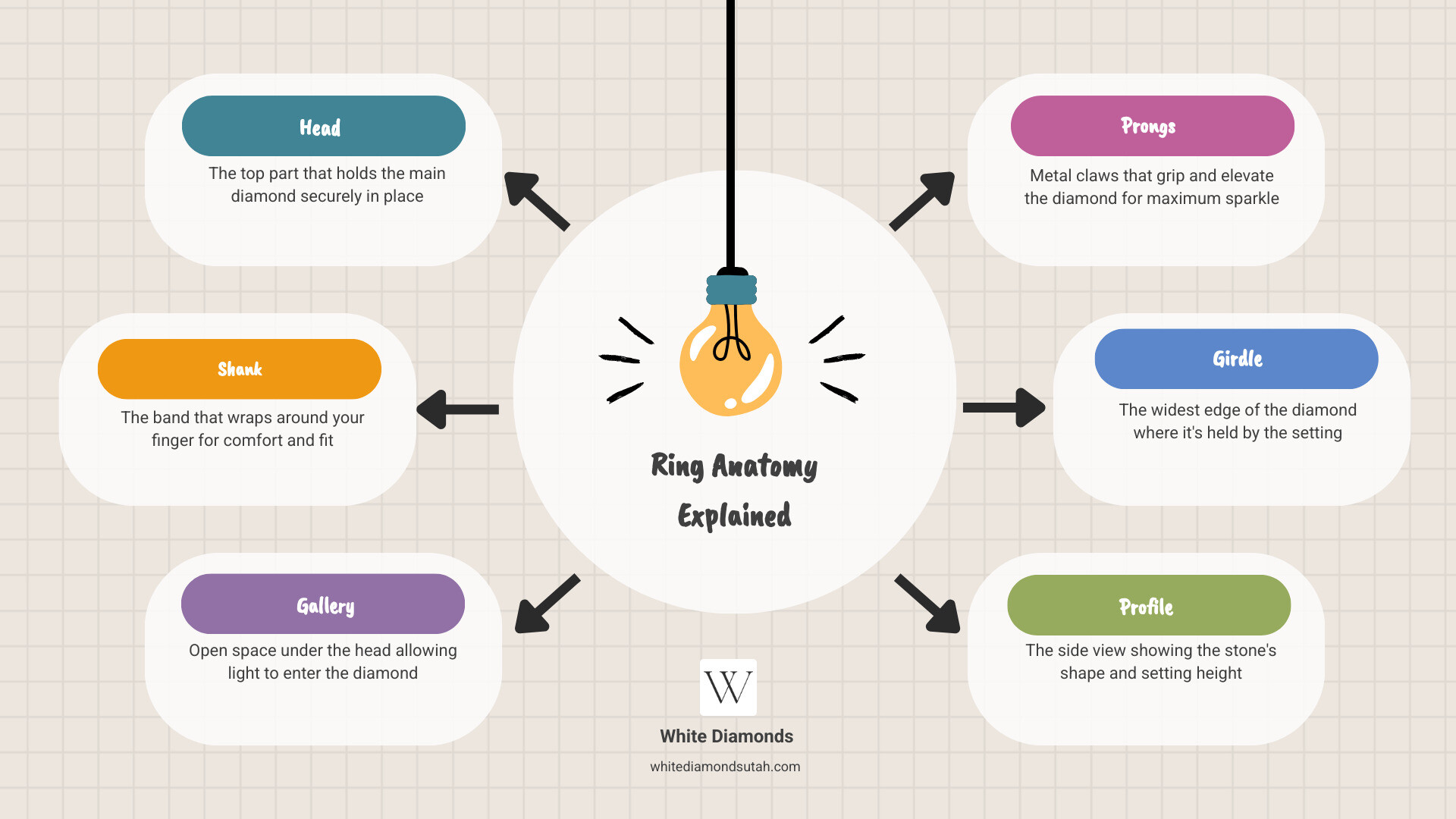
The prong setting is the most common and classic choice. It features slim metal arms (usually four or six) that cradle the diamond at the girdle.
- Brilliance: Because it uses the least amount of metal, it allows the most light to enter and exit the diamond, maximizing sparkle.
- Security: Six prongs offer better security than four; if one prong breaks, the stone stays in place. Four prongs, however, show more of the diamond.
- Maintenance: Prongs can snag on sweaters and require regular check-ups to ensure they haven't loosened.
Bezel Setting: The Modern Protector
In a bezel setting, a continuous metal rim surrounds the entire perimeter of the diamond.
- Protection: This is arguably the most secure diamond setting style. It protects the diamond’s edges (the girdle) from chipping.
- Lifestyle: Perfect for nurses, athletes, or anyone with a hands-on job. It’s completely snag-free.
- Look: It offers a sleek, modern, and "clean" aesthetic.
Pavé Setting: The Paved Path
Derived from the French word for "pavement," a pavé setting involves small diamonds set closely together, held by tiny metal beads.
- Effect: It creates a surface that looks like it's literally paved with diamonds, adding incredible "side sparkle" to the band.
- Detail: High-quality pavé uses shared beads to minimize the metal look and maximize the "crushed ice" effect.
Channel Setting: The Seamless Flow
Stones are nestled side-by-side between two parallel walls of metal.
- Security: There are no prongs to snag or bend.
- Aesthetics: It creates a smooth, continuous flow of light. In top-tier jewelry, the gap between stones in a channel should be no wider than a single sheet of paper.
For a deeper dive into the technical side, check out our Guide to Choosing a Diamond Ring Setting.
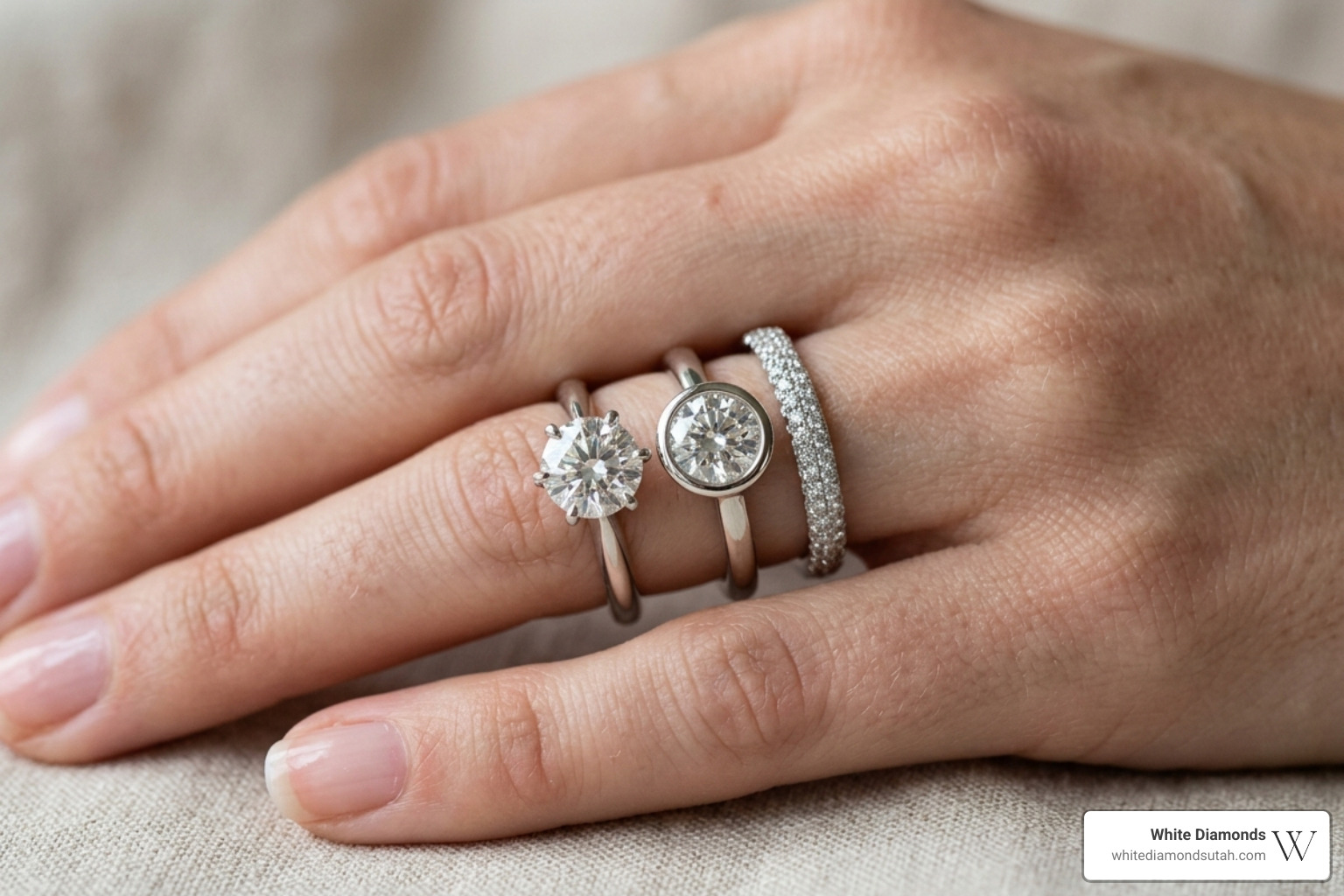
The Impact of a Halo Diamond Setting Style on Perceived Size
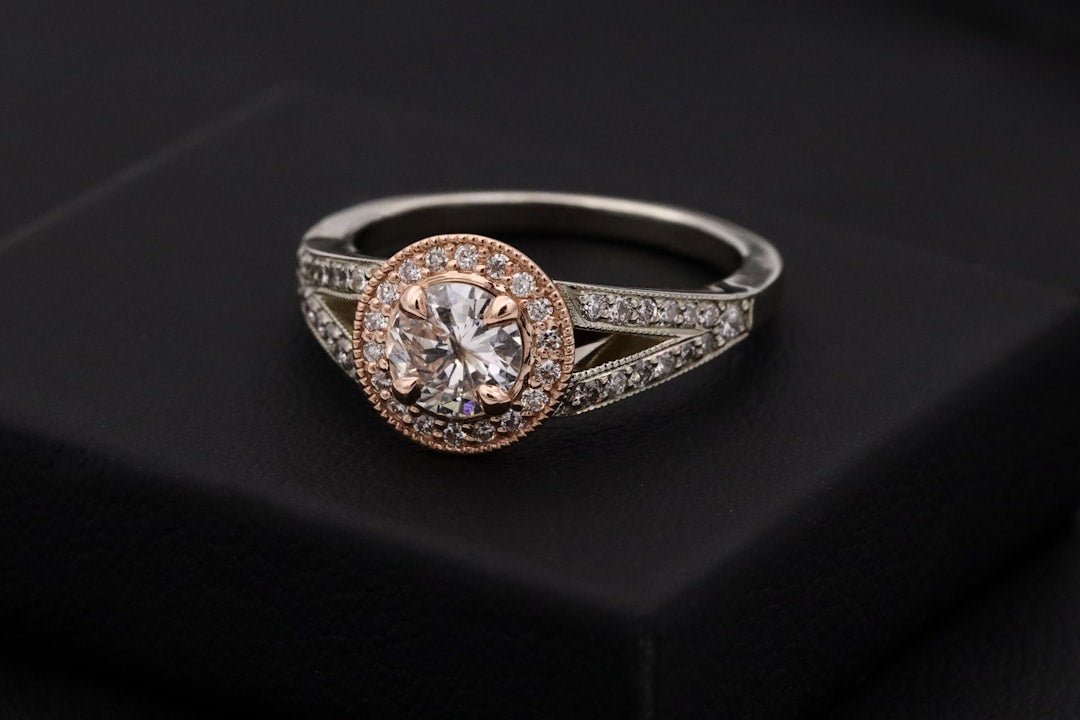
If you want to maximize your budget, the halo is your best friend. A halo setting features a center diamond surrounded by a "frame" of smaller pavé diamonds.
- Optical Illusion: A halo can make a center stone appear up to 50% larger than its actual carat weight. For example, a 1.0-carat diamond in a halo can visually mimic the surface area of a 1.5-carat stone.
- Hidden Halos: A major trend for May 2026 is the "hidden halo." Instead of framing the top of the diamond, the diamonds are placed on the gallery (the side profile), visible only from the side.
- Customization: At White Diamonds, we can create floral or mosaic halos that soften the edges of geometric stones like princess or marquise cuts.
Choosing a Diamond Setting Style for Specific Stone Shapes
The shape of your diamond dictates which diamond setting style is safest and most attractive.
- Round Brilliant: The most flexible shape. It looks iconic in a six-prong "Tiffany-style" mount but also works beautifully in a bezel.
- Princess and Marquise: These have sharp, vulnerable points. We always recommend V-prongs to wrap around those corners and prevent chipping.
- Oval and Pear: These elongated shapes can suffer from the "bowtie effect" (a dark shadow in the center). A well-proportioned setting can help minimize this.
- Emerald and Asscher: These are "step cuts" with large, open facets. They act like a hall of mirrors, so they require a setting that doesn't obstruct their architectural lines.
Learn more about matching shapes to mounts in our How to Choose a Diamond Ring Setting guide.
Architectural and Symbolic Variations
Beyond the basics, some settings are chosen for their structural drama or the story they tell.
Cathedral Setting
Inspired by the vaulted arches of Gothic cathedrals, this setting uses metal "slopes" that rise from the band to support the diamond's head. It adds height and a majestic profile to the ring, allowing a wedding band to sit perfectly flush against it.
Three-Stone Setting (Trilogy)
A popular choice for anniversaries and engagement rings alike, the three-stone setting symbolizes a couple's past, present, and future. Usually, the center stone is larger, framed by two smaller side stones that can be the same shape or a contrasting shape (like pear-shaped side stones framing a round center).
Tension Setting
This is the ultimate "conversation piece." The diamond appears to be floating in mid-air, held in place by thousands of pounds of lateral pressure from the metal band.
- Technical Note: Because of the extreme pressure, only very hard stones (Mohs 9 or above, like diamonds, sapphires, or rubies) can be used.
- Warning: These are nearly impossible to resize, so getting the measurement right the first time is crucial!
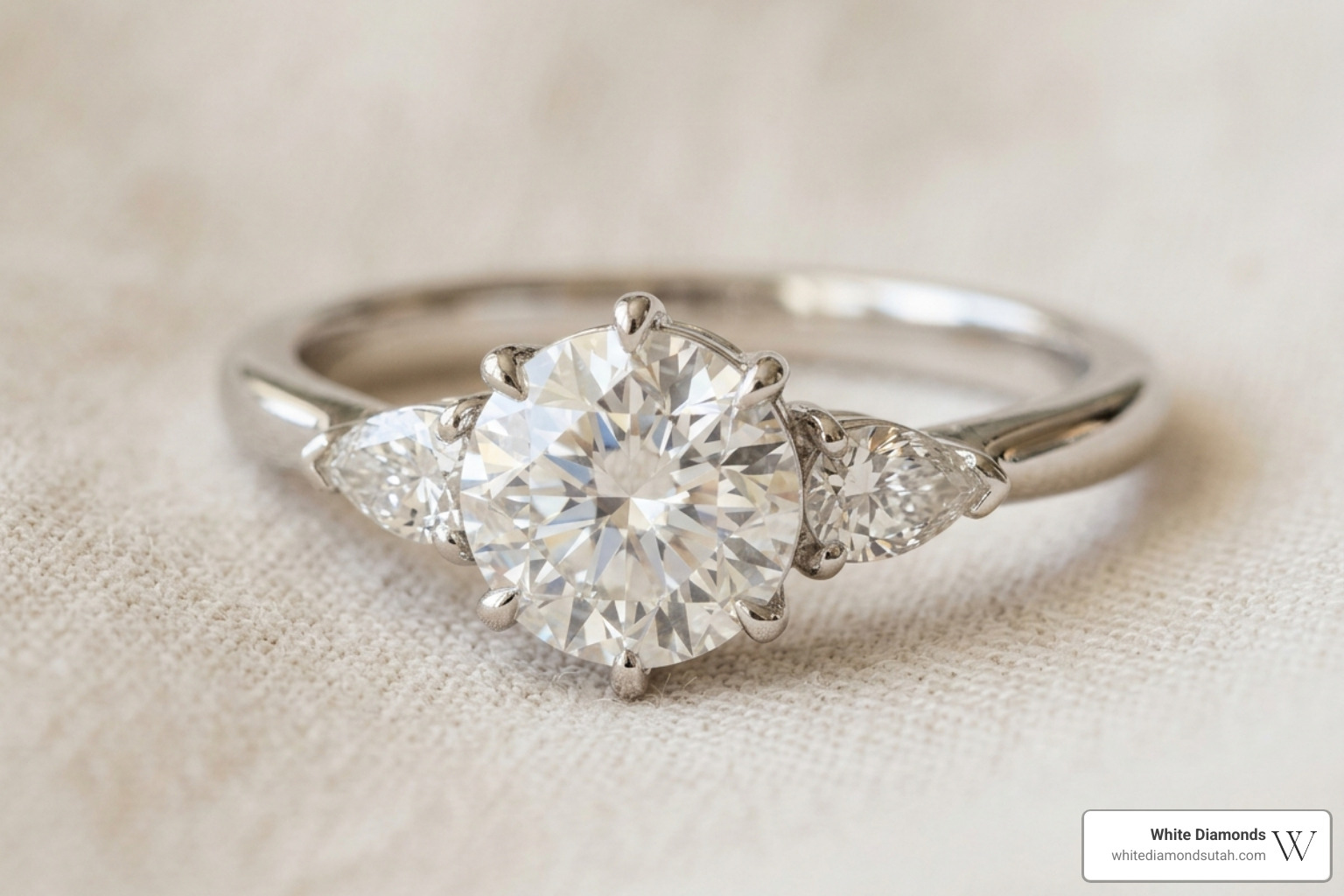
If you're looking for more local Utah advice on these styles, we've put together a Guide to Buying Diamond Engagement Rings in Utah.
Practicality, Maintenance, and 2026 Trends
As we look at the trends for 2026, we're seeing a return to both vintage charm and ultra-modern orientations.
The East-West Orientation
Instead of setting an oval or marquise diamond vertically (pointing toward the fingernail), the "East-West" style sets it horizontally. This offers a lower profile and a bold, modern look that stands out from the crowd.
Toi et Moi
French for "You and Me," this style features two stones (often different shapes or even different colors) nestled together. It’s a deeply romantic, vintage-inspired choice that has seen a massive resurgence recently.
Metal Choices and Durability
- Platinum: Our top recommendation for security. Platinum is a "work-hardening" metal. When it gets scratched, the metal is simply displaced rather than lost. It's also hypoallergenic and naturally white.
- Gold Alloys: Whether you choose 14k or 18k, yellow and rose gold offer a warm, romantic frame. For colorless diamonds, many of our clients choose a yellow gold band with white gold or platinum prongs to keep the diamond looking bright and white.
Hand-Crafted Excellence
In our Ogden workshop, we often use a graver blade to finish settings. This hand-cutting technique creates a mirror-like finish inside the metal seats, reflecting even more light back into the diamond. It’s a level of detail you won't find in mass-produced jewelry.
Frequently Asked Questions about Diamond Settings
Which diamond setting is the most secure for active wearers?
The bezel setting is the gold standard for security. Because the metal fully encircles the stone's girdle, it is protected from impacts and cannot snag on clothing or hair. Flush (or Gypsy) settings are also excellent for high-intensity lifestyles, as the stone sits level with the metal surface.
Can a setting make a small diamond look bigger?
Absolutely. A halo setting is the most effective way to do this, often making a 1-carat stone look like a 1.5-carat stone. Additionally, a bezel setting in white metal can create an optical illusion where the reflective metal rim blends with the diamond, extending its visual borders.
How often should I have my prongs inspected?
We recommend a professional inspection every 6 to 12 months. Over time, metal can wear down or get knocked out of alignment. A quick check-up ensures your prongs are tight and your diamond is safe. You can also do a "home check" by gently tapping the diamond with your finger; if you hear a clicking sound or see movement, it’s time to bring it in!
Conclusion
Choosing a diamond setting style shouldn't feel like a chore. It’s the "frame" for your masterpiece, and it’s the part of the ring that will interact most with your daily life. Whether you crave the architectural drama of a cathedral setting, the practical safety of a bezel, or the symbolic depth of a three-stone design, the right choice is the one that makes you smile every time you look down at your hand.
At White Diamonds in Utah, we pride ourselves on a pressure-free, personalized consultation process. We use model rings and custom design software to help you visualize exactly how your chosen style will look before we ever touch the metal.
Ready to design a ring that’s as unique as your story? Visit White Diamonds for a personalized consultation and let's find your perfect setting together.