Why 1ct Diamond Hoop Earrings Belong in Every Jewelry Box
Why 1ct Diamond Hoop Earrings Remain a Timeless Jewelry Staple
There is a reason fine jewelry enthusiasts consider hoops an essential foundation piece. While stud earrings provide classic simplicity, hoop earrings frame the face, catch ambient light from multiple angles, and introduce fluid movement. Finding the right pair of diamond earrings allows you to transition effortlessly between casual daytime wear and formal evening settings without missing a beat.
A pair crafted with a total diamond weight of one carat hits the sweet spot of fine jewelry. It delivers substantial sparkle and high visual presence without feeling overwhelmingly heavy or ostentatious. Whether you are pairing them with a tailored blazer for work or an evening gown for a special celebration, their understated luxury remains consistently balanced.
Total Carat Weight vs. Individual Diamond Size
When shopping for diamond hoop earrings, understanding diamond terminology is essential. Jewelers use "carat total weight" (ctw or ct.tw.) to describe the combined weight of every diamond set into both earrings.
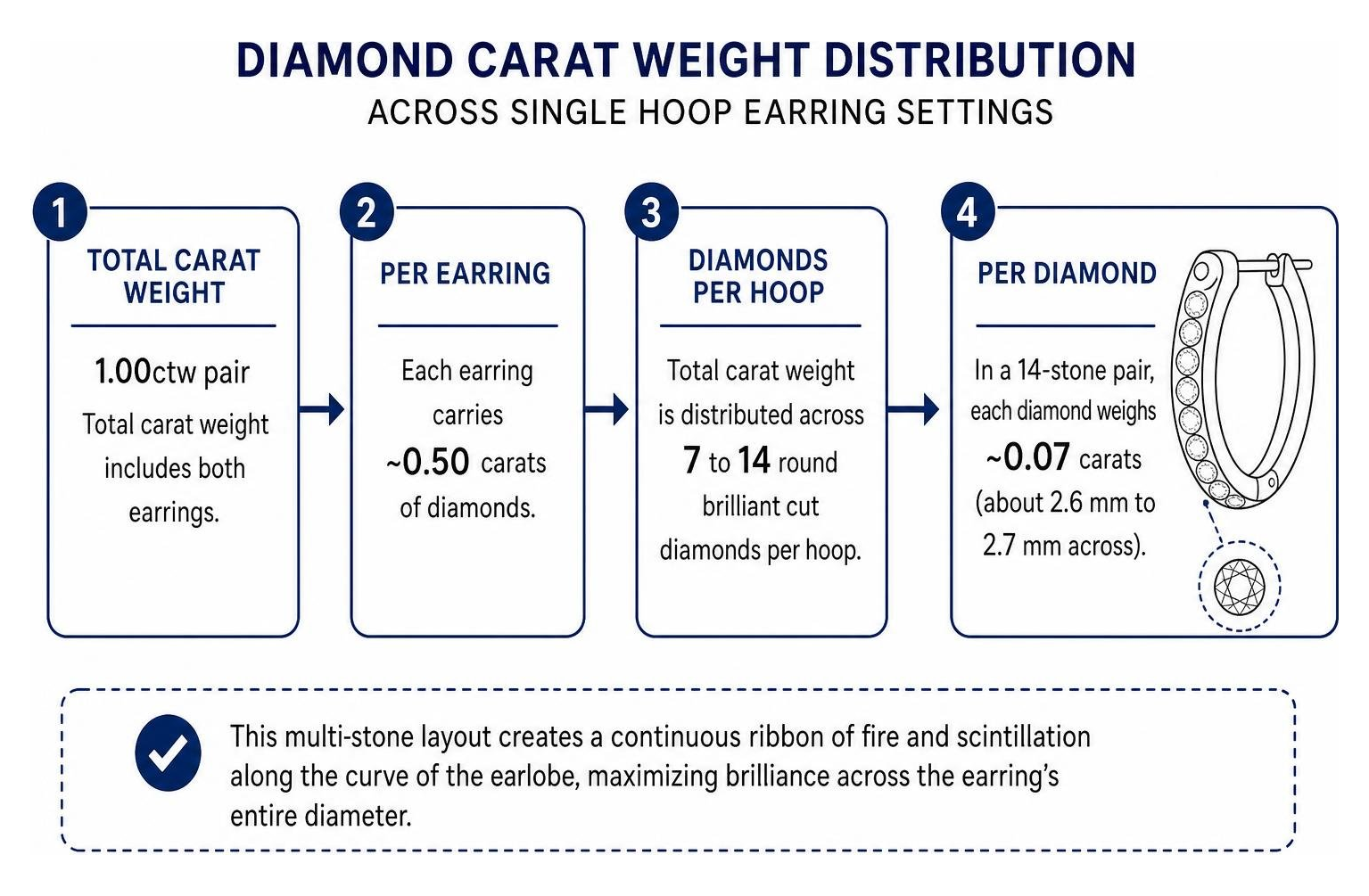
In a standard 1.00ctw pair:
- Each individual earring carries approximately 0.50 carats of diamonds.
- The total carat weight is distributed across multiple stones—often between 7 to 14 round brilliant cut diamonds per hoop.
- A single diamond in a 14-stone pair weighs roughly 0.07 carats (about 2.6 mm to 2.7 mm across).
This multi-stone layout creates a continuous ribbon of fire and scintillation along the curve of the earlobe, maximizing brilliance across the earring's entire millimeter diameter.
Evaluating Cut, Color, and Clarity for Earring Settings
Unlike solitaire engagement rings where a center stone sits directly under close scrutiny, the diamonds in hoop earrings are smaller and viewed in motion. This dynamic works in your favor when balancing quality and budget.
- Cut Quality: The precision of the cut remains the most critical factor. Well-proportioned round brilliant cuts maximize internal light reflection, delivering maximum brightness even in dim lighting.
- Color Grading: You do not need to invest in flawless, colorless (D–F) stones for hoop settings. Diamonds in the near-colorless range (G through J) appear crisp, white, and bright against precious metal backings while keeping costs practical.
- Clarity Considerations: Eye-clean clarity grades (ranging from VS2 down to SI1 or SI2) are ideal for hoop earrings. Inclusions at these grades are microscopic and invisible to the naked eye from normal viewing distances.
- Prong Integrity: Ensure every stone is secured with sturdy, smooth prongs or channel walls that keep the diamonds aligned securely without catching on clothing or hair.
Precious Metal Comparison: 10K vs. 14K Gold Settings
Selecting the right precious metal setting affects not only the aesthetic warmth of your earrings but also their everyday durability, weight, and hypoallergenic comfort.
| Feature | 10K Gold Hoops | 14K Gold Hoops |
|---|---|---|
| Pure Gold Composition | 41.7% Pure Gold (10 parts gold, 14 parts alloy) | 58.3% Pure Gold (14 parts gold, 10 parts alloy) |
| Scratch Resistance | Extremely high due to dense alloy content | High; balanced strength and gold richness |
| Color Saturation | Subtle, pale gold tone (yellow gold) | Rich, classic warm gold tone |
| Skin Sensitivity | Higher risk for nickel-sensitive skin | Generally hypoallergenic for daily wear |
| Typical Market Price Point | Entry-level luxury ($1,000 – $1,800) | Industry standard fine jewelry ($2,200 – $3,000+) |
Durability and Pure Gold Composition
Pure gold (24 karat) is naturally soft, malleable, and prone to bending under pressure. To create functional jewelry that withstands daily life, gold is alloyed with durable metals such as copper, silver, zinc, and nickel.
10K gold contains 41.7% pure gold, making it exceptionally hard and scratch-resistant. If you work in an active environment or prioritize maximum structural toughness at an accessible price point, 10K gold offers solid resilience.
By contrast, 14K gold contains 58.3% pure gold. It provides the optimal balance for fine jewelry, pairing excellent durability with higher precious metal content.
Color Richness and Metal Longevity
The visual difference between gold purities is noticeable upon close inspection:
- Yellow Gold: 14K yellow gold displays a warmer, richer golden luster compared to the slightly paler hue of 10K yellow gold.
- White Gold: Both 10K and 14K white gold settings are typically electroplated with rhodium—a rare, platinum-group metal that produces a mirror-like, icy white finish. Over time, friction will gradually wear down rhodium plating, requiring occasional replating to maintain its bright white sheen.
- Metal Longevity & Hypoallergenic Properties: Because 10K gold contains a higher percentage of non-gold base metals, individuals with sensitive skin or nickel allergies are more likely to experience minor irritation. 14K gold is significantly gentler on sensitive ear piercings.
Sizing, Proportions, and Setting Styles
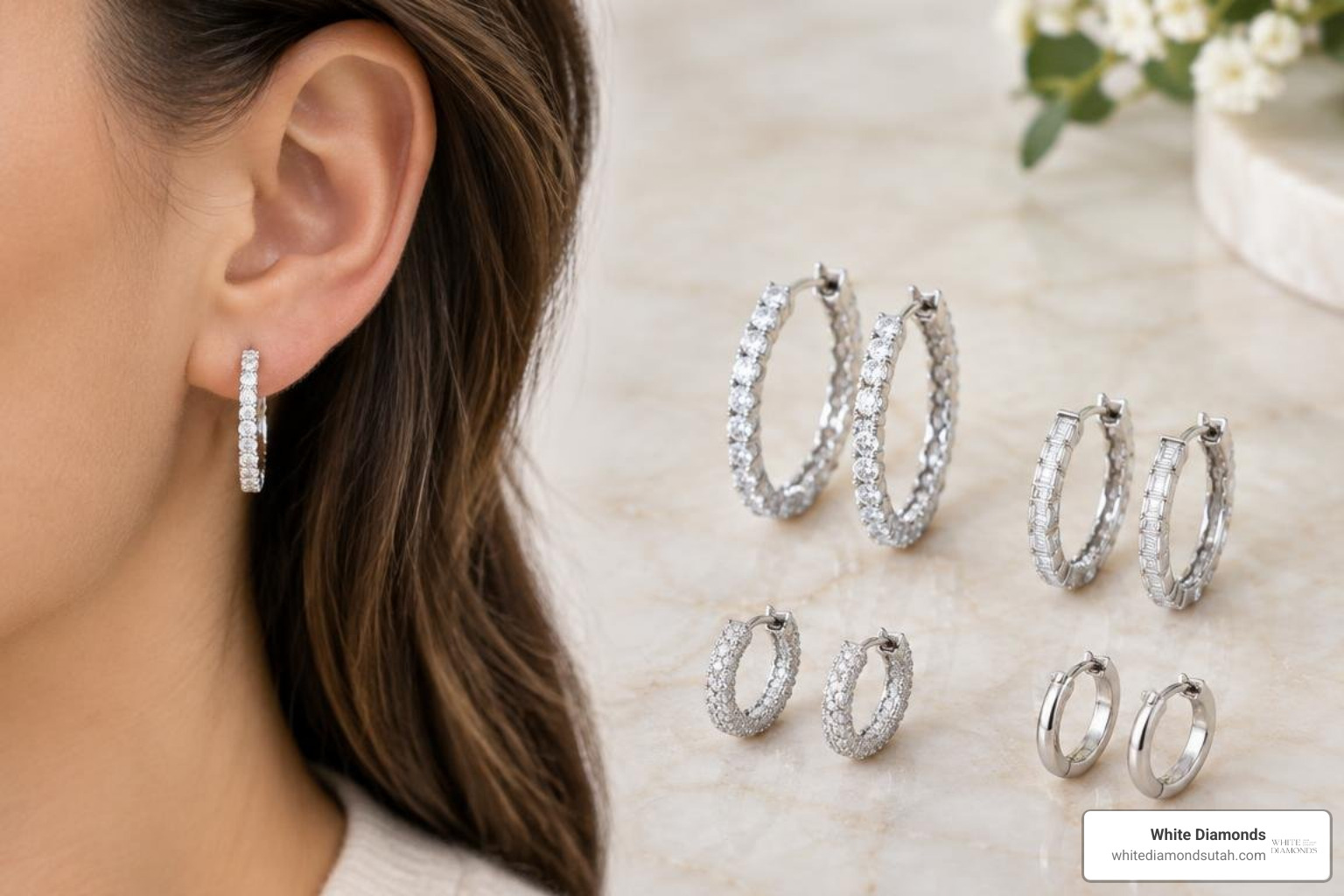
The overall diameter and profile of a hoop determine how it sits on the earlobe and complements different face shapes.
Ideal Dimensions for 1ct Diamond Hoop Earrings
For a 1ctw diamond hoop, jewelers generally construct hoops with an outer diameter between 15 mm and 18 mm (roughly 0.6 to 0.7 inches) and a hoop width of 2.0 mm to 5.0 mm.
A 16 mm diameter creates a versatile huggie-to-mid-size silhouette. It sits close enough to the lobe to prevent pulling or snagging while maintaining enough curve to let all 14 diamonds catch the light. If you already love the understated scale of 1 carat diamond solitaire earrings, a 16 mm hoop provides a comparable level of brilliance in an elongated, continuous circle.
Secure Closures and Everyday Comfort
Because fine diamond hoops represent a meaningful investment, closure mechanics are paramount:
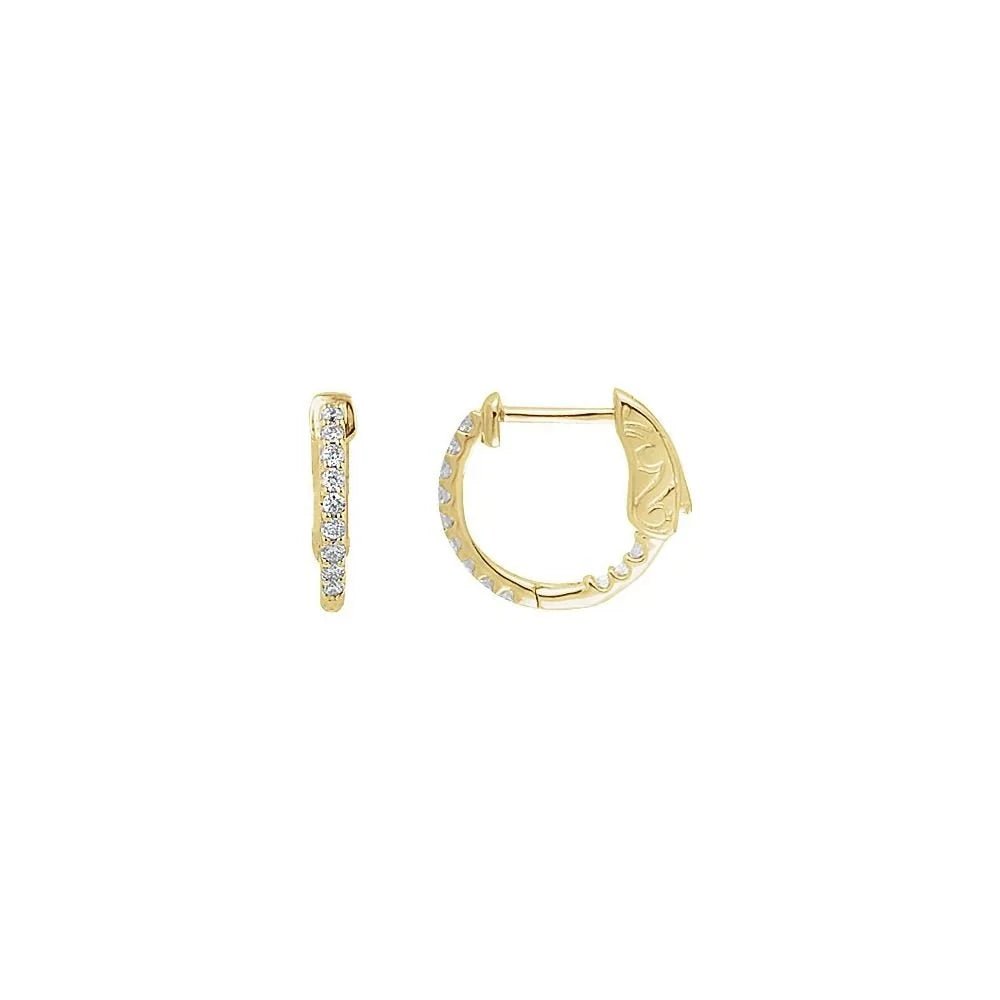
- Hinge Back Closures (Click-Lock): A hinged curved post snaps securely into a locking groove at the back of the earring. This mechanism offers robust retention for active wear.
- Post Strength: A straight or curved gold post must feature sufficient gauge thickness to resist bending while slipping comfortably through standard piercings.
- Weight Distribution: A well-crafted pair of 1ctw gold hoops generally weighs between 3.5 and 5.0 grams total. This provides a reassuring, substantial feel without dragging or stretching sensitive earlobes during all-day wear.
Shopping Channels and Pricing Analysis
Understanding where and how to purchase diamond jewelry helps you evaluate real value versus inflated retail markups.
| Retail Channel | Typical Price Range (1.00ctw) | Key Advantages | Buyer Protections & Considerations |
|---|---|---|---|
| Custom / Independent Jeweler | $1,800 – $2,800 (Mined) / $800 – $1,400 (Lab) | Direct quality control, tailored settings, local service | In-house warranties, free lifetime cleaning, precise sizing |
| Traditional Online Retailer | $2,200 – $3,000 | Broad catalog selection, frequent promotional sales | 30-day return windows, optional third-party protection plans |
| Jewelry Auction Platforms | $1,500 – $2,500 + Buyer's Premium | Potential for below-market hammer prices | 15%–25% buyer premiums, non-refundable sales, final purchases |
Price Expectations for 1ct Diamond Hoop Earrings
Pricing for 1ctw diamond hoop earrings varies based on diamond origin, metal purity, and market conditions. You can reference our complete guide to 1 carat solitaire earrings price for broader context on how carat weight scales across different styles.
In retail settings, natural diamond 1.00ctw hoops in 14K white or yellow gold typically retail between $2,300 and $2,950, with promotional events occasionally lowering costs by 15% to 20%. Secondary market auction estimates often range between $2,300 and $3,100, though buyers must account for auction house premiums (often adding 20% to 25% onto the winning bid) alongside separate shipping and handling charges.
Retail Guarantees and Purchase Protections
When purchasing fine diamond jewelry, evaluate the seller's logistical safeguards:
- Insured Shipping: High-value pieces should always ship via insured carriers with mandatory signature confirmation upon delivery.
- Clear Return Windows: Transparent retailers typically offer a 30-day return or exchange period, allowing you to inspect the earrings in person under natural light.
- Extended Care Plans: Comprehensive protection policies can cover accidental stone loss, bent posts, and prong retipping for routine wear and tear over two or more years.
Diamond Origins, Treatments, and Certifications
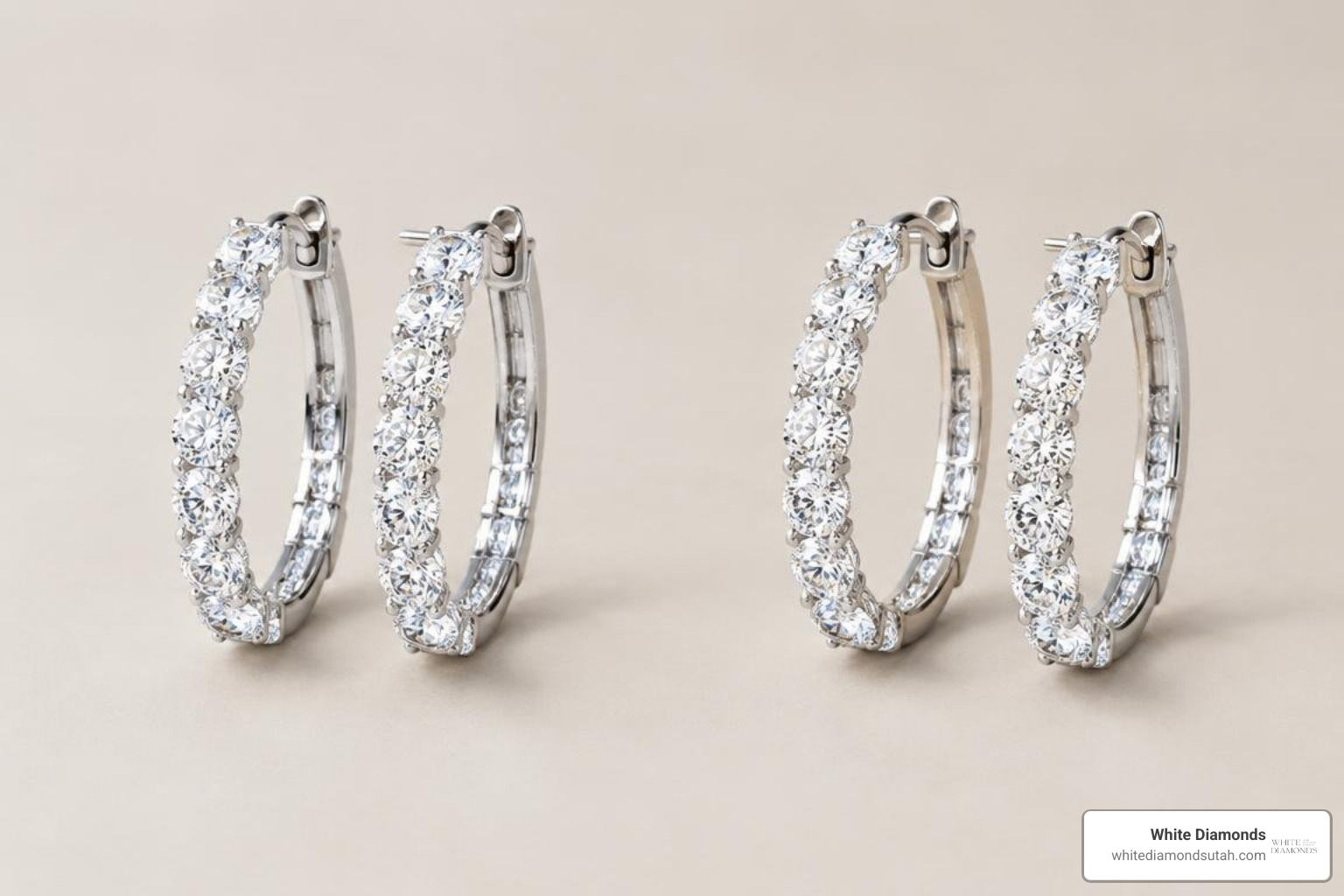
Modern fine jewelry buyers have distinct options when choosing stone origins, each offering distinct advantages.
Mined vs. Lab-Grown Diamonds in Hoop Earrings
Understanding lab-grown diamonds gives buyers complete control over their budget and stone scale. Lab-created diamonds share the identical crystal lattice structure, chemical makeup, optical properties, and Mohs hardness (10) of mined diamonds.
When comparing mined and lab-created diamonds, lab-grown stones offer remarkable cost efficiency. Choosing lab grown diamond hoop earrings allows shoppers to secure higher color grades (such as E–F) and clarity ratings (VS1+) in solid 14K gold settings at a fraction of the cost of their mined counterparts.
Verifying Quality and Authenticity
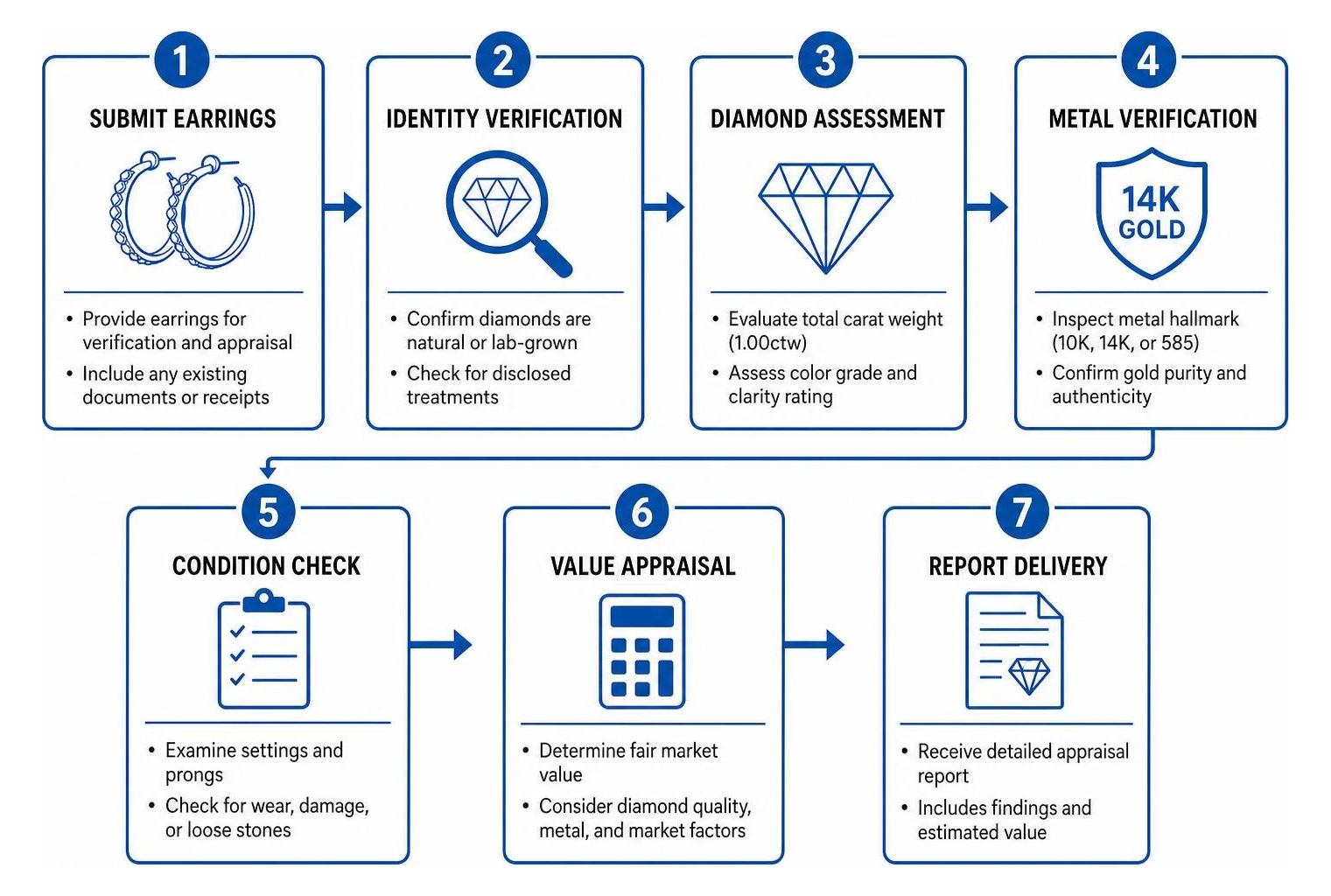
To protect your fine jewelry investment:
- Insist on Disclosure: Ensure your sales documentation clearly specifies whether diamonds are natural or lab-created and notes any color or clarity treatments.
- Inspect Metal Hallmarks: Genuine gold hoops must carry an official laser stamp or mechanical hallmark indicating purity (e.g., "10K", "14K", or "585").
- Seek Expert Appraisals: For higher-value natural diamond pieces, independent laboratory verification or certified gemological appraisals confirm total carat weights and stone authenticity. The Gemological Institute of America provides widely recognized diamond grading reports that document carat weight, color, clarity, and cut quality for loose and mounted stones.
Frequently Asked Questions About Diamond Hoop Earrings
What is the average price of 1ct diamond hoop earrings?
A standard pair of natural 1.00ctw diamond hoop earrings in 14K solid gold generally retails between $2,200 and $2,950 depending on stone color, clarity, and craftsmanship. Lab-grown diamond versions with equivalent or superior clarity typically range between $800 and $1,400.
Are 1ct diamond hoop earrings suitable for everyday wear?
Yes. A 1ctw hoop measuring between 15 mm and 17 mm is lightweight and low-profile enough for daily routines. Sturdy 14K gold settings paired with secure hinge-back closures ensure the earrings stay firmly in place throughout work, travel, and exercise.
How do I clean and maintain diamond hoop earrings at home?
To keep your hoops sparkling, soak them for 10 to 15 minutes in a bowl of warm water mixed with a few drops of mild, lotion-free dish soap. Gently scrub behind the diamond settings using an extra-soft toothbrush, rinse thoroughly under warm running water with the drain closed, and pat dry with a lint-free microfiber cloth.
Conclusion
A well-crafted pair of 1ct diamond hoop earrings delivers the ideal union of durability, visual impact, and enduring elegance. By evaluating gold purities, checking clasp mechanisms, and choosing between natural and lab-created stones, you can select a versatile pair tailored precisely to your personal style and budget.
At White Diamonds, we believe fine jewelry should always be crafted with care, complete transparency, and zero pressure. If you are exploring custom fine jewelry or looking for your next signature piece, consult our comprehensive diamond earrings buying guide or connect with our team to design a pair made just for you.