A Practical Guide to Comparing Oval Diamond Rings
How to Choose an Oval Diamond Ring
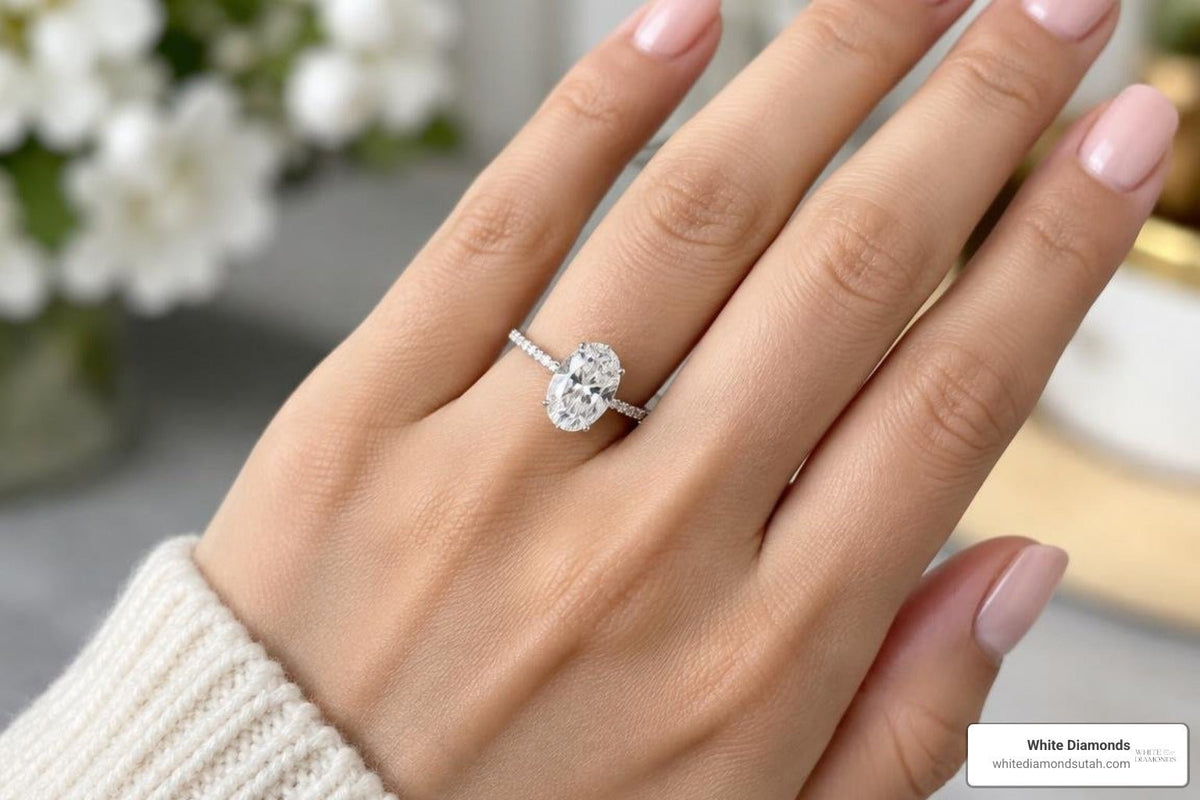
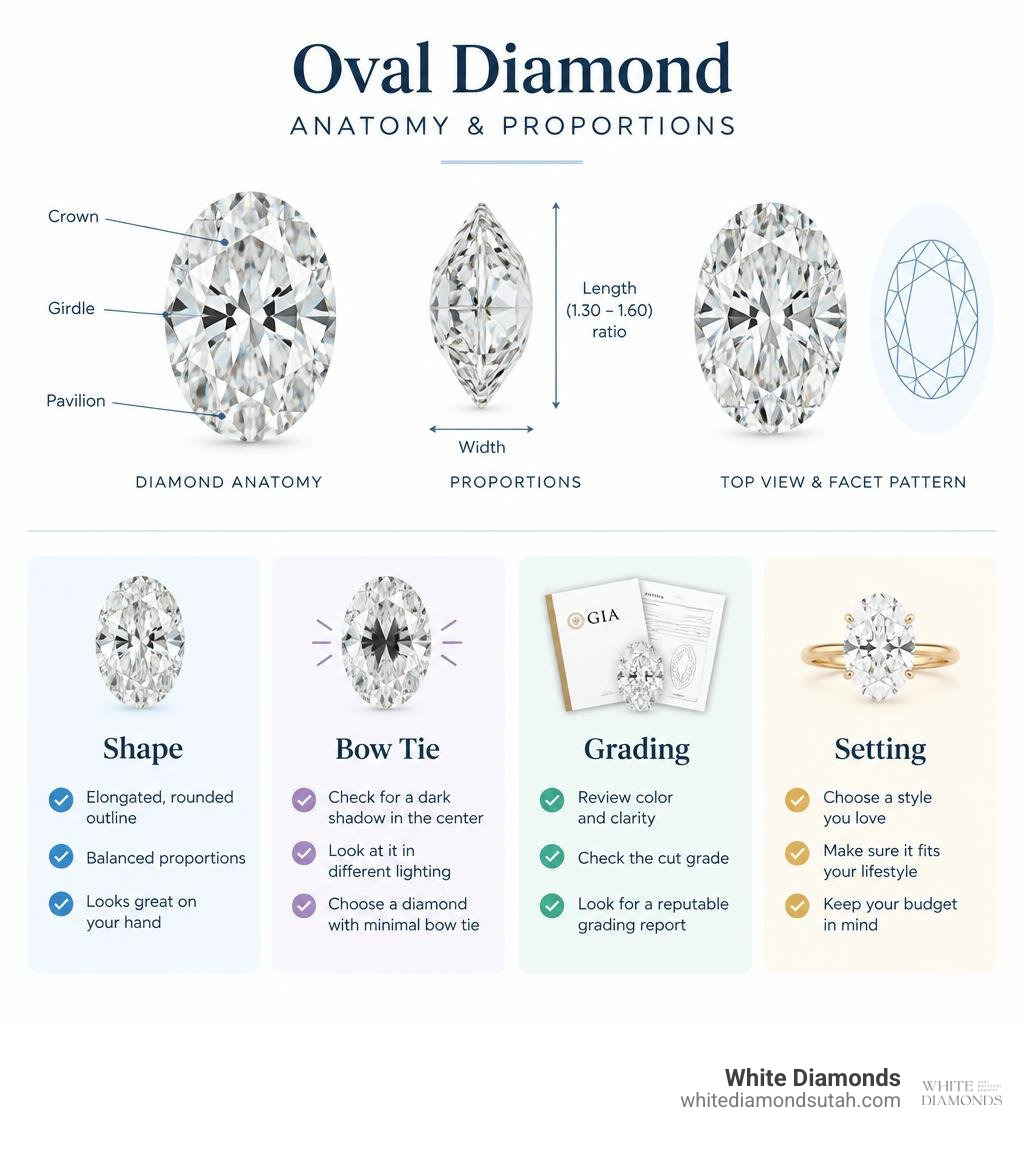
An oval diamond ring has an elongated, rounded diamond that can give the finger a longer look. To choose one, compare how the diamond looks on your hand, check whether a dark "bow tie" across its center draws your eye, and review its color, clarity, and grading report. Then choose a setting you like that fits your budget.
At White Diamonds, we've helped shoppers design custom rings and wedding bands and care for them through ring cleaning. We bring that hands-on experience to comparing an oval diamond ring without rushing your decision.
Why the Oval Diamond Ring Remains a Top Choice
First introduced in its modern form by master cutter Lazare Kaplan in the 1960s, the oval cut has grown into a modern classic. Accounting for roughly 10% of all fancy-shaped diamond sales and seeing a steady 25% surge in popularity over the past five years, it now represents the top choice for brides seeking an alternative to the traditional round stone. A survey of over 1,000 brides revealed that 18% preferred an oval cut diamond for their engagement ring, outpacing every other fancy shape.
There are compelling aesthetic and practical reasons for this sustained popularity. An oval diamond combines the fire and scintillation of a round brilliant with an elongated silhouette. Because of its shape, an oval cut creates an optical illusion that naturally lengthens and slenders the wearer's fingers. Discover the reasons oval cuts flatter different hand shapes across various finger widths and knuckle structures.
Beyond sheer aesthetics, oval stones offer practical value. An oval cut features an expanded surface area, meaning its carat weight is concentrated in its table (the top surface) rather than hidden beneath the girdle. As a modified brilliant cut, it boasts an optical brilliance and fire rating of approximately 8.5 out of 10. When exploring classic oval diamond ring styles, you get a stone that delivers substantial visual presence alongside brilliant sparkle.
Evaluating the 4Cs for Oval Diamonds
Applying the 4Cs—Cut, Color, Clarity, and Carat weight—to fancy shapes requires a slightly different approach than evaluating round diamonds. While round brilliant stones receive standardized cut grades from labs like the Gemological Institute of America (GIA), fancy shapes do not receive an overall cut grade on standard certificates. Understanding fundamental jewelry education principles ensures you know how to look beyond the grading report when assessing stone quality.
Evaluating Cut Quality and Proportions in an Oval Diamond Ring
Because cut dictates light performance, assessing proportions is essential:
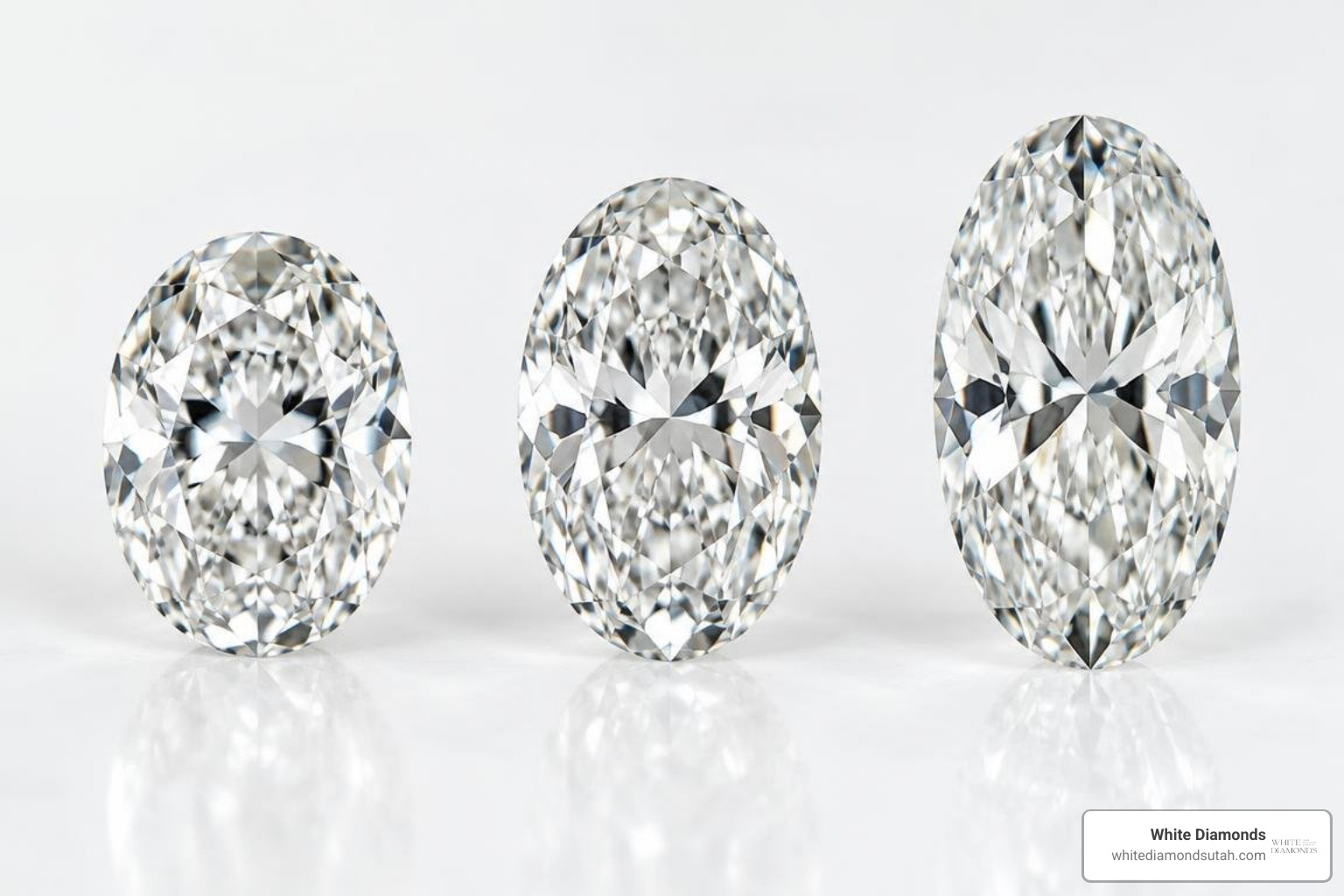
- Length-to-Width Ratio (L:W): The classic, universally loved ratio for an oval diamond sits between 1.35 and 1.50. Ratios closer to 1.30 provide a softer, chubbier look, while ratios above 1.55 yield an ultra-elongated, modern aesthetic.
- Table and Depth Proportions: Strive for a depth percentage between 58% and 63% and a table percentage between 53% and 63% to maximize light return and prevent light leakage through the bottom.
- Symmetry: Look closely at the curved ends (heads) and sides (bellies). An ideal oval should feature identical halves with clean, smooth curves rather than flat edges or bulging shoulders.
- The Bow-Tie Effect: Every elongated brilliant cut exhibits some degree of a dark shadow across its center, resembling a bow tie. This occurs when light entering the stone is obstructed by the viewer's head and shoulders. Mastering how to balance understanding the bow-tie effect will help you pick a diamond where the shadow is subtle and blends naturally into the stone's lively facet pattern.
Color, Clarity, and Carat Weight Considerations
- Color: Oval diamonds tend to concentrate body color near their rounded tips (the heads). If you are setting your diamond in platinum or white gold, we recommend staying within the G to H color range for an icy-white appearance. For warm yellow gold or rose gold settings, I or J colors blend naturally and provide tremendous value.
- Clarity: Thanks to their modified brilliant facet pattern, oval diamonds excel at masking minor natural inclusions. Choosing a VS2 or eye-clean SI1 clarity grade allows you to maximize size and appearance without paying for microscopic perfection invisible to the naked eye.
- Carat Weight & Spread: Rather than fixating strictly on carat weight, examine the diamond's millimeter dimensions. For instance, comparing a 10x7 oval diamond dimension shows that this measurement typically correlates to a 2.0 to 2.25-carat appearance, delivering substantial finger coverage without requiring an overly heavy, costly stone.
Selecting the Best Setting and Band Styles
The right setting does more than showcase your diamond; it provides essential structural protection for daily wear. Exploring custom engagement ring design options allows you to tailor both the physical security and artistic flair of your piece.
Popular Settings for an Oval Diamond Ring
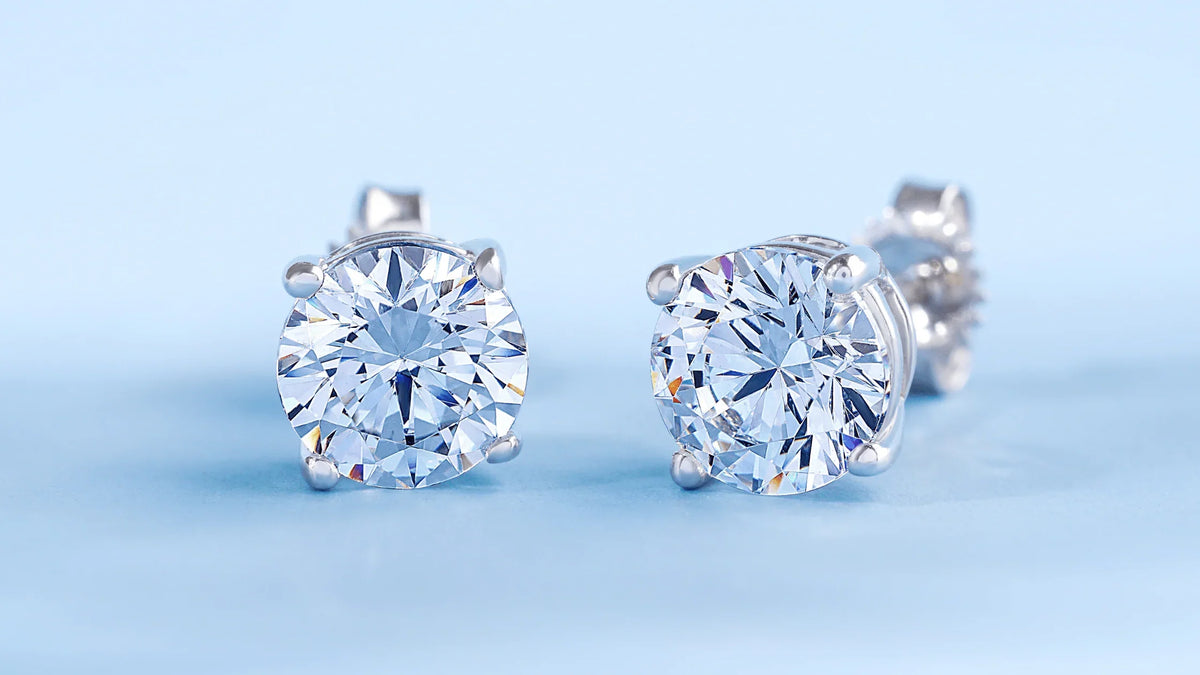
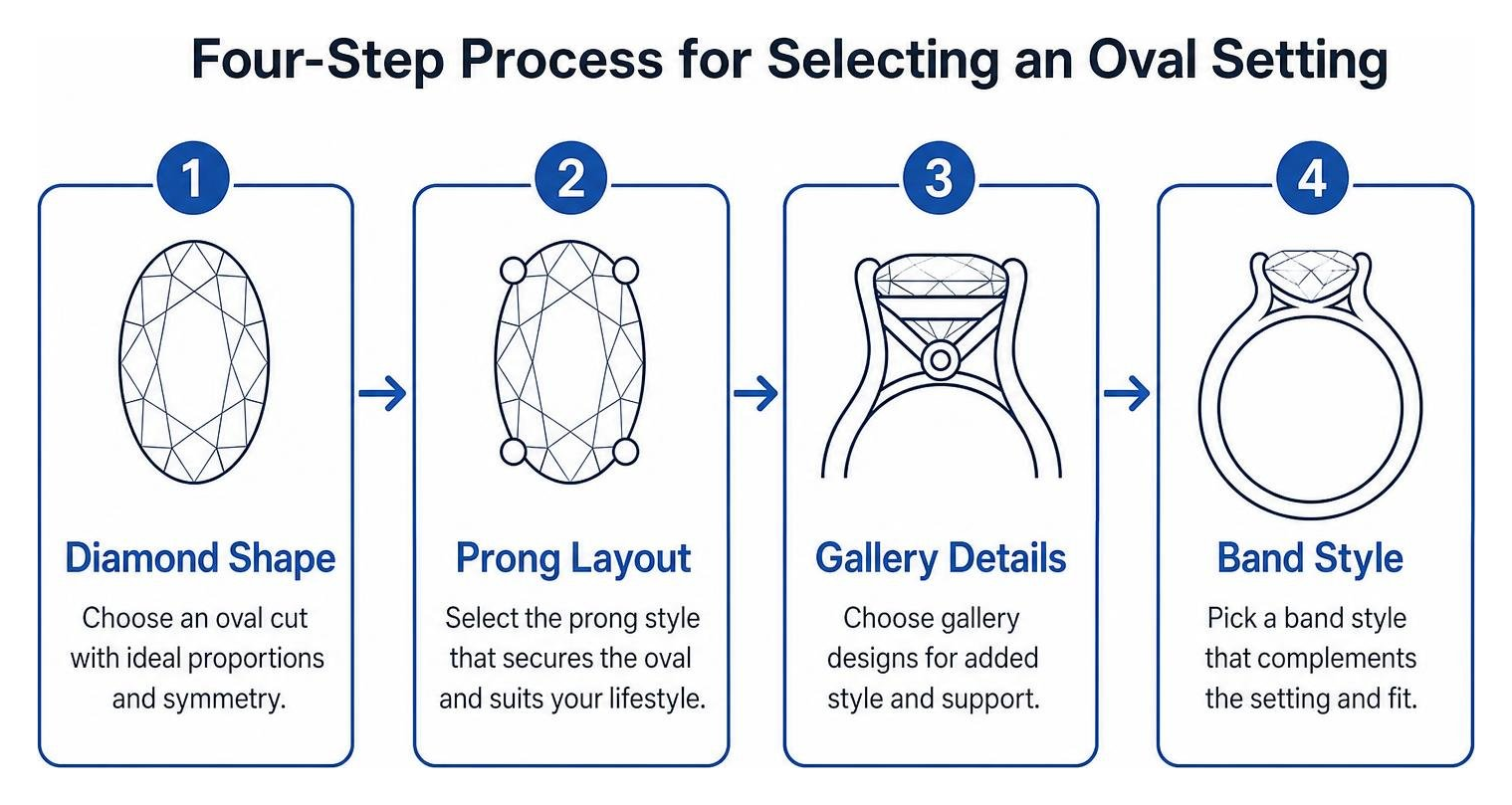
- Four-Prong Mountings: Positions prongs at the northwest, northeast, southwest, and southeast curves of the stone. This setup allows maximum light to enter the gem while keeping metal visible to a minimum.
- Six-Prong Mountings: Offers enhanced protection by securing both the sides and tips of the oval, perfect for active lifestyles.
- Bezel Settings: Wraps the entire perimeter of the diamond in a sleek ribbon of precious metal, delivering a smooth, snag-free profile with mid-century modern character.
- Classic Mountings: Browse timeless solitaire ring mountings that elevate the center gem, or explore protective halo ring designs that frame the oval with a perimeter of micro-pave diamonds for added sparkle and presence.
Modern Accents and Band Pairings
- Hidden Halos: A delicate circle of diamonds set just below the center stone's girdle, offering a discreet pop of shimmer visible from profile angles.
- Three-Stone Arrangements: Pairing an oval center with side stones—such as tapered baguettes, half-moons, or pear shapes—creates a graceful, graduated sweep across the hand.
- East-West Orientations: Setting the oval horizontally across the band gives a classic shape an avant-garde twist.
Take a look through our collection of curated oval cut engagement rings, or experiment directly using an interactive ring builder tool to assemble your preferred combination of metal, prong style, and side accents.
Comparing Oval Diamonds to Other Popular Diamond Shapes
When selecting a center stone, comparing the oval cut directly against other timeless shapes highlights its strengths in cost efficiency, optical brilliance, and finger coverage:
| Diamond Shape | Cut Style | Brilliance Rating | Surface Spread (Face-Up Size) | Cost Comparison vs. Round |
|---|---|---|---|---|
| Oval Cut | Modified Brilliant | High (8.5/10) | Very Large (Longer optical spread) | 10% – 15% Less Expensive |
| Round Brilliant | Standard Brilliant | Maximum (9.5/10) | Standard Baseline | Highest Cost Per Carat |
| Cushion Cut | Modified / Brilliant | High (8.0/10) | Medium (Deeper weight distribution) | 15% – 25% Less Expensive |
| Emerald Cut | Step Cut | Muted / Luster (6.5/10) | Large (Broad rectangular table) | 15% – 20% Less Expensive |
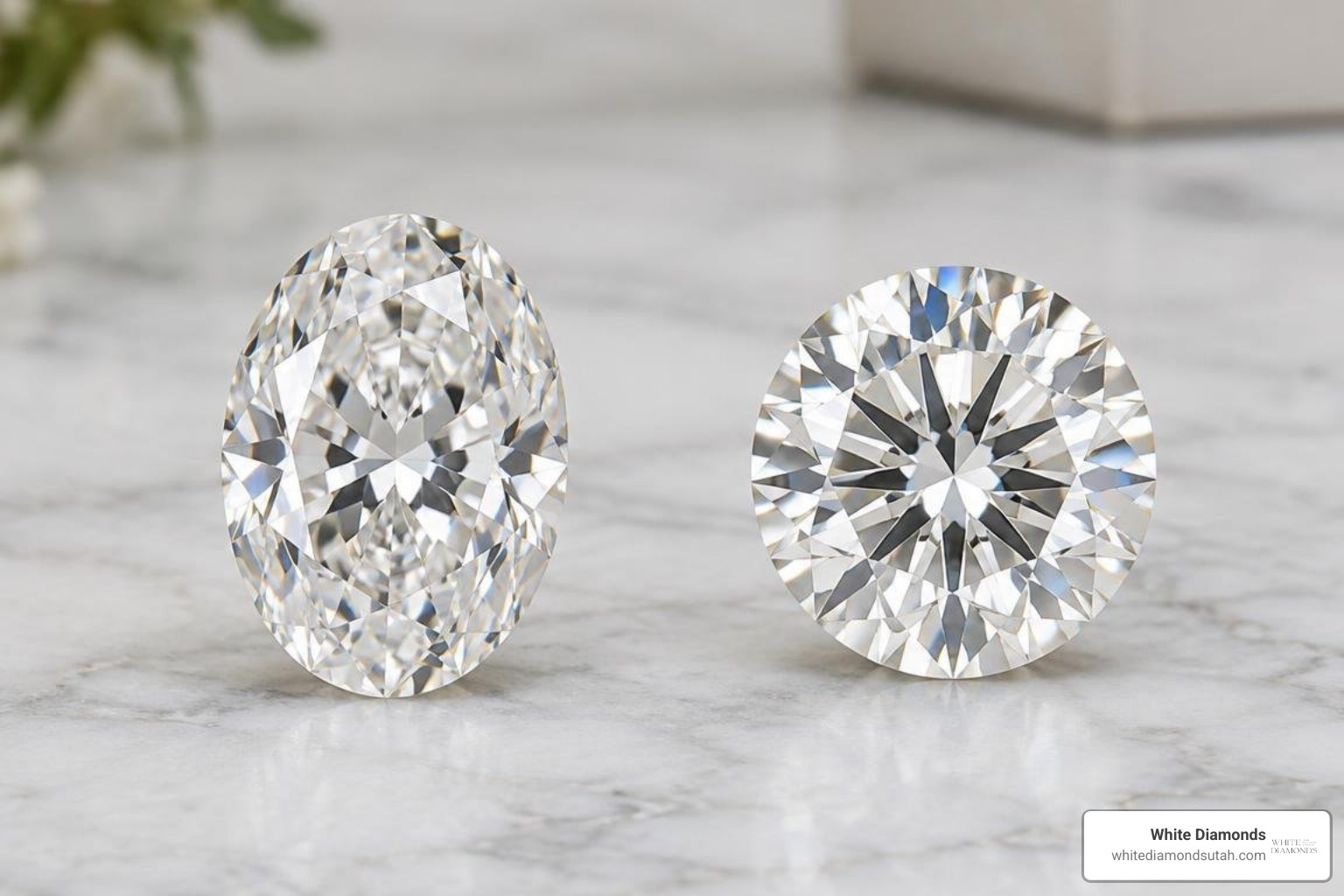
Because diamond cutters can preserve more rough crystal when fashioning an oval shape, an oval diamond ring is typically 10% to 15% less expensive per carat than a round brilliant stone of identical grade. This allows you to allocate more of your budget toward cut quality, metal craftsmanship, or higher carat weight.
Price Expectations, Sourcing, and Ring Maintenance
Oval diamond pricing varies based on whether you select a natural or lab-grown center stone, the complexity of your custom setting, and the exact 4C grading specifications. Sourcing your diamond through a trusted diamond dealer ensures that every stone is evaluated in person for fire, scintillation, and symmetry rather than solely selected from a digital inventory list.
To maintain your ring's pristine condition:
- Daily Care: Remove your ring during heavy lifting, gardening, or when applying thick lotions and hand creams that create residue behind the stone.
- Routine Cleaning: Soak the ring weekly in warm water mixed with mild dish soap. Gently scrub the underside of the mounting using a soft-bristled baby toothbrush, then rinse with clean water and pat dry with a lint-free cloth.
- Professional Checkups: Schedule an in-person prong inspection every six months to verify that everyday wear has not loosened the setting.
Frequently Asked Questions About Oval Diamond Rings
Do all oval cut diamonds have a visible bow-tie effect?
Because of how facets are cut along the elongated body of the stone, nearly every oval diamond displays some degree of central light obstruction. However, a masterfully proportioned stone will minimize this contrast so that it sparkles in harmony with the surrounding facets rather than appearing as a dull, dark block across the center.
How does an oval diamond look larger than a round diamond of the same carat?
Oval diamonds have a shallower depth distribution and an elongated crown, spreading their total carat weight over a broader surface area. This results in an oval stone having roughly an 8% to 10% larger face-up surface area than a round diamond of identical carat weight.
What is the ideal length-to-width ratio for an oval diamond?
The traditional standard is between 1.35 and 1.50. This creates a classic, balanced oval silhouette that neither looks too circular nor overly narrow. However, ratios are ultimately a matter of personal taste—slender fingers often suit longer ratios (1.50+), while broader hands look great with wider cuts (1.30–1.35).
Conclusion
Finding the ideal ring comes down to balancing proportional beauty, optical brilliance, and secure craftsmanship. We love guiding you through every step of this journey with personalized, pressure-free consultations where you can try on model rings, view loose stones in natural light, and tailor a custom piece within your timeline and budget.
To better evaluate loose stones before making your choice, take time to learn what causes the bow tie effect in oval diamonds. When you are ready to design your dream piece or view loose stones in person, schedule a consultation to explore ring designs with our Ogden, Utah design team today.