A Comprehensive Guide to Visualizing Carat Size on Finger
What Carat Size Looks Like on a Finger
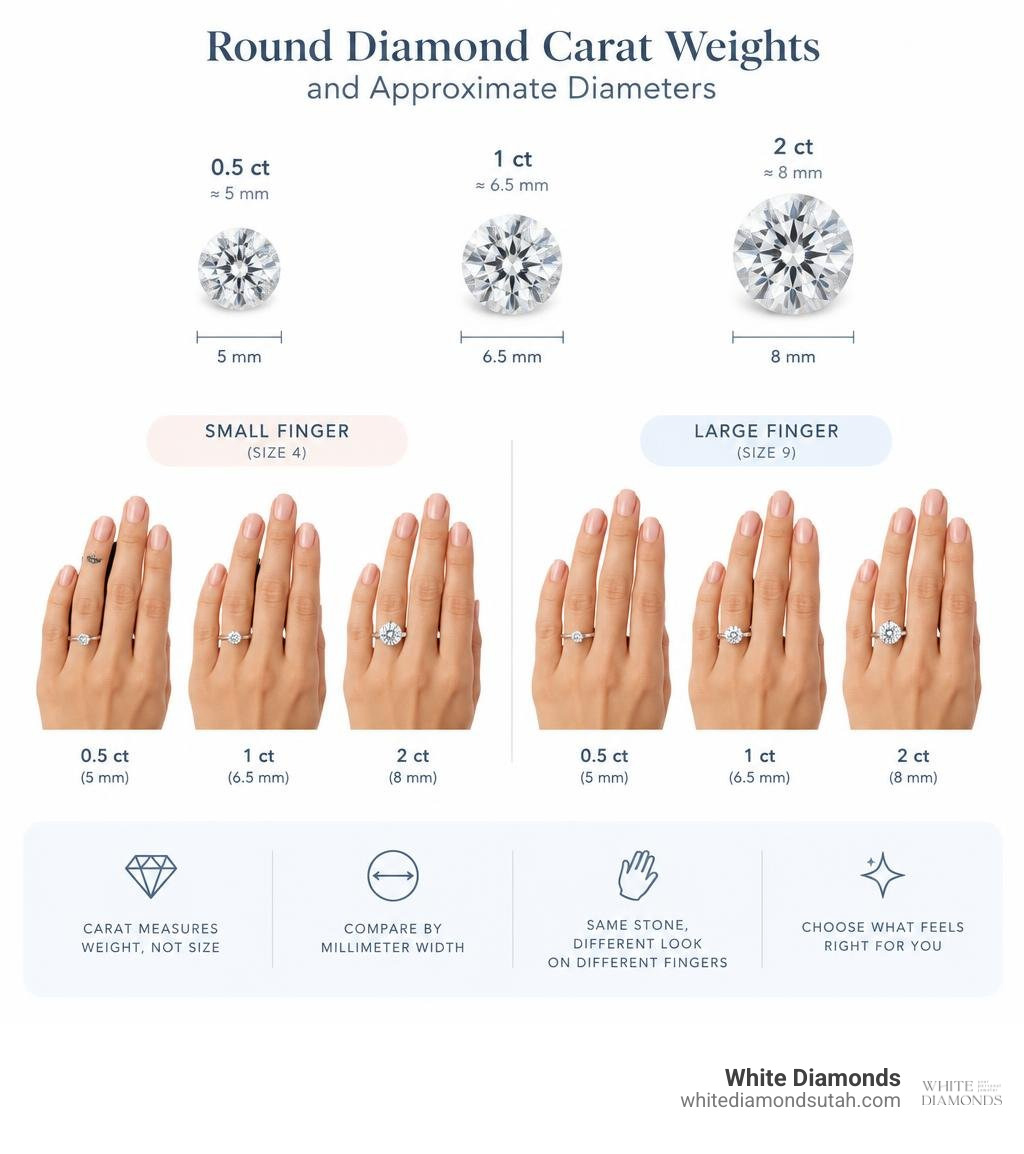
A diamond's carat tells you its weight, not how wide it looks. For round diamonds, 0.5 carat is about 5 mm across, 1 carat is about 6.5 mm, and 2 carats is about 8 mm. The same stone will look more prominent on a size-4 finger than on a size-9 finger. To choose a size, compare stones by millimeter width on your own hand, then weigh the look against your budget and daily comfort.
At White Diamonds, we craft custom rings and wedding bands, helping shoppers judge carat size on finger alongside the setting that holds the stone. That hands-on view makes it easier to choose a ring that feels right, not just a number on a label.
Carat Weight vs. Millimeter Dimensions: How Diamonds Measure Up
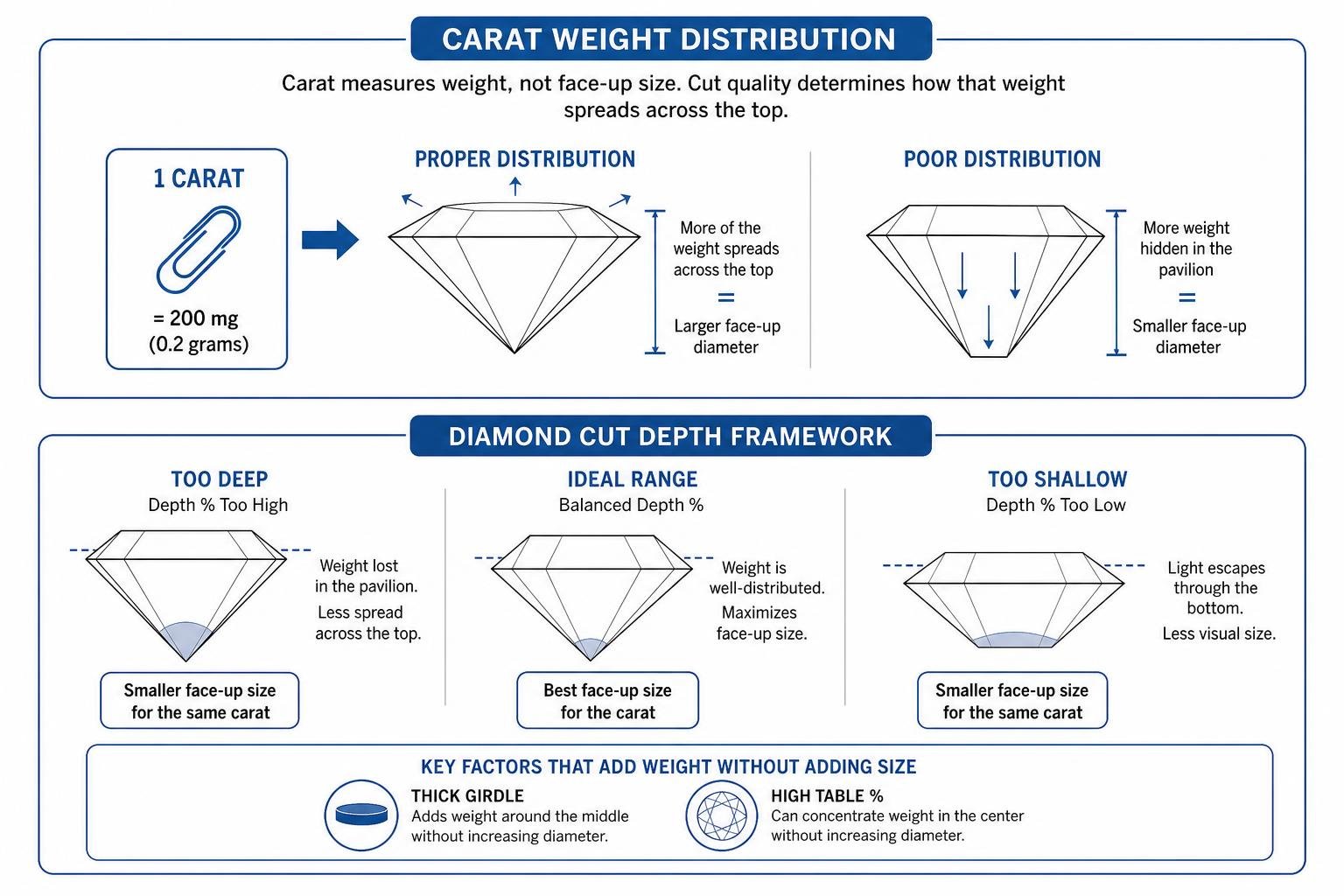
When shopping for an engagement ring, the word "carat" gets tossed around constantly. It is easy to assume that carat is simply a measurement of physical width, but it actually measures mass. According to the Gemological Institute of America, one metric carat equals exactly 200 milligrams (0.2 grams)—roughly the weight of a standard paperclip.
Because carat measures mass rather than face-up surface area, two diamonds with the exact same weight can look noticeably different in size when viewed from the top. A comprehensive understanding of carat size requires looking at how a cutter distributes that mass. If a diamond is cut too deep, a large percentage of its weight sits hidden in the pavilion (the bottom cone), meaning you pay for weight you never see. Conversely, if a stone is cut with proper proportions, the weight spreads outward across the table and crown, maximizing the millimeter diameter you actually view on a hand.
Girdle thickness and table percentage also play major roles. A thick girdle adds dead weight to the middle of the gemstone without adding any visual presence. This is why looking strictly at the millimeter spread across the top of the diamond gives a far more accurate representation of its true visual scale.
Ring Size vs. Stone Size: Measuring Band Circumference Accurately
It is impossible to separate how a diamond looks from the hand wearing it. This brings us to a fundamental distinction: ring size measures the circumference of the finger, while carat size measures the mass of the gem.
A diamond's perceived scale is entirely relative to the width of the finger it rests on. To establish an accurate baseline, measuring band circumference properly is crucial:
- Measure at the right time: Fingers fluctuate in size based on temperature, physical activity, and hydration. Measure your finger toward the end of the day when hands are naturally warm and slightly swollen to ensure the ring will always slide on comfortably.
- Account for the knuckle: If your knuckle is significantly wider than the base of your finger, measure both areas. The ring needs to clear the knuckle without spinning freely once it rests in place.
- Use reliable sizing tools: While printable paper sizers offer a quick estimate, a professional metal sizing set used in our Ogden showroom provides the most exact measurement.
The Millimeter Translation: Round Brilliant Diameter Benchmarks
Because round brilliant cuts follow standardized geometry, we can map their carat weights directly to typical face-up millimeter spreads.
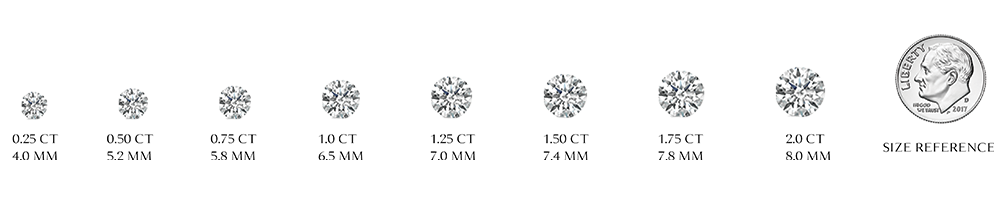
- 0.50 Carat: Measures approximately 5.0 mm across. It provides a subtle, balanced aesthetic.
- 0.75 Carat: Measures approximately 5.8 mm across.
- 1.00 Carat: Measures approximately 6.5 mm across. This remains the classic benchmark.
- 1.50 Carat: Measures approximately 7.3 mm across.
- 2.00 Carat: Measures approximately 8.1 mm to 8.2 mm across.
- 3.00 Carat: Measures approximately 9.3 mm to 9.4 mm across.
Notice how the diameter does not double when the carat weight doubles. Going from a 1.0-carat (6.5 mm) to a 2.0-carat (8.1 mm) increases diameter by roughly 25%, even though the weight has doubled. Exploring a diamond size on hand simulator helps you see these delicate millimeter shifts in real time before making a final design choice.
Understanding Diamond Carat Size on Finger Across Different Hand Sizes
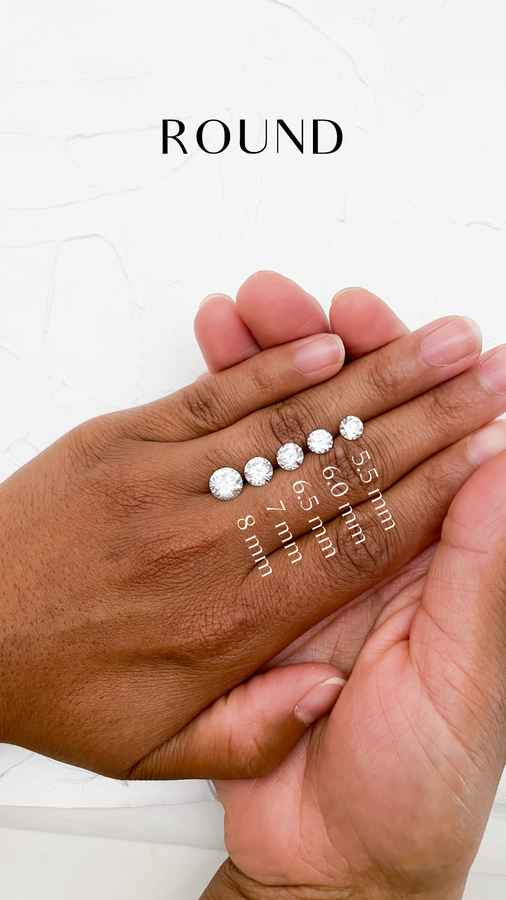
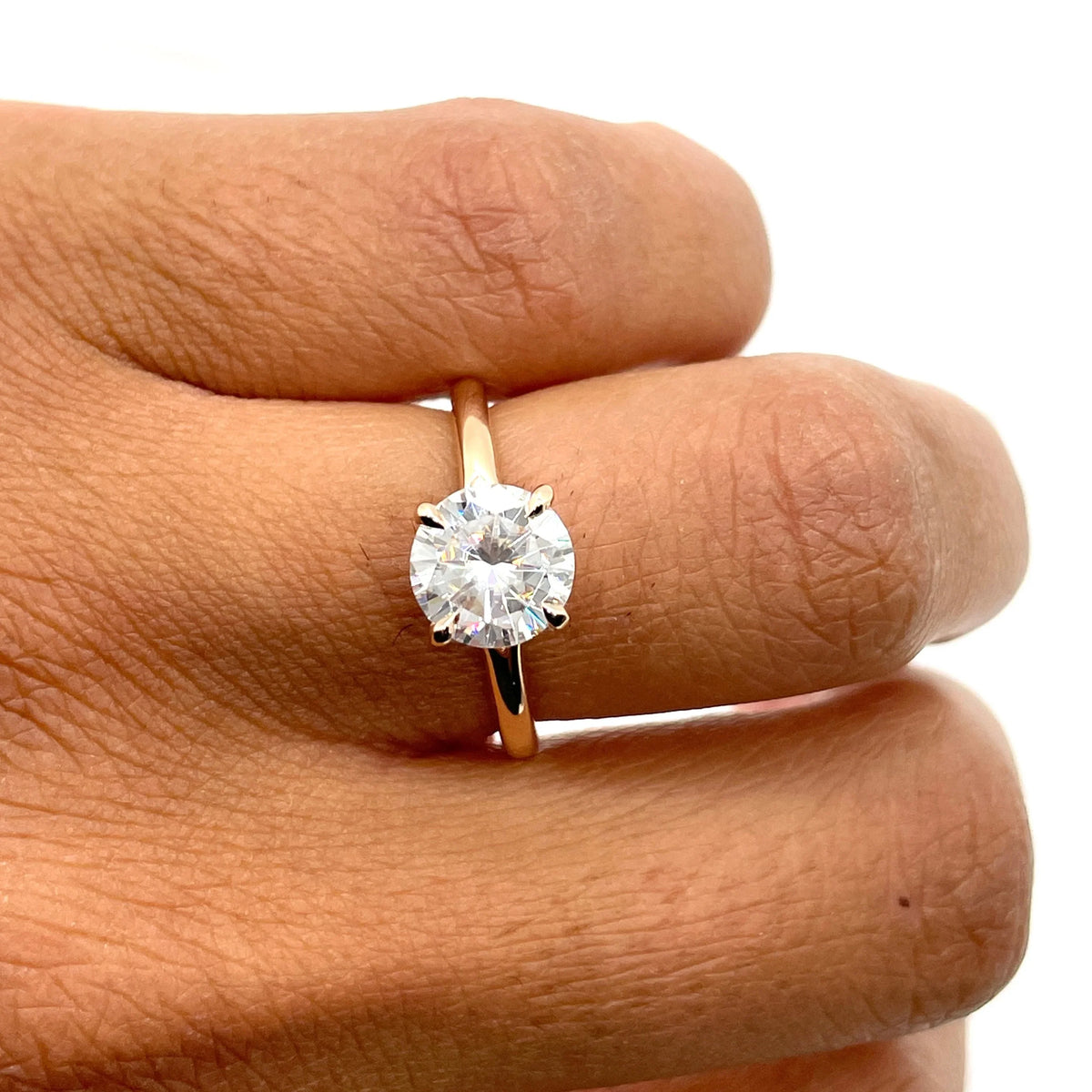
A diamond never sits in a vacuum; it sits on a living hand with distinct proportions, knuckle shapes, and skin tones. A 1-carat round brilliant on a slender size-4 hand will cover roughly 45% of the finger's width, commanding significant visual presence. Place that exact same 6.5 mm diamond on a size-9 hand, and the coverage drops closer to 30%, giving the stone a much more understated appearance.
| Carat Weight | Approx. Round Diameter (mm) | Visual Coverage on Size 4 Finger | Visual Coverage on Size 6 Finger | Visual Coverage on Size 9 Finger |
|---|---|---|---|---|
| 0.50 ct | 5.0 mm | Moderate (~34%) | Subtle (~30%) | Delicate (~23%) |
| 0.75 ct | 5.8 mm | Prominent (~40%) | Balanced (~35%) | Moderate (~27%) |
| 1.00 ct | 6.5 mm | Very Prominent (~45%) | Prominent (~39%) | Balanced (~30%) |
| 1.50 ct | 7.3 mm | Substantial (~50%) | Very Prominent (~44%) | Prominent (~34%) |
| 2.00 ct | 8.1 mm | Dominant (~56%) | Substantial (~49%) | Distinct (~38%) |
| 3.00 ct | 9.3 mm | Full Span (~64%) | Dominant (~56%) | Substantial (~43%) |
How Finger Circumference Alters Perceived Carat Size on Finger
Finger width acts as the visual frame for your centerpiece. On petite fingers (sizes 3.5 to 5), modest stones gain an optical boost, often looking half a carat larger than their certified weight.
On wider fingers (sizes 7 to 9), center stones have more negative space surrounding them on either side of the band. If you have a larger ring size, choosing a stone with a broader surface spread balances your hand's natural proportions beautifully. For those curious about how massive carat weights look, exploring a 10 carat diamond size shows how dramatic proportions scale on different hands.
Visualizing Popular Carat Size on Finger Options: 0.5 to 3 Carats
Each weight category brings its own unique balance of everyday wearability, sparkle, and profile height:
- 0.50 Carat: Delivers an understated, elegant look. It sits low to the finger, making it ideal for healthcare workers, athletes, or anyone seeking effortless daily wear without snagging.
- 1.00 Carat: The timeless standard. It strikes a balance between noticeable presence and practical comfort, looking well-proportioned across almost all ring sizes.
- 1.50 Carat: A modern favorite that offers a substantial step up in visual footprint without the steep price jumps seen at the 2.0-carat mark.
- 2.00 Carat: Delivers immediate eye-catching presence. At over 8 mm wide, it covers roughly half the width of an average finger.
- 3.00 Carat: A luxury statement piece. At this dimension, finding the right setting architecture is essential to keep the ring stable and prevent it from rolling to the side.
For a deeper dive into current trends, review our engagement rings ultimate guide 2026.
Maximizing Visual Impact: Diamond Shapes, Settings, and Smart Budget Strategies
Carat weight is only one component of a ring's overall visual footprint. By carefully pairing stone shapes with strategic settings, you can maximize the face-up spread of your ring while staying comfortably within your target budget. Review our complete engagement rings guide 2026 for custom design ideas.
Diamond Shape and Elongation: Fancy Cuts That Look Larger
Round diamonds are symmetrical, spreading their weight evenly in all directions. Fancy shapes, particularly elongated cuts, distribute carat mass across a longer surface area, creating the optical illusion of a larger diamond.
- Oval Cuts: Combine brilliant faceting with an elongated silhouette. An oval diamond generally presents up to 10% more surface area than a round brilliant of identical carat weight.
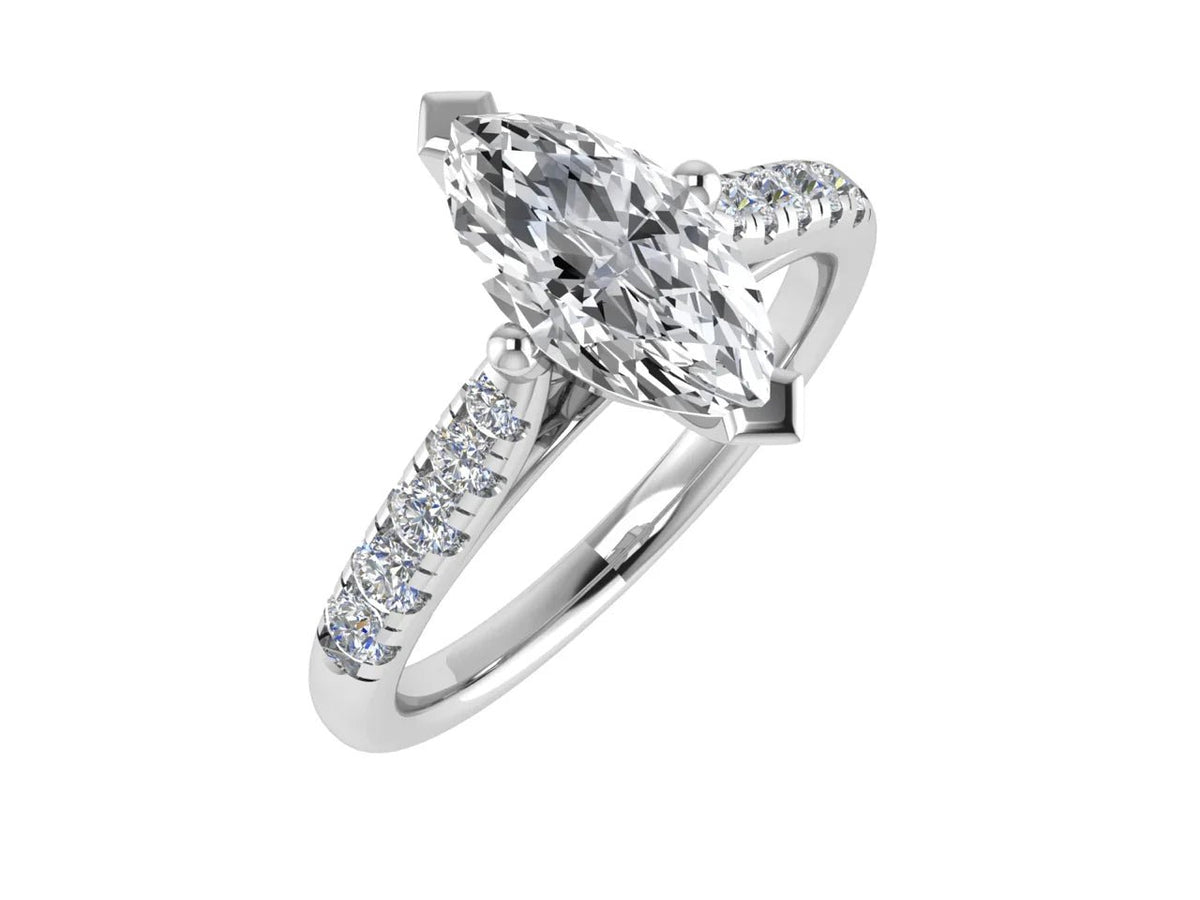
- Marquise Cuts: Feature the largest surface area per carat of any traditional cut. Its tapered points draw the eye upward and downward, making the wearer's fingers appear longer and more slender.
- Pear Cuts: Blend round and marquise elements, offering exceptional surface spread at the rounded base while elongating the hand.
- Emerald Cuts: Step-cut stones feature a large open table. For example, a 1 carat emerald cut displays an expansive, sleek architectural spread that covers significant finger width.
Setting Styles and "Buying Shy" for Budget Maximization
Smart design choices can enhance how prominent your center stone appears:
- Halo Settings: Encircling your center stone with a delicate ring of smaller accent diamonds can expand the total diameter by 1.5 to 2 mm. A 0.75-carat center stone inside a micro-pave halo easily mimics the visual presence of a 1.25-carat solitaire across a room.
- Bezel Settings: A thin metal rim framing the diamond outlines its perimeter, enhancing its perceived diameter while protecting the stone's edges.
- Slim Bands: Pairing your centerpiece with a 1.5 mm to 1.8 mm band creates contrast, making the center stone appear larger against the slim band.
- "Buying Shy": Diamond prices jump at milestone weights (1.0 ct, 1.5 ct, 2.0 ct, 3.0 ct). By purchasing a stone just under these thresholds—such as a 1.90-carat instead of a 2.00-carat, or a 2.75-carat instead of a 3.00-carat—you can save substantially with zero visible difference in diameter.
Prioritize cut quality above all else. A masterfully cut 0.90-carat diamond will reflect light edge-to-edge, appearing brighter and larger than a dull, deeply cut 1.10-carat stone that leaks light through its sides.
Understanding Diamond Material Options: Natural and Lab-Grown Diamonds
When planning your ring, selecting the right diamond allows you to balance size, brilliance, and budget.
- Natural Diamonds: Formed deep within the earth over billions of years, natural diamonds offer timeless rarity and lasting value, with hardness of 10 on the Mohs scale and classic brilliance prized for generations.
- Lab-Grown Diamonds: Chemically, physically, and optically identical to mined diamonds, lab-created diamonds provide the exact same hardness (10 on the Mohs scale) and brilliance. Because they are grown under controlled laboratory conditions, they typically cost significantly less than natural stones, allowing buyers to choose larger carat weights without compromising on cut grade.
Even across different jewelry formats like stud earrings or solitaire pendants, a 6.5 mm stone delivers the exact visual face-up size of a 1-carat round diamond, illustrating how consistent millimeter dimensions remain across all fine jewelry designs.
Frequently Asked Questions About Diamond Carat Sizes
What is the most popular carat size for an engagement ring?
The 1.0-carat to 1.5-carat round brilliant remains the most popular engagement ring center stone in the United States. However, personal lifestyle, finger size, and setting preferences are far more important than national averages when designing your piece.
Is a 0.5-carat diamond too small for an engagement ring?
Not at all. A 0.5-carat round diamond measures approximately 5.0 mm across, offering a refined, delicate look that never gets in the way of active daily routines. When mounted on a petite band or set within a halo, a half-carat center stone creates a striking, balanced aesthetic.
How does diamond cut affect how large the stone looks on a hand?
Cut quality directly determines how light travels through the stone. An "Ideal" or "Excellent" cut stone returns maximum light back to the viewer's eye, creating bright edge-to-edge reflection that makes the diamond appear larger. A poorly cut stone with excessive depth hides weight beneath the setting, appearing dark and physically smaller than its carat weight suggests.
Conclusion
Finding the perfect balance between carat weight, finger coverage, and ring setting is a personalized journey. Understanding how millimeter dimensions translate onto your specific hand allows you to create a piece that looks stunning and feels comfortable every single day.
At White Diamonds in Utah, we specialize in personalized, pressure-free custom design consultations. We provide model rings to try on in person, helping you visualize different proportions within your preferred timeline and budget. Schedule your consultation with our team to discover what diamond carat size is right for you and create an heirloom that will last a lifetime.