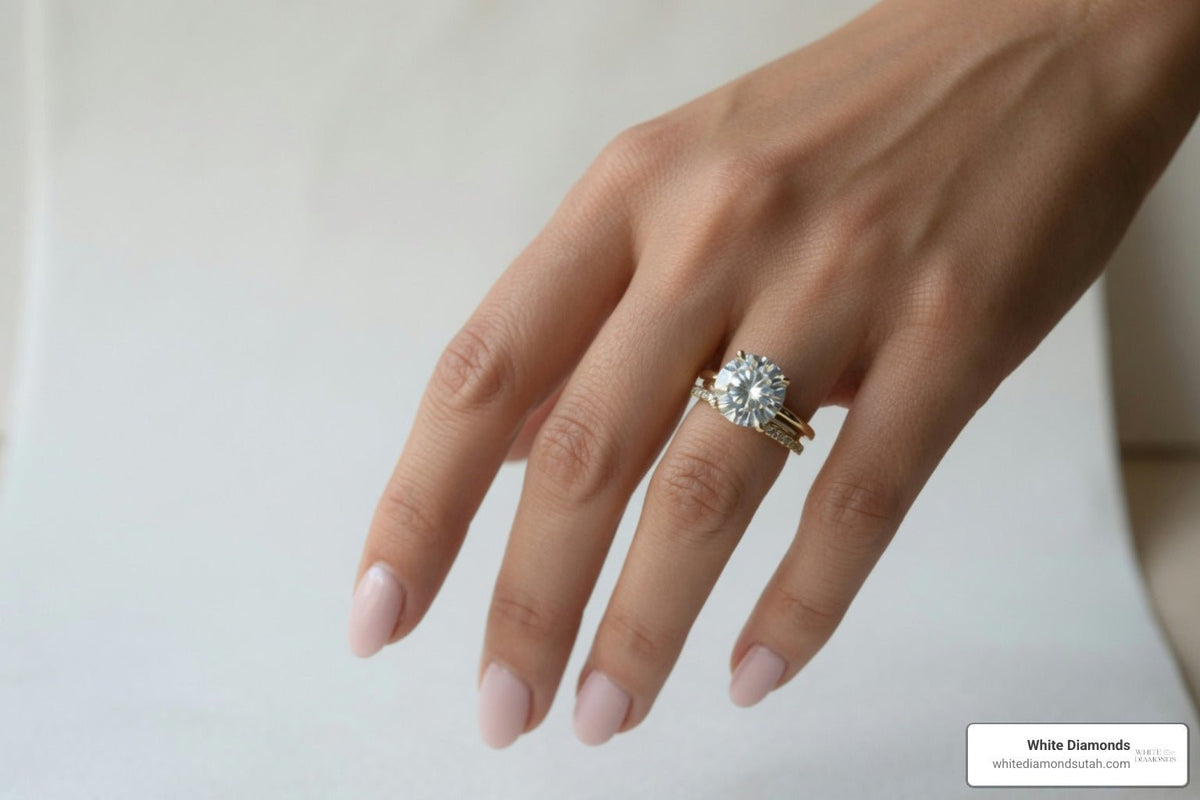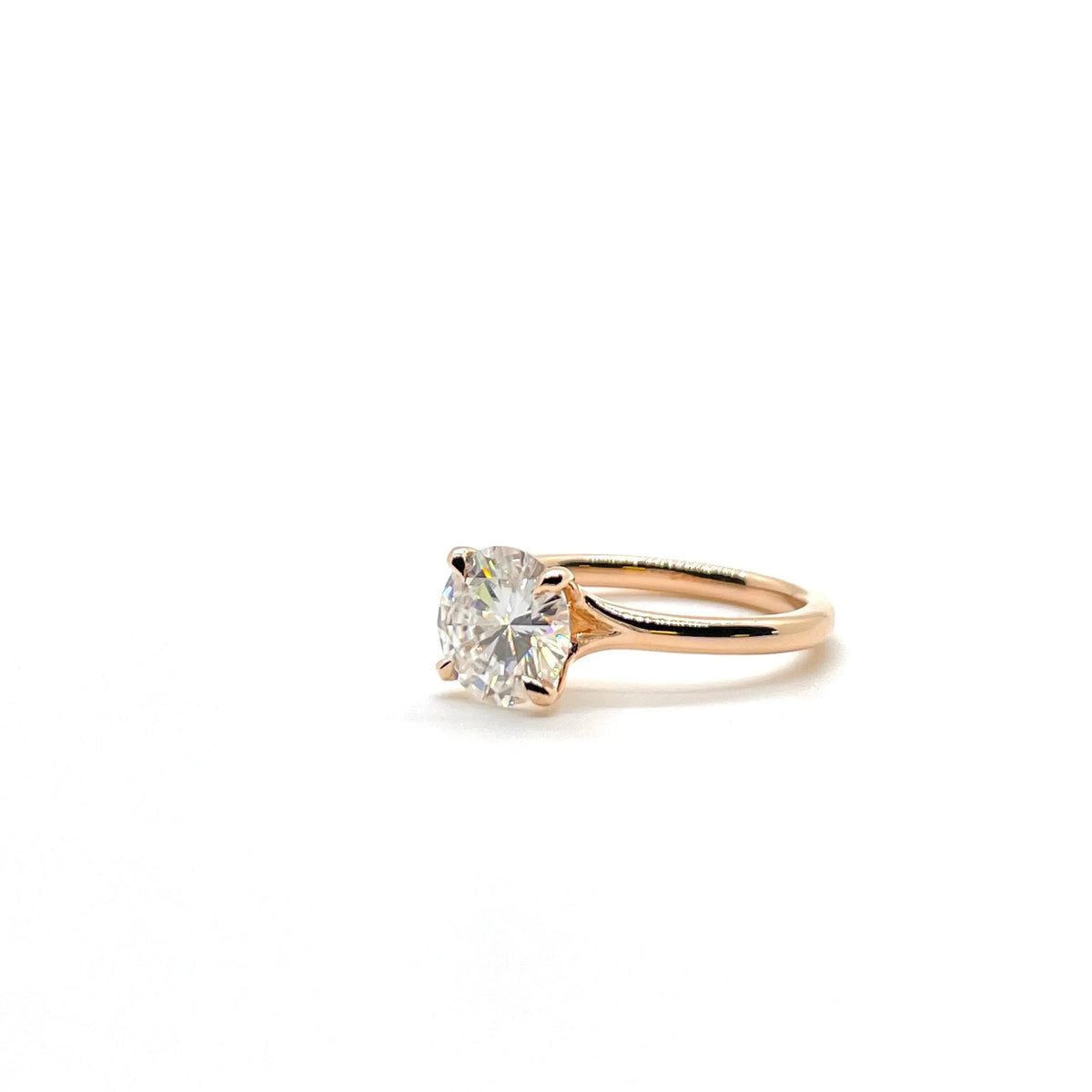
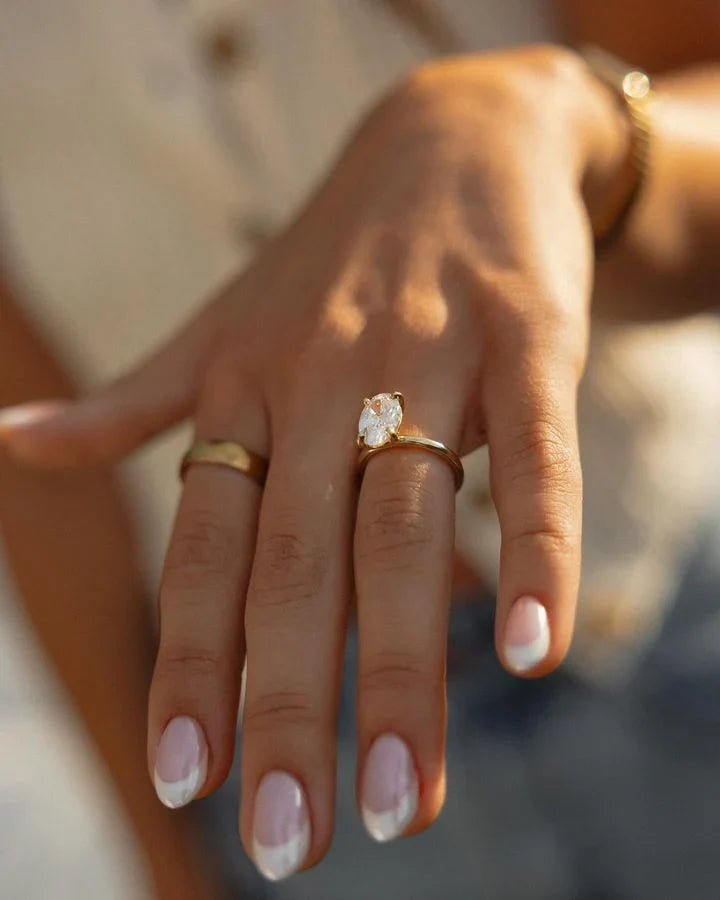
A Comprehensive Guide to Carat Size Meaning
Why Understanding Carat Size Changes Everything
Many people assume that a diamond's carat size refers to how large the stone looks to the eye, but this is a common myth.
Here is the quick truth you need to know:
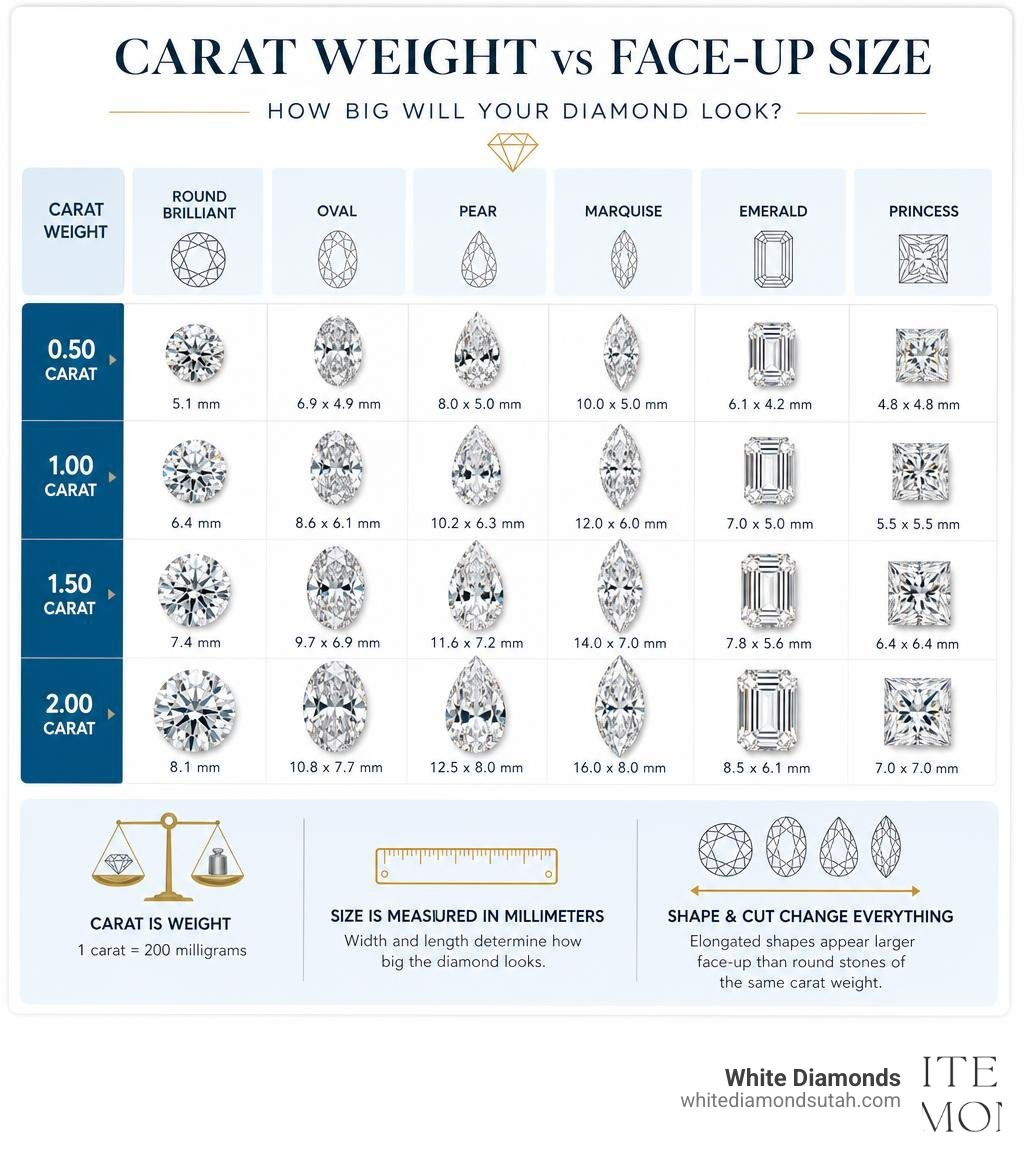
- Carat is weight, not dimensions. One carat weighs exactly 200 milligrams—about the same as a single paperclip.
- Size is measured in millimeters (mm). The physical width and length of the stone dictate how big it actually looks on your finger.
- Shape and cut change everything. A well-cut, elongated diamond (like an oval or pear) will always look larger face-up than a deep-cut stone of the exact same weight.
At White Diamonds, we are personal jewelers crafting custom rings and wedding bands, drawing on years of design experience to help you choose the perfect carat size for your budget. We also offer expert ring cleaning services to keep your custom creation shining bright for a lifetime.
Understanding Diamond Carat Weight vs. Carat Size
To master the art of buying a diamond, you must first separate weight from visual presence. When people talk about a diamond's carat size, they are usually combining two distinct concepts: how much the diamond weighs (carat weight) and how large it looks face-up (millimeter size).
Because diamonds are three-dimensional crystals, their weight is distributed across three axes: length, width, and depth. Two diamonds that weigh exactly 1.00 carat can have completely different physical dimensions. For example, a shallowly cut diamond spreads its weight wider, resulting in a larger physical footprint, while a deeply cut diamond hides its weight in its bottom half, making it look much smaller from above.
To help our clients navigate this tricky balance, we always recommend looking at the exact millimeter measurements listed on a diamond's grading certificate. If you want to explore how these measurements translate to real-life finger coverage, check out our guide on What Diamond Carat Size Is Right For You to see which visual scale matches your personal style. For a deeper look into how global standards define this weight measurement, you can also read the explanation of Diamond Carat Weight on GIA.
How Gemstone Density Affects Carat Size
To make things even more interesting, different gemstones have different densities (or specific gravities). Think of it like comparing a pound of lead to a pound of feathers—they weigh the same, but they occupy vastly different amounts of space.
- Diamond weight vs. sapphire weight: Sapphires are denser than diamonds. A 1-carat round sapphire will physically measure about 6.0mm in diameter, whereas a 1-carat round diamond measures approximately 6.4mm.
- Tanzanite vs. Diamond: Tanzanite is also denser than diamond. If you are comparing a diamond to a beautiful blue-violet 1 Carat Tanzanite, the tanzanite will have a slightly smaller millimeter footprint than a diamond of the exact same weight.
When shopping for colored gemstones, it is always best to purchase by millimeter dimensions rather than carat weight alone to ensure you get the visual presence you expect.
Carat vs. Karat: What is the Difference?
It is incredibly easy to confuse these two terms because they sound identical, but they measure completely different things:
- Carat (ct): This is the unit of mass used exclusively for measuring gemstone weight. Standardized internationally in 1907, one metric carat equals 200 milligrams. Carats are divided into 100 "points" for extreme precision (e.g., a 75-point diamond is a 0.75-carat stone).
- Karat (K): This is the 24-part scale used to measure gold purity in metal alloys. Pure gold is 24 Karats (24K). If a ring band is 14K gold, it means 14 parts are pure gold and 10 parts are other metals added for durability.
So, while you want a high carat count for your center diamond, you will want to balance your karat purity for the metal band to ensure it is strong enough for daily wear.
How Diamond Shape and Cut Quality Affect Visual Size
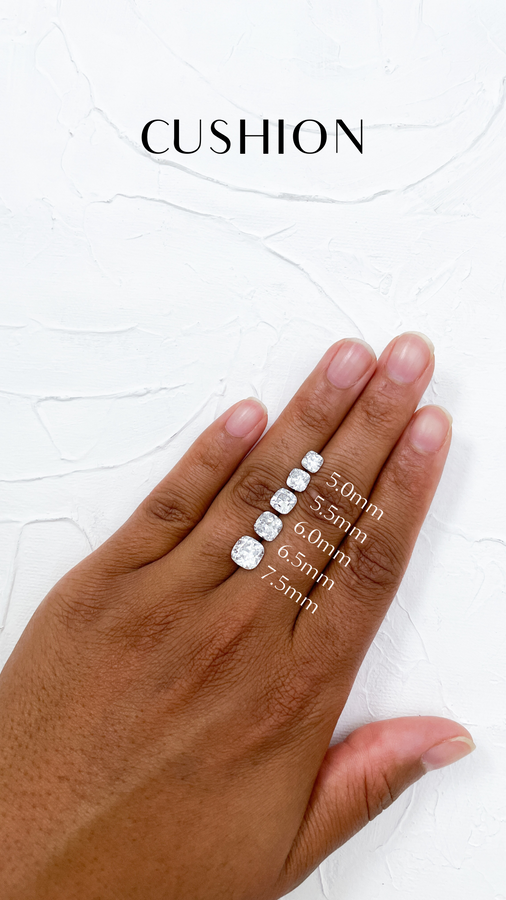
The silhouette of your diamond has a massive impact on its perceived carat size. Different shapes distribute their physical weight in different ways, meaning some cut styles inherently look much larger than others of the exact same weight.
To understand how to make the most of your budget, you need to look at how shape and cut quality work together. For a complete breakdown of how this applies to the classic one-carat threshold, read our Ultimate 1 Ct Diamond Engagement Ring Guide.
Elongated Shapes That Maximize Carat Size
If your goal is to get the largest-looking diamond possible without paying for extra carat weight, elongated fancy shapes are your best friend. Shapes like the oval cut, marquise cut, and pear shape distribute their mass horizontally across a larger face-up area.
- Oval Cut: An oval diamond can appear 10% to 15% larger than a round diamond of the same weight because of its elongated footprint.
- Marquise Cut: With its pointed ends, a marquise cut maximizes surface area better than almost any other shape, often looking up to 20% larger than a round brilliant.
- Pear Shape: The teardrop silhouette of a pear shape creates a beautiful elongating effect on the finger.
If you are open to alternative gemstones that offer incredible brilliance and visual size, you might also consider a 2 Carat Pear Moissanite Ring. For those planning a proposal in the near future, our 3 Carat Moissanite Pear Ring Guide 2026 offers fantastic insights into maximizing hand presence on a smart budget.
How Cut Quality Prevents Hidden Weight
The quality of a diamond's cut determines its sparkle, but it also dictates its visual size. When a diamond is cut poorly, the cutter is often trying to preserve weight from the rough stone rather than prioritizing beauty. This results in "hidden weight."
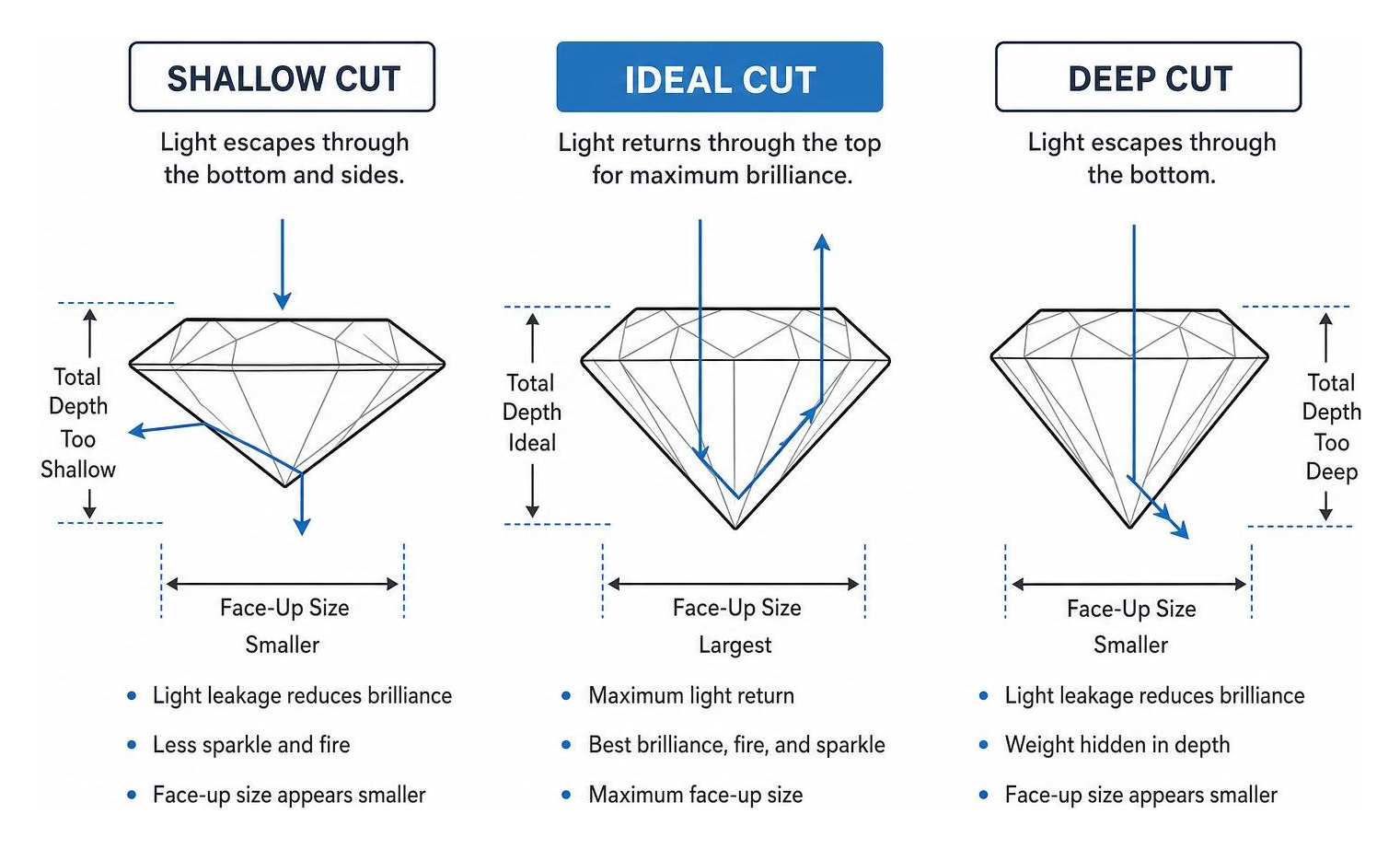
- Deep Cuts (Hidden Weight): If a diamond has an excessively deep pavilion (the bottom portion), a significant portion of its carat weight is hidden below the girdle. Once set in a ring, this weight is completely invisible, leaving you with a 1.20-carat stone that has the physical face-up millimeter size of a 1.00-carat stone.
- Thick Girdles: An extra-thick girdle (the outer edge of the diamond) adds dead weight to the stone without adding any visual diameter.
- GIA Excellent / Ideal Cuts: A diamond with excellent cut proportions distributes its weight perfectly. It ensures that the face-up millimeter diameter is maximized while maintaining the exact angles needed for breathtaking light performance.
Always prioritize an Excellent or Ideal cut grade. A well-cut 0.90-carat diamond will look larger, brighter, and more beautiful than a poorly cut 1.10-carat diamond every single time.
Average Diamond Carat for Engagement Rings and Pricing Realities
When planning an engagement ring purchase, it is helpful to know where your budget stands relative to national averages and pricing curves.
In the United States, the average center diamond for an engagement ring typically falls between 1.00 and 1.20 carats, with the total weight of the ring often reaching around 1.50 carats. Across the pond in the United Kingdom, the average engagement ring center stone is closer to 0.60 carats.
To help you visualize the pricing landscape in July 2026, here is a realistic comparison of average costs for round brilliant diamonds of different carat weights:
| Carat Weight | Average Cost (Natural Diamond) | Average Cost (Lab-Grown Diamond) |
|---|---|---|
| 1.00 Carat | $7,500 | $3,500 |
| 1.50 Carat | $13,000 | $5,500 |
| 2.00 Carat | $20,500 | $7,500 |
| 3.00 Carat | $36,500 | $13,000 |
Note: These prices represent high-quality, well-cut, eye-clean stones in standard solitaire settings.
The Impact of 'Magic Sizes' on Diamond Cost
Diamond pricing is non-linear. Because larger rough diamond crystals are incredibly rare to find in nature, the price-per-carat increases exponentially as the weight goes up. This pricing structure is heavily influenced by "magic sizes."
Magic sizes are popular milestone weights, such as 0.50ct, 0.75ct, 1.00ct, 1.50ct, and 2.00ct. Because there is massive consumer demand for these specific numbers, diamond prices jump dramatically the moment a stone crosses one of these thresholds.
- The Under-the-Size Value Play: You can save 15% to 25% on a diamond by buying just below a magic size. For example, a 0.90-carat to 0.95-carat diamond will look virtually identical to a 1.00-carat diamond on a hand—differing by only about 0.1mm to 0.2mm in diameter—but it will cost significantly less.
If you want to see how stunning these classic sizes look in real-world settings, browse our curated collection to Put A Little Love On Her Finger With These 1 Carat Rings.
Natural vs. Lab-Grown Diamond Pricing in 2026
In July 2026, lab-grown diamonds continue to be an incredibly popular option for couples looking to maximize their budget. Because lab-grown diamonds share the exact same physical, chemical, and optical properties as natural diamonds, they weigh the same and look identical to the naked eye.
Opting for a lab-grown stone allows you to allocate more of your budget toward a larger carat size, a higher cut quality, or a more intricate custom setting. For instance, while a 2-carat natural diamond ring averages around $20,500, a 2-carat lab-grown diamond ring of equal visual quality averages around $7,500.
If you are looking to accessorize beyond the ring, this budget flexibility also makes a massive difference for classic jewelry pieces, as explained in our Complete Guide To 1 Carat Solitaire Earrings Price and our showcase of classic 1 Carat Diamond Solitaire Earrings.
Smart Ways to Make Your Diamond Look Bigger
You do not need to buy a heavier stone to achieve a commanding presence on the hand. There are several design strategies and optical illusions that we use during our custom design process to make a center stone pop.
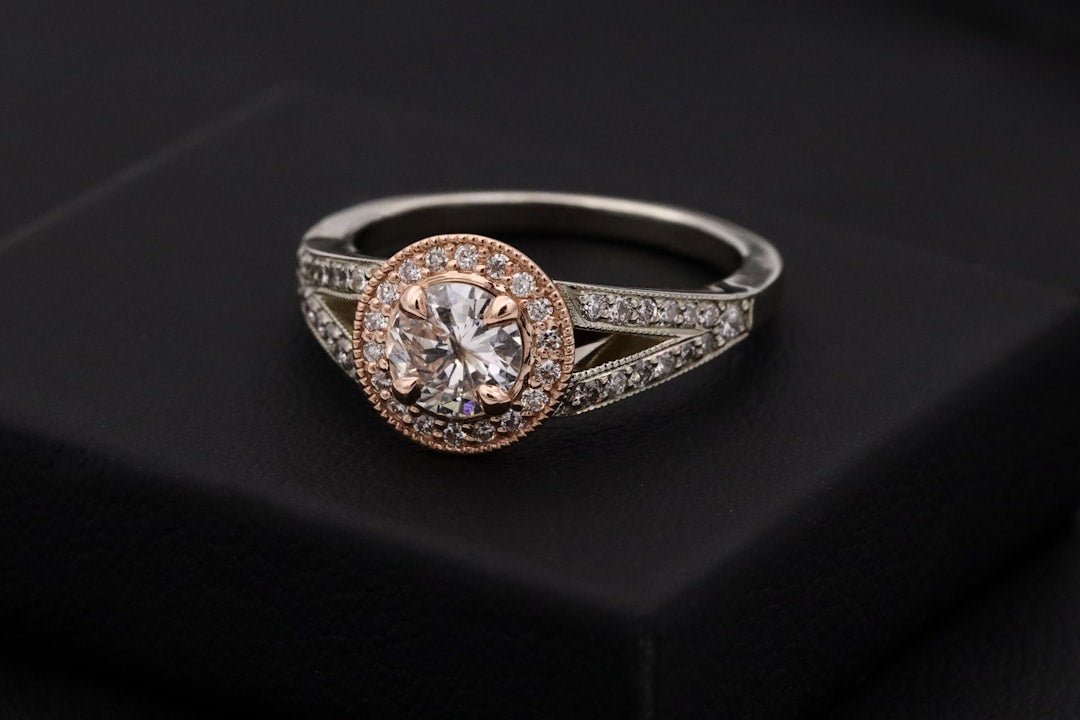
- Choose a Halo Setting: Surrounding your center stone with a seamless border of smaller pavé diamonds can make a 1.00-carat diamond look like a 1.50-carat or even a 2.00-carat stone from a distance.
- Opt for a Thin, Delicate Band: A band that is 1.5mm to 1.8mm wide creates a beautiful contrast, making the center stone appear much larger by comparison than it would on a thick 3.0mm band.
- Use White Metal Prongs: Setting a colorless diamond in platinum or white gold prongs prevents yellow metal reflections from bleeding into the stone, keeping its edges crisp and visually expansive.
- Keep Your Diamond Sparkling Clean: A dirty diamond loses its light performance and looks visually flat. Regular, professional cleanings ensure your diamond reflects maximum light, making it stand out.
To see these design principles in action with beautiful emerald cuts, take a look at our guide on the 1 Carat Emerald Ring With Diamonds.
How Finger Size Influences Visual Scale
The hand wearing the ring acts as a natural frame for the diamond. Because of this, finger size plays a massive role in how large a diamond appears.
- Smaller Fingers (Sizes 3 to 5): A 1.00-carat diamond will provide excellent finger coverage, looking beautifully substantial and prominent.
- Larger Fingers (Sizes 7 to 9): The same 1.00-carat diamond may look more modest. To achieve the same visual proportion on a larger finger, couples often opt for elongated shapes or add side stones to widen the ring's footprint.
To help you visualize how different weights look on different hand shapes, we invite you to read our detailed reference on What Diamond Carat Size Is Right For You 1.
Frequently Asked Questions about Diamond Carats
What is the average diamond weight for an engagement ring?
In the United States, the average center diamond weight for an engagement ring typically ranges from 1.00 to 1.20 carats. However, when you factor in side stones and accent diamonds, the average total carat weight (TCW) is closer to 1.50 carats. These preferences can vary by region and demographic, with younger couples increasingly opting for larger lab-grown center stones.
How much does a 1-carat, 2-carat, or 3-carat diamond ring cost?
The cost is heavily dependent on whether the diamond is natural or lab-grown, as well as its cut, color, and clarity. As of July 2026, a high-quality 1-carat natural diamond ring averages around $7,500, while a lab-grown equivalent is around $3,500. A 2-carat natural ring averages $20,500 (lab-grown is $7,500), and a 3-carat natural ring averages $36,500 (lab-grown is $13,000).
What is the best carat weight for my budget?
The best carat weight is the one that allows you to buy a well-cut, eye-clean stone without stretching your finances. We always recommend prioritizing Cut quality first, dropping down slightly in Color (to G or H) and Clarity (to VS2 or SI1) to free up budget for a larger carat weight. This ensures your diamond is incredibly brilliant and free of visible flaws while maximizing its physical size.
Conclusion
Choosing the right carat size is a highly personal decision that balances physical dimensions, shape, cut quality, and financial comfort. A diamond's beauty comes from how it handles light, not just what it weighs on a scale.
At White Diamonds in Ogden, Utah, we specialize in a personalized, pressure-free custom jewelry design process. We love sitting down with our clients for custom consultations, using physical model rings to help you visualize exactly how different shapes and carat weights will look on your hand. Whether you are looking to design a completely custom engagement ring from scratch or want to explore our loose diamond inventory, we are here to bring your vision to life within your timeline and budget.
If you are ready to take the next step or want to explore our other specialized design guides, check out our comprehensive overview on What Diamond Carat Size Is Right For You.
We invite you to visit our physical showroom in Ogden, Utah, to schedule your custom consultation today. We look forward to crafting something beautiful with you!