Put a Little Love on Her Finger with These 1 Carat Rings
The Most Romantic Ring Choice: What to Know About a 1 Carat Heart Shaped Diamond Ring
A 1 carat heart shaped diamond ring is one of the most expressive engagement ring choices you can make — and it's easier to find a great one than you might think.
Quick answers:
| Question | Answer |
|---|---|
| Typical price range | $1,500 – $21,000 (median ~$3,400) |
| Average price (April 2026) | ~$2,700 (down 12.56% recently) |
| Typical dimensions | 6.9mm long × 6mm wide × 4.1mm deep |
| Cheaper than round cut? | Yes — up to 25% less expensive |
| Lab-grown option available? | Yes — starting around $988 |
| Best certifications | GIA or IGI |
Heart-shaped diamonds are a modified brilliant cut — meaning they're designed with many small facets to reflect as much light as possible. That gives them serious sparkle, wrapped in a silhouette that's instantly recognizable as a symbol of love.
They're not the most common engagement ring shape, and that's exactly why many people love them. If your partner has a bold, romantic personality, this ring style speaks to that.
At White Diamonds, we're a custom jeweler specializing in crafting personalized rings and wedding bands — including the 1 carat heart shaped diamond ring — with hands-on guidance and zero pressure. We'll walk you through every option at your own pace.
Why Choose a Heart-Shaped Diamond for Your Engagement?
When you choose a 1 carat heart shaped diamond ring, you aren't just picking a piece of jewelry; you are choosing a universal symbol of devotion and passion. While round or oval cuts are timeless, the heart shape is unapologetically romantic. It’s a "fancy cut" that stands out in a crowd, making it perfect for someone who wears their heart on their sleeve (and soon, their finger).
The Romantic Aesthetic
The heart shape is a variation of the brilliant cut, meaning it’s engineered for maximum "fire" and "brilliance." Because it has a multitude of facets, it catches the light beautifully from every angle. It represents an unbreakable union and eternal love, often making it the top choice for Valentine's Day proposals or significant anniversaries.
Pros and Cons to Consider
Like any diamond shape, there are trade-offs to consider. On the "pro" side, heart-shaped diamonds can be up to 25% less expensive than round-cut diamonds of the same carat weight and quality. This is because they allow the cutter to retain more of the original rough diamond.
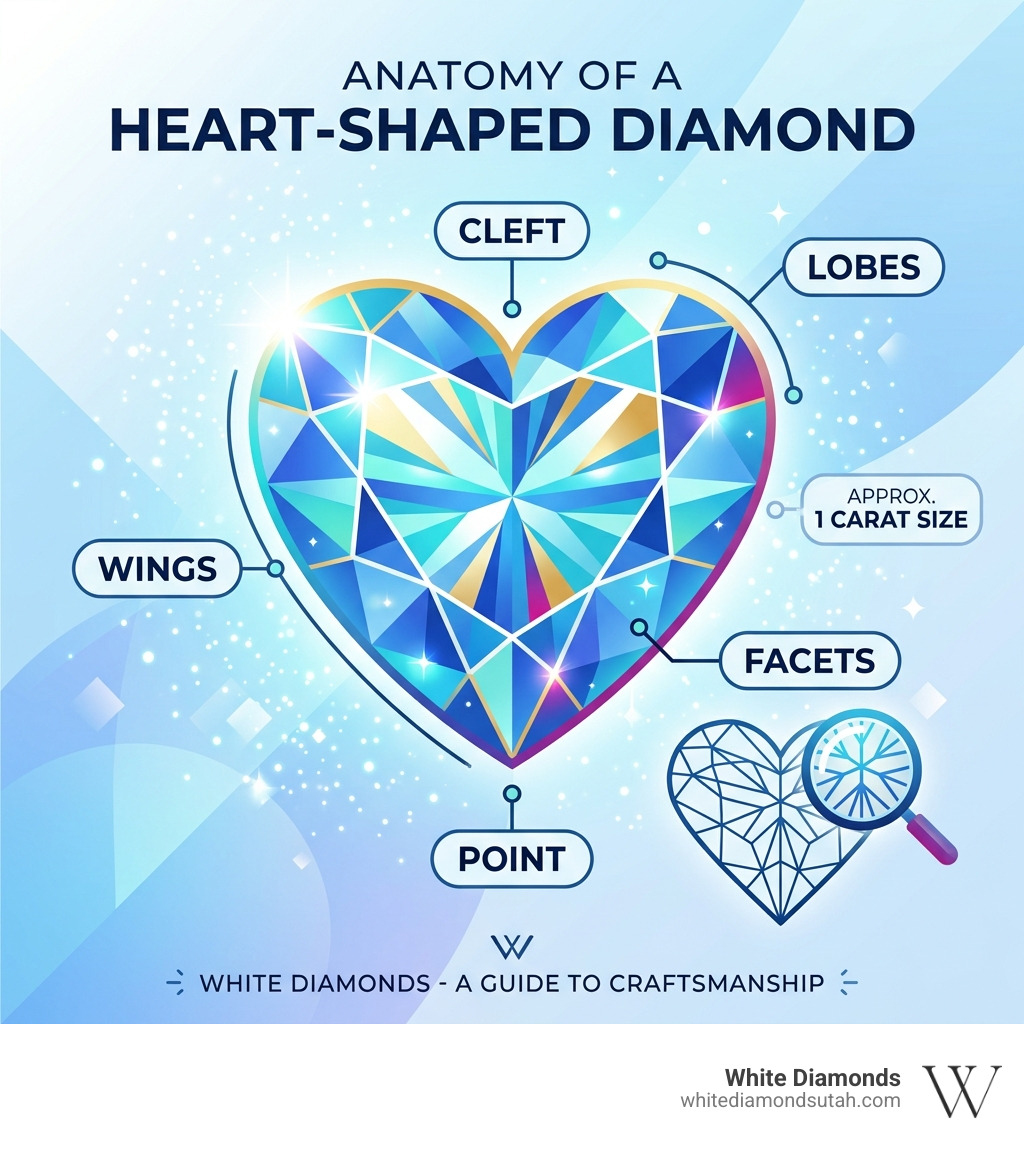
On the "con" side, heart shapes are technically the hardest to cut. They require perfect symmetry to look right. If one "lobe" is larger than the other, or if the "cleft" (the dip at the top) isn't deep enough, the diamond can look like a lumpy pear or a triangle rather than a heart. Additionally, the pointed tip is a vulnerable spot that can chip if not protected by the right setting.
If you’re wondering how this unique shape looks in daily life, you might ask, How Do You Wear A Heart Shaped Diamond Ring? Traditionally, the point of the heart faces toward your fingernails, pointing "out" to the world, though some prefer to wear it pointing toward their own heart.
Understanding the 4Cs and Proportions for Heart Cuts
Buying a 1 carat heart shaped diamond ring requires a slightly different eye than buying a standard round diamond. You need to pay close attention to the "4Cs" (Cut, Color, Clarity, and Carat) but with a specific focus on how they interact with this unique silhouette.
The Importance of Symmetry
In a heart shape, symmetry is everything. We recommend looking for diamonds with "Excellent" or "Very Good" symmetry grades. You want the two halves of the heart to be mirror images of each other. If the lobes are uneven, the diamond will look "off" to the naked eye, regardless of how high the clarity grade is.
Certification Standards
Always insist on a diamond certified by the GIA (Gemological Institute of America) or IGI (International Gemological Institute). These reports provide an unbiased assessment of the stone’s quality. At our Ogden, UT studio, we always review these certificates with you to ensure you know exactly what you’re buying.
Color and Clarity
Heart-shaped diamonds tend to reveal their color more than other cuts, especially in the "wings" (the rounded sides) and the "point." If you are sensitive to yellow tints, we suggest staying in the D-H color range. For clarity, heart shapes are fairly good at hiding small inclusions because of their brilliant faceting pattern, but you should still aim for an "Eye Clean" stone (usually VS2 or SI1).
To help you decide if a full carat is the right move for your hand shape and budget, check out our guide on What Diamond Carat Size Is Right For You.
What are the ideal dimensions for a 1 carat heart shaped diamond ring?
Size is often measured in carats (weight), but the dimensions (millimeters) tell you how large the diamond will actually look on your finger. For a 1-carat stone, you want a balance between length and width so the heart doesn't look too "skinny" or too "fat."
The median dimensions for a well-proportioned 1 carat heart diamond are:
- Length: 6.9mm
- Width: 6.0mm
- Depth: 4.1mm
- Length-to-Width (L/W) Ratio: 1.20
| Proportion Metric | Ideal Range | What to Avoid |
|---|---|---|
| L/W Ratio | 1.00 – 1.10 | Over 1.20 (looks too long) |
| Depth % | 56% – 66% | Under 54% (leaks light) |
| Table % | 53% – 63% | Over 70% (looks flat) |
| Cleft | Distinct and sharp | Shallow or non-existent |
A ratio of 1.00 creates a "chubby" heart, which is very popular for solitaire rings. As the ratio increases, the heart becomes more elongated. For more on how these dimensions affect the visual impact, see What Diamond Carat Size Is Right For You 1.
Comparing Costs: Natural vs. Lab-Grown 1 Carat Heart Shaped Diamond Ring
As of April 2026, the market for heart-shaped diamonds is quite favorable for buyers. Prices for 1 carat heart diamonds have seen a notable 12.56% drop in the last month alone, making this an excellent time to invest in a romantic piece.
Natural Diamonds
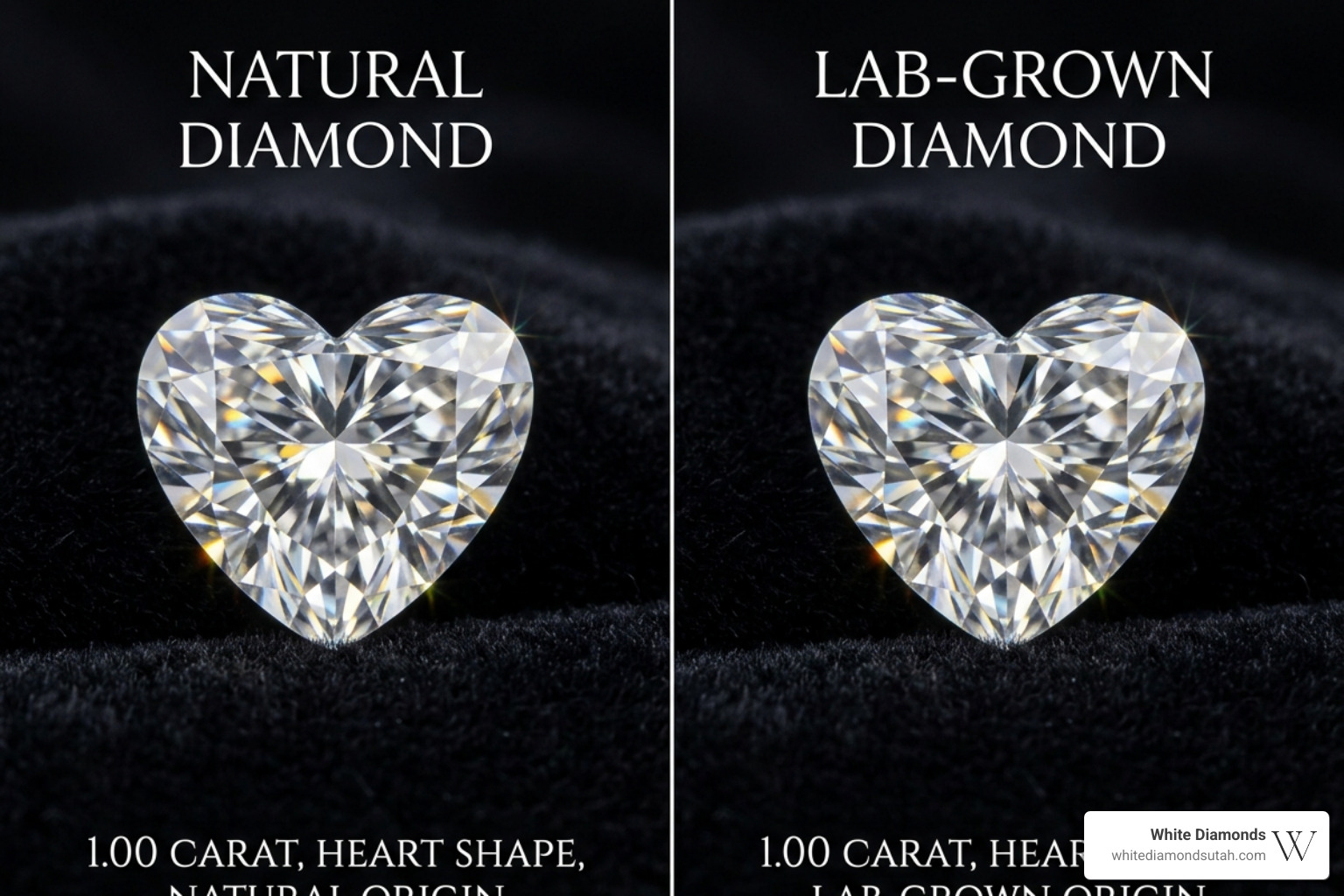
Natural diamonds are formed over billions of years deep within the earth. They carry a sense of rarity and history that many find irreplaceable. A natural 1 carat heart shaped diamond ring typically ranges from $1,500 to $21,000. Why such a huge range? A "D Color, Flawless" stone will be at the top of that bracket, while a "J Color, SI2" stone will be at the bottom. The median price for a high-quality natural stone currently sits around $3,400.
Lab-Grown Diamonds
If you want to maximize your budget, lab-grown diamonds are a game-changer. These are chemically, physically, and optically identical to mined diamonds — they just grow in a lab over several weeks instead of in the earth over eons. Lab-grown heart-shaped rings can start as low as $988, allowing you to get a much higher color and clarity grade for a fraction of the price of a natural stone.
How much does a 1 carat heart shaped diamond ring cost?
On average, you can expect to spend about $2,700 for a beautiful, well-cut 1-carat heart diamond. This is significantly lower than the $4,000+ you might spend on a comparable round-cut diamond.
Several factors influence this final price:
- The 4Cs: Higher grades in color and clarity always command a premium.
- Fluorescence: Interestingly, about 1 in 3 diamonds has fluorescence (glows under UV light). In near-colorless diamonds (G-J), a "medium blue" fluorescence can actually make the diamond look whiter and save you money!
- Market Trends: As of April 2026, prices have stabilized after a recent dip, offering great value for fancy-cut stones.
Best Settings and Metals for Your Heart-Shaped Stone
The setting you choose doesn't just hold the diamond; it protects it and defines the ring's overall style. Because the heart shape has a very specific silhouette, some settings work better than others.
Popular Setting Styles
- Solitaire: This is the most classic choice. It lets the unique heart shape take center stage without any distractions.
- Halo: Surrounding the center heart with a "halo" of smaller round diamonds can make the 1-carat center stone look much larger — sometimes appearing closer to 1.5 or 2 carats visually.
- Three-Stone: Pairing a heart with two side stones (like smaller pears or rounds) can symbolize your past, present, and future together.
Metal Choices
- Platinum: The gold standard for durability. Its naturally white sheen won't fade, and it's heavy enough to feel substantial on the hand.
- 14k or 18k White Gold: Offers a similar look to platinum but at a more accessible price point. It does require occasional "rhodium plating" to keep its bright white finish.
- Rose Gold: This is a fan favorite for heart rings. The pinkish hue of the metal enhances the romantic theme of the heart shape.
- Yellow Gold: Provides a dramatic, vintage-inspired contrast that makes a colorless diamond really "pop."
Protecting the Point
One of the most important technical aspects of a 1 carat heart shaped diamond ring is the "V-prong." Because the tip of the heart is thin, it is prone to chipping. A V-shaped prong wraps around that point to shield it from accidental bumps. Alternatively, a bezel setting (where a metal rim surrounds the entire diamond) provides the ultimate protection.
Expert Tips for Buying and Caring for Your Ring
We want your ring to look as beautiful twenty years from now as it does the day you propose. Here are a few "insider" tips for selecting and maintaining your diamond:
- Watch for the "Bow-Tie" Effect: Many fancy cuts, including hearts, can have a dark shadow across the center that looks like a bow-tie. This is caused by light escaping through the bottom of the stone. A well-cut diamond will minimize this, so always view the stone in person or via 360-degree HD video.
- Look at "Visual Carat": Some diamonds are cut "shallow," meaning they have a larger surface area and look bigger from the top than their weight suggests. This is a great way to get a "big" look on a budget, but be careful — if it's too shallow, it will lose its sparkle.
- Regular Cleaning: The many facets of a heart cut can easily trap oils and lotion, which dulls the sparkle. A simple routine of warm water, mild dish soap, and a soft toothbrush once a week will keep it fiery.
- Professional Inspections: We recommend bringing your ring back to our Utah shop every six months. We’ll check the prongs to make sure they haven't loosened, ensuring your diamond stays securely in place.
Frequently Asked Questions about Heart-Shaped Rings
Are heart-shaped diamonds more expensive than round cuts?
Actually, no! Heart-shaped diamonds are generally 15% to 25% less expensive than round-cut diamonds of the same weight. Round diamonds are the most expensive because they result in the most "rough" diamond being wasted during the cutting process.
What is the best length-to-width ratio for a heart diamond?
For a classic, balanced look, aim for a ratio between 1.00 and 1.10. If you like a more elongated, slender heart, you can go up to 1.20. Anything beyond that might start to lose the distinct "heart" look and resemble a pear shape.
How do I protect the pointed tip of a heart-shaped diamond?
The best way is to ensure your jeweler uses a V-prong at the point. This metal "cap" protects the most vulnerable part of the stone from hitting hard surfaces. Bezel settings are also an excellent choice for those with active lifestyles.
Conclusion
A 1 carat heart shaped diamond ring is a bold, beautiful statement of love that defies the ordinary. Whether you choose a sparkling natural diamond or an ethical lab-grown alternative, this shape offers a unique blend of brilliance and deep symbolism.
At White Diamonds, we believe the process of buying an engagement ring should be as joyful as the proposal itself. Located in Ogden, UT, we provide a pressure-free environment where you can explore custom designs and find the perfect stone that fits your budget and timeline. We specialize in personalized consultations, using model rings to help you visualize exactly how your custom heart-shaped ring will look.
Ready to put a little love on her finger? Come see us in Utah or reach out to start your custom journey today.