Is a 1 Carat Tanzanite Right for You? A Size Guide
Is a 1 Carat Tanzanite the Right Size for Your Ring?
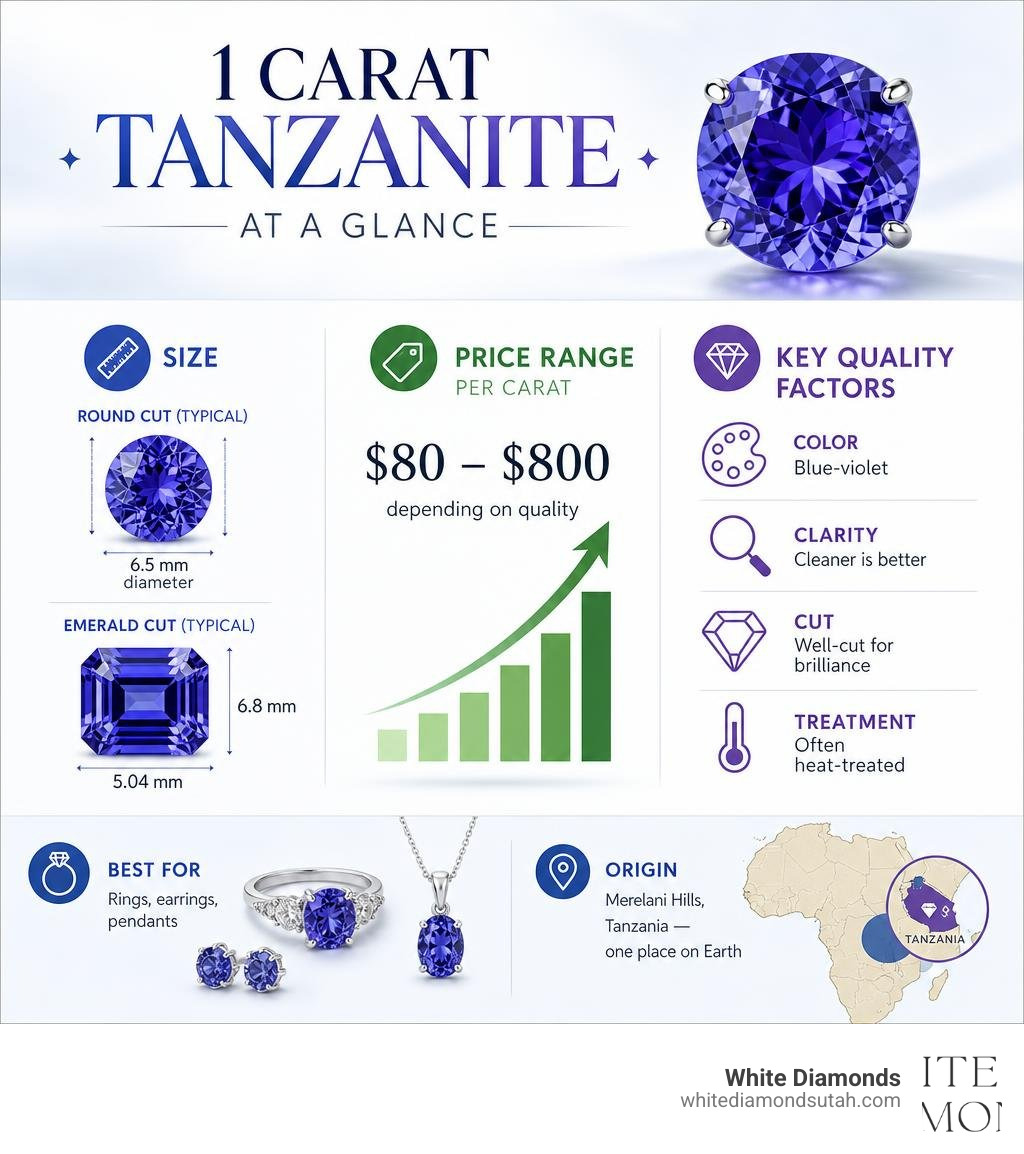
A 1 carat tanzanite sits in a sweet spot for jewelry — big enough to make a statement, small enough to stay affordable. Here's a quick overview of what to expect:
| Feature | 1 Carat Tanzanite at a Glance |
|---|---|
| Typical size (round) | 6.5 mm diameter |
| Typical size (emerald cut) | 6.8 x 5.04 mm |
| Price range per carat | $80 – $800 depending on quality |
| Color | Blue-violet, often heat-treated |
| Best for | Rings, earrings, pendants |
| Origin | Merelani Hills, Tanzania — one place on Earth |
So you're looking at tanzanite for an engagement ring or custom jewelry piece — and you're not sure if 1 carat is the right size.
That's a fair question. Carat weight sounds simple, but it affects how a stone looks on the finger, how much it costs, and whether it fits your design vision.
Here's the honest answer: for most people, 1 carat tanzanite hits the ideal balance. It's visually impactful, sits well in most ring settings, and costs significantly less than a comparable sapphire or diamond. Prices typically range from $80 to $800 per carat — a wide range that comes down to color, clarity, and cut quality.
But whether 1 carat is right for you depends on a few things: your ring style, your budget, and how the stone actually looks in person.
At White Diamonds, we specialize in crafting custom rings and wedding bands, and we've helped many clients find the perfect 1 carat tanzanite for their unique designs. This guide will walk you through everything you need to know before you decide.
What is a 1 Carat Tanzanite and Why is it So Popular?
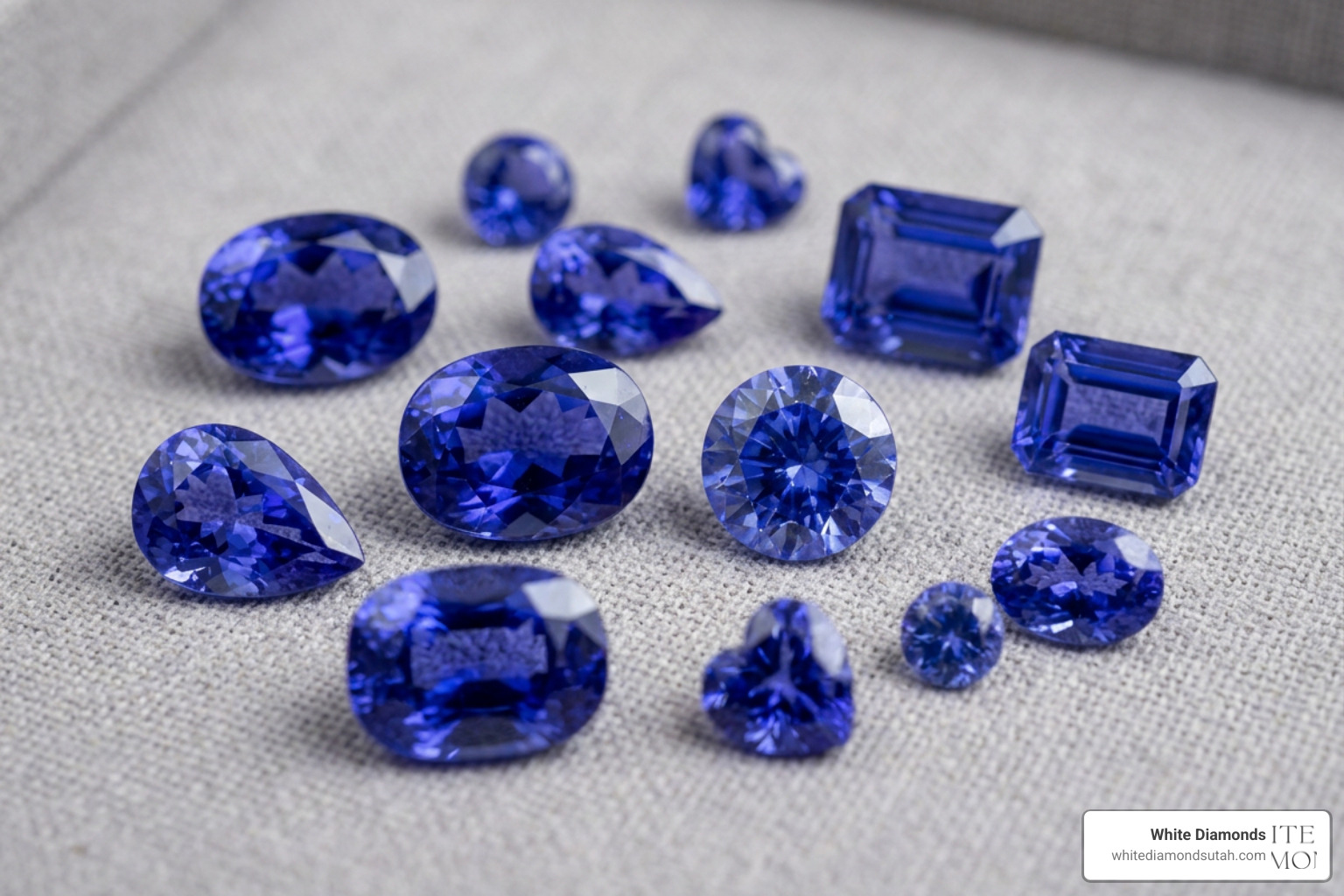
Tanzanite is a relatively new newcomer to the gem world, but it has made an absolute splash. Discovered in 1967 near the foothills of Mount Kilimanjaro, this stunning blue-violet gem belongs to the zoisite mineral family.
What makes it truly extraordinary is its single-source origin. Unlike diamonds or sapphires, which are mined in dozens of countries across multiple continents, tanzanite is found in only one place on Earth: a tiny, 4-kilometer strip of land in the Merelani Hills of Tanzania. This extreme geographical rarity has earned it the reputation of a "one-generation" gemstone.
As the official December birthstone, tanzanite is celebrated for its rich, velvety hues that shift from deep royal blue to vibrant violet depending on how the light hits it. But why is the 1 carat tanzanite size so incredibly popular?
First, it offers spectacular visual presence. In the gemstone world, a 1 carat weight provides a face-up surface area that is easily noticed on a hand or neck without looking overly ostentatious. Second, because tanzanite is less dense than diamonds, a 1 carat tanzanite actually looks slightly larger face-up than a 1 carat diamond!
Finally, it is a highly practical choice for custom design. This size class fits perfectly into standard jewelry mountings while keeping your budget intact. To understand what makes a high-quality stone, you can read up on the GIA Tanzanite Quality Factors to see how color saturation and clarity impact overall beauty.
Visualizing a Round 1 Carat Tanzanite
If you are leaning toward a classic, brilliant look, the round cut is an exceptional choice. A standard round brilliant 1 carat tanzanite measures approximately 6.5 mm x 6.5 mm in diameter.
To put that in perspective, a 6.5 mm stone is roughly the same width as a standard pencil eraser. On an average-sized ring finger, a round 1 carat stone provides beautiful coverage, capturing light from all angles to highlight the gem's natural brilliance. Because round cuts are engineered to maximize sparkle, they do a fantastic job of blending the blue and violet flashes that make tanzanite so famous. You can explore the exact physical dimensions and face-up area of this shape using the 1 Carat Tanzanite (Round, Blue, 6.5×6.5 mm) - Gem Size Details tool.
Visualizing an Emerald Cut 1 Carat Tanzanite
For those who prefer a vintage, sophisticated aesthetic, the emerald cut is a showstopper. An emerald cut 1 carat tanzanite typically measures around 6.8 mm x 5.04 mm.
Unlike the round brilliant, which relies on tiny facets to scatter light, the emerald cut features long, parallel "step-cut" facets. This style acts like a hall of mirrors, emphasizing the stone's clarity and deep, liquid-like color. Because of its elongated rectangular shape, an emerald cut can make the wearer’s finger look longer and more slender. If you want to see how this rectangular footprint looks on a hand, check out the 1 Carat Tanzanite (Emerald, Blue, 6.8×5.04 mm) - Gem Size Details resource.
Tanzanite Price Factors: Color, Clarity, Cut, and Origin

When shopping for a 1 carat tanzanite, you will quickly notice a massive price spread. A single stone can cost anywhere from $80 to over $800. Why such a huge difference for the exact same weight? It all comes down to the 4Cs: Color, Clarity, Cut, and Carat Weight.
- Color (The King of Factors): Tanzanite is trichroic, meaning it naturally displays three colors: blue, violet, and burgundy-red. Almost all tanzanite on the market undergoes gentle heat treatment to eliminate the brownish-red tones, leaving behind a vivid blue-violet. The deeper and more saturated the color, the higher the price. Pale lavender or light blue stones are highly affordable, while intense, royal "AAA+" velvet-blue gems command the highest premiums.
- Clarity: Unlike emeralds, which are notoriously included, high-quality tanzanite is expected to be "eye-clean" (meaning no visible flaws to the naked eye). Any visible inclusions will significantly drop the stone's value.
- Cut: A master cutter will balance weight retention with beauty. Fine cuts can command up to a 30% premium over weight-maximization cuts because they ensure maximum brilliance and prevent "extinction" (dark, lifeless areas in the stone).
- Origin & Certification: Because tanzanite only comes from the Merelani Hills, origin is fixed, but having a reputable lab certificate (like GIA) verifying the stone's authenticity and treatment status is crucial for protecting your purchase.
To help you budget, here is a general breakdown of how quality tiers affect the price of a loose 1 carat stone:
| Quality Grade | Visual Characteristics | Price Range (Per Carat) |
|---|---|---|
| Commercial (A) | Light lavender, pale violet, or light blue; may have minor inclusions. | $80 – $150 |
| Fine (AA / AA+) | Medium blue-violet; eye-clean with good brilliance. | $150 – $350 |
| AAA (Investment Grade) | Rich, vivid royal blue with strong violet flashes; perfectly eye-clean. | $350 – $600 |
| Deluxe / Heirloom | Deepest, saturated blue-violet with red flashes; exceptional custom cut. | $600 – $800+ |
These factors play a massive role in determining the value of a tanzanite. When shopping, always look for a stone that balances these elements to fit your personal taste and budget.
How Tanzanite Compares to Sapphire and Diamond
If you are looking for a blue gemstone, you have likely weighed tanzanite against blue sapphire. And if you are planning an engagement ring, you've definitely compared it to a diamond. Here is how they stack up in terms of hardness, rarity, and value:
Hardness & Durability
On the Mohs scale of mineral hardness, a diamond is a perfect 10, making it virtually scratch-proof. Sapphire is a close 9, which is outstanding for everyday wear. Tanzanite, however, sits at a 6 to 6.5.
This means tanzanite is softer than sapphire and diamond. It is still durable enough for everyday jewelry, but it requires a bit more care and a protective setting (like a bezel or halo) if you plan to wear it daily in a ring.
Rarity
Here is where tanzanite completely outshines the competition. Geologists estimate that tanzanite is roughly 1,000 times rarer than diamond. Because it is mined in only one tiny, depleting location, its supply is strictly finite. Diamonds and sapphires, while highly valued, are mined globally and do not face the same immediate threat of total depletion.
Value and Cost
Despite being vastly rarer, tanzanite is significantly more affordable than both sapphire and diamond. A top-tier, vivid blue 1 carat sapphire can easily cost $2,000 to $5,000+, while a flawless 1 carat diamond can run from $4,000 to over $10,000. A top-grade 1 carat tanzanite tops out around $800. This makes tanzanite an incredible value proposition for couples who want a striking, rare gemstone without the astronomical price tag.
If you are still weighing your gemstone options, check out our Gemstone Rings Complete Guide 2026 for an in-depth comparison of colored stones.
Designing Custom Jewelry with Tanzanite
Because a 1 carat tanzanite is so versatile, it is a favorite for custom jewelry design. Whether you want to create a daily heirloom or a show-stopping engagement ring, we love working with this gemstone at our Utah studio.
Here are a few popular ways to style a 1 carat stone:
- The Diamond Halo Ring: Surrounding a blue-violet tanzanite with a halo of brilliant white diamonds creates a breathtaking contrast. The white diamonds reflect light back into the tanzanite, making its blue and violet flashes pop even more intensely.
- The Vintage Bezel Setting: Because tanzanite is a softer stone (6.5 on the Mohs scale), setting it in a protective metal bezel is both stylish and practical. A bezel wraps a thin collar of gold or platinum around the gem's edge, protecting it from accidental bumps and scratches.
- Classic Stud Earrings or Pendants: A pair of 1 carat tanzanite studs (each stone weighing around 0.50 carats) or a delicate solitaire pendant makes for a sophisticated, timeless gift.
When designing custom jewelry, choosing a loose stone first is almost always better than buying a pre-set mall jewelry piece. Buying loose allows you to inspect the stone's clarity and color saturation from all angles without a setting hiding flaws. It also gives you complete creative freedom.
At White Diamonds in Ogden, UT, we make the custom design journey seamless and pressure-free. We will sit down with you, look at loose stones, and help you sketch a design that fits your exact budget and timeline. You can explore our Bespoke Jewellery Design page to see our philosophy, learn about our local Utah services at Design Your Ring Ogden, or read about our retail experience at Customize Jewelry Store. If you want to know exactly how we bring these creations to life, take a look at our step-by-step Custom Ring Design Process.
Frequently Asked Questions About Tanzanite
Is tanzanite rarer than diamond?
Yes, absolutely. Tanzanite is considered one of the rarest gemstones in the world — roughly 1,000 times rarer than a diamond. While diamonds are found in multiple deposits globally, tanzanite is mined exclusively in a single, tiny 4-kilometer strip of land in the Merelani Hills of Tanzania. Once these mines are depleted, there are no known alternative sources.
Will tanzanite run out in 10 to 15 years?
Geologists and mining experts estimate that the current tanzanite deposits may indeed be exhausted within the next 10 to 15 years. Because of this finite supply, tanzanite is frequently marketed as a "one-generation" gemstone, meaning the generation buying it today may be the last to purchase it directly from primary mining sources. This looming depletion adds a strong element of long-term value and investment potential to the gem.
Is tanzanite suitable for everyday wear?
Yes, but with some care. Rating 6 to 6.5 on the Mohs hardness scale, tanzanite is softer than sapphire and diamond, making it more susceptible to scratching or chipping under heavy impact.
If you plan to wear a 1 carat tanzanite ring every day, we highly recommend choosing a protective setting, like a bezel or a halo. Additionally, you should always remove your tanzanite jewelry before heavy physical activities, gardening, or cleaning, and avoid exposing it to harsh chemicals or ultrasonic/steam cleaners. To clean it safely at home, simply use warm water, mild dish soap, and a very soft-bristled brush.
Conclusion
As we look at the jewelry market in June 2026, the appeal of tanzanite has never been stronger. With supply lines tightening and the reality of depleting mines drawing closer, a 1 carat tanzanite represents not just a stunning fashion choice, but a piece of geological history that is rapidly becoming more exclusive. It offers a luxurious, deeply saturated color that rivals the finest sapphires, but at a fraction of the cost.
Whether you are celebrating a December birthday, planning a unique engagement ring, or designing a custom piece of jewelry to mark a major milestone, this remarkable blue-violet gem is a choice you will cherish forever.
Are you ready to see how a tanzanite looks in person? If you are in the Ogden, Utah area, we invite you to book a Custom Ring Consultation Free with our team at White Diamonds. We will guide you through the process of selecting the perfect loose stone and designing a custom setting that matches your style, budget, and story.
For more educational guides, jewelry trends, and gemstone insights, explore our White Diamonds News and Guides library.