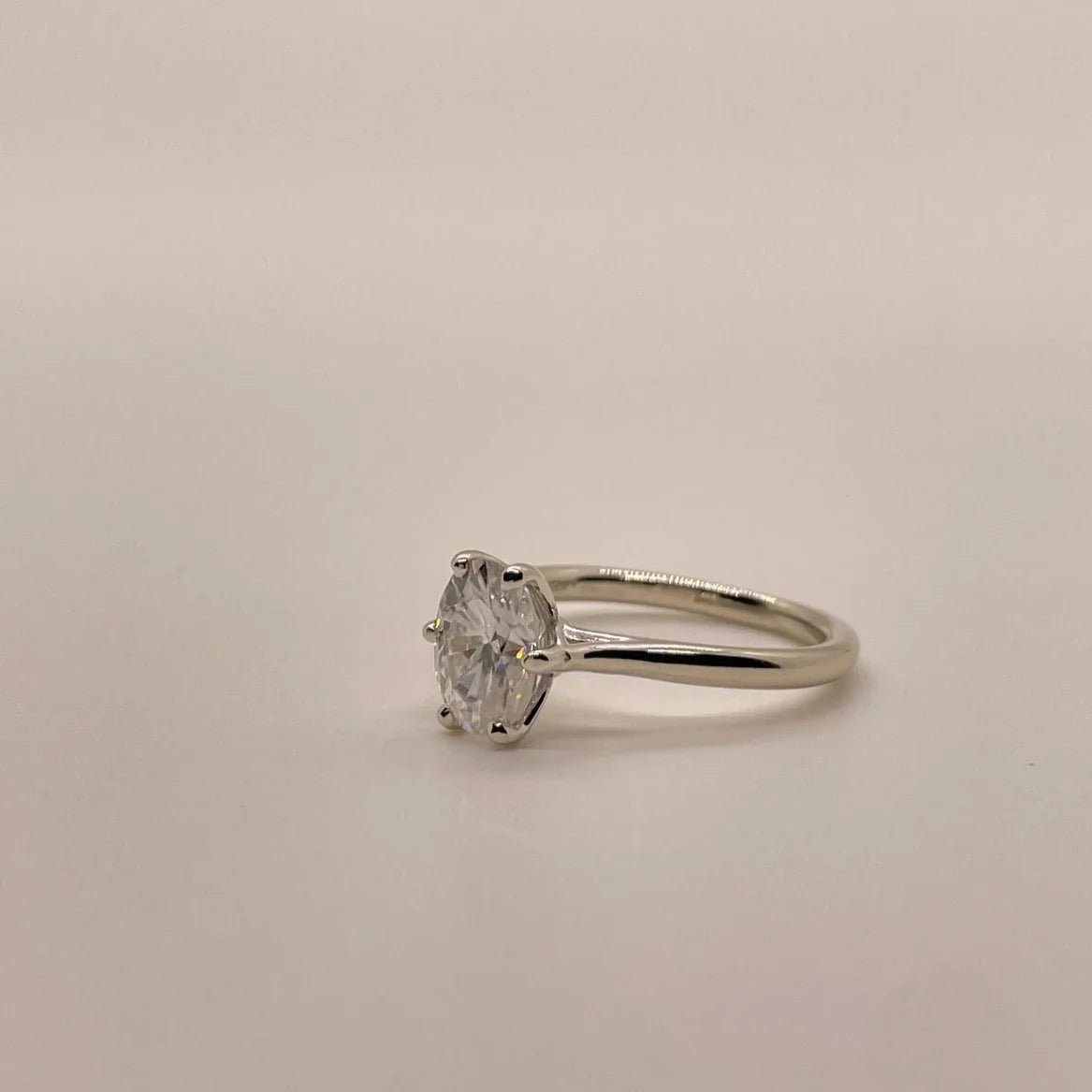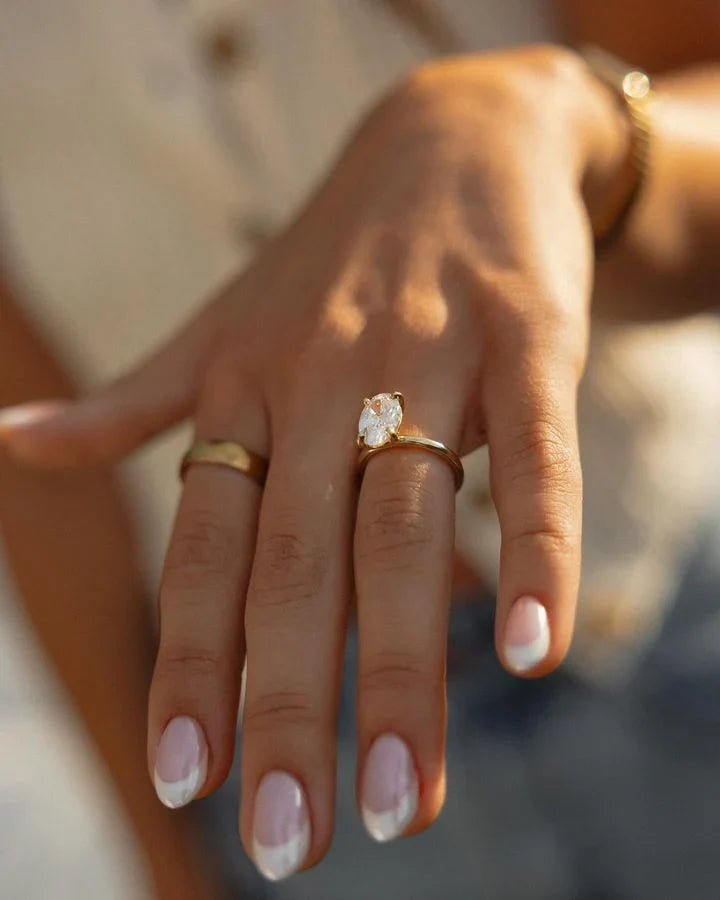
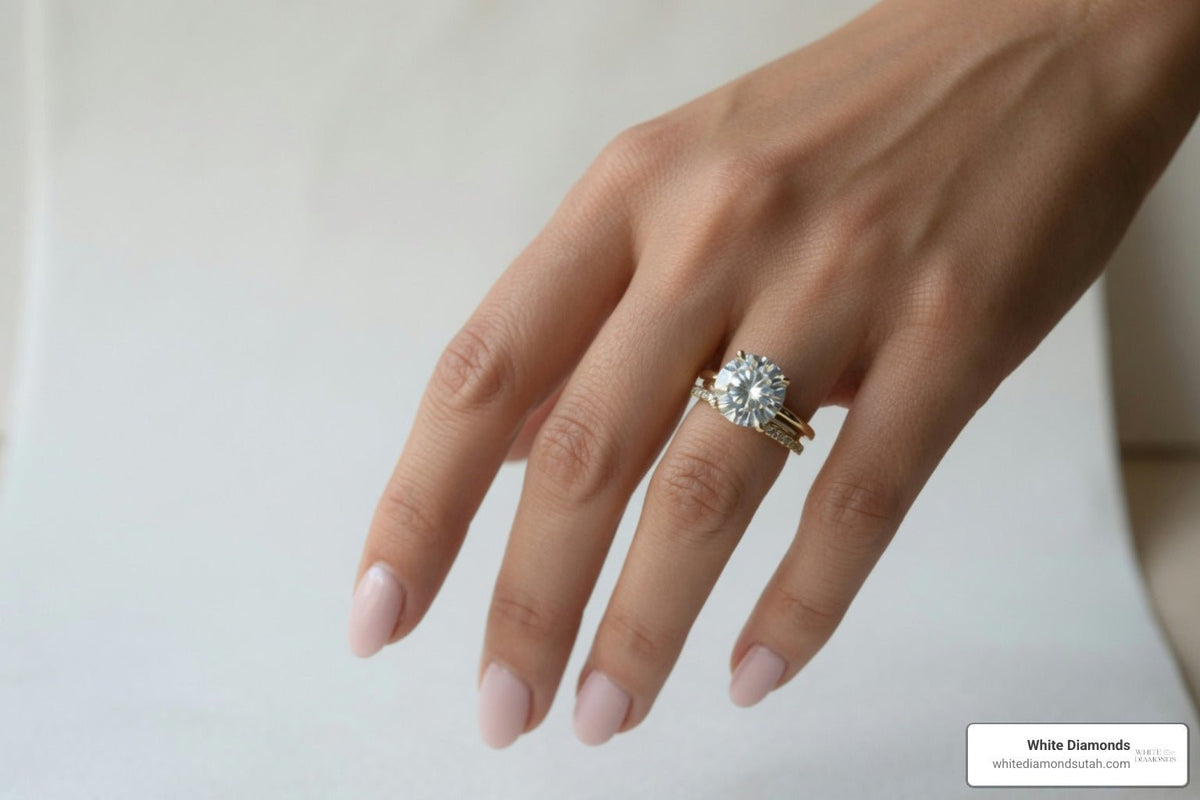
A – Z Guide to Diamond Alternatives
The Best Diamond Alternatives in 2026: What You Need to Know
Diamond alternatives are gemstones or materials that replace natural diamonds in jewelry - offering similar sparkle, beauty, and durability at a fraction of the cost.
Here are the most popular options at a glance:
| Alternative | Hardness (Mohs) | Price vs. Diamond | Best For |
|---|---|---|---|
| Lab-Grown Diamond | 10 | 30-70% less | Closest match to natural diamond |
| Moissanite | 9.25 | 90-95% less | Maximum brilliance on a budget |
| White Sapphire | 9 | ~85% less | Natural stone, soft sparkle |
| Cubic Zirconia | 8-8.5 | ~98% less | Fashion jewelry, travel rings |
| White Topaz | 8 | Very affordable | Simple, refined look |
| Morganite | 7.5-8 | Moderate | Romantic peach-pink color |
For most people shopping for an engagement ring, moissanite or a lab-grown diamond will be the best choice - they offer the closest look to a natural diamond with the best durability for daily wear.
Choosing a diamond alternative is no longer a compromise. More couples than ever are skipping the traditional mined diamond - not because they can't afford one, but because they've found better options. Searches for moissanite engagement rings alone have jumped 47% since 2020, and the range of beautiful, durable alternatives has never been wider.
Whether you're working with a tight budget, prioritizing ethical sourcing, or simply want something that feels more you, there's an alternative that fits. This guide covers everything - from how each stone looks and wears over time, to what you should know before you buy.
At White Diamonds, we're a personal jewelry studio specializing in custom rings and wedding bands, and we've helped countless couples find the perfect diamond alternative for their style and budget. Read on to find your ideal stone - no pressure, no rush.
What Are Diamond Alternatives?
Diamond alternatives are stones used instead of a mined natural diamond in engagement rings, wedding bands, and fine jewelry. Some are designed to look very similar to a diamond, while others are chosen because they offer a different color, personality, or price point.
This category includes:
- Diamond simulants, such as moissanite and cubic zirconia
- Lab-created diamonds
- Natural mined gemstones such as white sapphire, sapphire, ruby, emerald, and morganite
- Other clear stones like white topaz
People choose alternatives for several reasons:
- Lower price
- Ethical or environmental concerns
- Desire for a larger center stone
- Preference for a softer or flashier sparkle
- Love of colored gemstones
- Interest in a ring that feels less traditional
Diamond Alternatives vs Natural Diamonds
Natural diamonds are made of carbon and form deep within the earth over immense time and pressure. That gives them rarity, symbolism, and a long cultural history. But not every alternative is trying to imitate that exact story.
Here is where they differ:
- Diamond is carbon crystal
- Moissanite is silicon carbide
- Cubic zirconia is zirconium dioxide
- Sapphire and ruby are corundum
- Emerald and morganite belong to different mineral families altogether
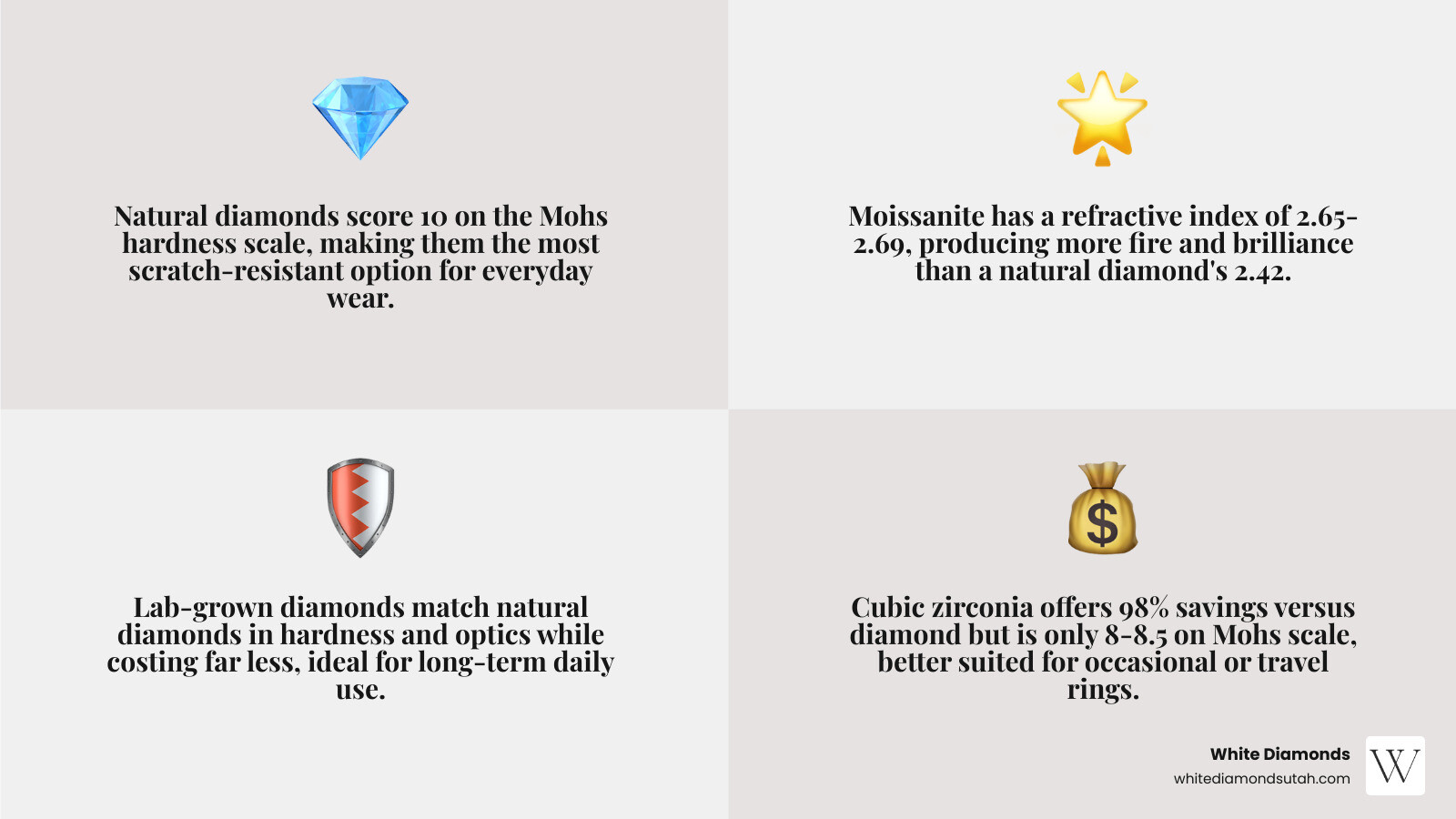
Those chemistry differences affect how each stone looks and wears. For example, moissanite has a higher refractive index than diamond, about 2.65 vs. 2.42, which means it can show even more fire and rainbow flashes. White sapphire is durable but has a much softer, quieter sparkle. Cubic zirconia can look bright when new, but it is more likely to scratch and turn cloudy over time.
Natural diamonds also tend to carry stronger resale expectations and more traditional symbolism. Alternatives usually win on price, flexibility, and personality.
Are Lab-Grown Diamonds a True Diamond Alternative?
This is where things get interesting: lab-grown diamonds are both an alternative and, scientifically, the same gem.
Lab-grown diamonds have the same:
- Chemical composition
- Hardness
- Crystal structure
- Optical performance
They are created using CVD or HPHT methods rather than mined from the earth. So if you want a stone that is a real diamond in every gemological sense, lab-grown is it. Many buyers see them as the best of both worlds: diamond beauty and durability, with much lower cost and a more transparent origin story.
If you want a deeper breakdown, here is more info about lab-grown diamonds.
Why More Buyers Are Choosing Diamond Alternatives in 2026
The shift is real, and it is not just about spending less.
In 2026, buyers are more informed, more style-driven, and more willing to question tradition. Searches for moissanite engagement rings have jumped 47% since 2020. Lab-grown diamonds have become mainstream. Couples are comparing sparkle, ethics, size, and long-term wear instead of just defaulting to mined diamond.
Common reasons we see people choose alternatives include:
- Better value for the money
- Ability to go larger without wrecking the budget
- Less interest in old-school status rules
- More focus on ethical sourcing
- Desire for custom, personal design
In other words, the modern ring buyer is asking, "What fits us best?" not "What are we supposed to buy?"
Best Diamond Alternatives for Engagement Rings
Not every alternative works equally well for daily wear. For an engagement ring, we usually focus first on durability, then on appearance, then on budget.
Moissanite
Moissanite is one of the most popular diamond alternatives for good reason.
Why people love it:
- Mohs hardness of 9.25
- Very strong durability for everyday wear
- Refractive index around 2.65, higher than diamond
- Brilliant, fiery sparkle
- Lab-created and widely seen as a conflict-free option
- Usually 90-95% less expensive than a comparable natural diamond
Moissanite is especially appealing if you want maximum sparkle on a budget. It throws more rainbow fire than a diamond, which some people adore and others find a little extra. We like to say it is the extrovert of the white stone world.
For many couples, that tradeoff is worth it because the value is outstanding. You can explore more on the best diamond alternatives here.
Lab-Grown Diamonds
Lab-grown diamonds are the closest possible match to a natural diamond because they are real diamonds.
Highlights:
- Mohs hardness of 10
- Same brilliance and sparkle profile as mined diamonds
- Same chemical and physical properties
- Often 30-50% more affordable than natural diamonds, with some comparisons showing 70-80% savings depending on size and quality
- Readily available with grading reports
If you want a ring that looks, wears, and tests as diamond, lab-grown is usually the best fit. It is especially appealing for buyers who want the classic diamond look without the mined-diamond price tag.
For a closer comparison, see lab-grown diamond vs mined diamond.
White Sapphire and Cubic Zirconia
These two get grouped together often, but they are very different in long-term performance.
White sapphire:
- Natural gemstone
- Mohs hardness of 9
- Durable enough for ring wear
- Softer, more subtle sparkle than diamond or moissanite
- Good choice for someone who wants a natural stone and understated look
Cubic zirconia:
- Lab-made simulant
- Mohs hardness around 8-8.5
- Extremely affordable, often about 98% cheaper than diamond
- Bright at first, but more prone to scratching, abrasion, and clouding
- Better for travel rings, fashion jewelry, or occasional wear than for lifelong daily wear
If your budget is tight and the ring is temporary or occasional, CZ can make sense. If you want a natural gem with better durability, white sapphire is the stronger option.
Other Clear and Colored Alternatives
There is no rule that an engagement ring has to be clear and colorless.
Other options include:
- White topaz: affordable, clean look, but more prone to scratching than sapphire
- Sapphire: extremely durable and available in many colors, not just blue
- Ruby: rich red corundum with excellent hardness
- Emerald: beautiful but more brittle and often treated
- Morganite: soft peach-pink tone, romantic look, but needs more care
- Aquamarine: airy blue and elegant, though softer than sapphire
- Spinel: underrated, beautiful, and available in many colors
Colored gems are ideal if you want your ring to feel distinctly personal instead of diamond-adjacent.
Diamond Alternatives Compared: Brilliance, Durability, and Price
| Stone | Refractive Index | Mohs Hardness | Relative Price | Best for Long-Term Daily Wear |
|---|---|---|---|---|
| Natural Diamond | 2.42 | 10 | Highest | Excellent |
| Lab-Grown Diamond | 2.42 | 10 | Much lower than natural | Excellent |
| Moissanite | 2.65-2.69 | 9.25 | Very low vs diamond | Excellent |
| White Sapphire | 1.76-1.77 | 9 | Mid-range | Very good |
| Cubic Zirconia | 2.15-2.18 | 8-8.5 | Lowest | Fair to poor |
Which Stone Sparkles Most?
If sparkle is your top priority, moissanite usually wins on sheer fire. Its higher refractive index and much higher dispersion create stronger rainbow flashes than diamond.
Very broadly:
- Moissanite = most fire and bold sparkle
- Diamond and lab-grown diamond = balanced white brilliance and crisp scintillation
- Cubic zirconia = bright at first, but less refined and less durable
- White sapphire = softer, quieter glow
None of these is "best" for everyone. Some buyers want the classic diamond look. Some want moissanite's fireworks. Some prefer white sapphire because it is not trying so hard. Fair enough.
For another helpful overview, see What’s the Best Diamond Alternative?.
Which Stone Lasts Best for Everyday Wear?
For daily wear, durability matters as much as beauty.
Best performers:
- Natural diamond
- Lab-grown diamond
- Moissanite
- White sapphire
Why:
- High hardness helps resist scratching
- Good toughness helps reduce breakage risk
- Stable materials hold appearance over time
More limited:
- Cubic zirconia, because it can abrade, scratch, and cloud
- Emerald and morganite, depending on lifestyle and setting
- White topaz, if worn hard every day
A stone can be hard but still need protection. Corners on shapes like princess or marquise can be vulnerable, and softer gems benefit from bezel or halo settings.
Which Option Fits Your Budget Best?
Here is the quick version:
- Cubic zirconia is cheapest
- Moissanite gives the strongest mix of beauty, durability, and savings
- White sapphire sits in a natural-gem middle lane
- Lab-grown diamonds cost more than moissanite but much less than mined diamonds
- Natural diamonds are typically the most expensive
Typical research-based price patterns show:
- Lab-grown diamonds can be 30-50% less than natural diamonds, and sometimes far more depending on comparison
- Moissanite is often 90-95% less than comparable diamond looks
- Cubic zirconia can cost only a few dollars to a very small fraction of diamond pricing
If your goal is upgrade potential without sacrificing wearability, moissanite and lab-grown diamonds are usually the most practical choices.
Pros and Cons of Choosing Diamond Alternatives
Ethical and Environmental Benefits
A major reason buyers explore diamond alternatives is values.
Potential benefits include:
- Reduced need for mining
- Lower environmental disruption
- More transparent sourcing
- Conflict-free appeal, especially for lab-created options
- Less earth moved compared with mined diamonds
Some research estimates diamond mining can move around 100 tons of earth per carat. Lab-created stones and simulants generally avoid that level of extraction.
That said, "ethical" is not automatic. Manufacturing still uses energy, and quality standards still matter. The best approach is to ask where the stone came from, what disclosures are provided, and how the seller documents it.
Potential Drawbacks to Know Before You Buy
Alternatives are not perfect, and it is better to know that upfront.
Possible downsides:
- Lower resale expectations, especially for simulants
- Different sparkle than a mined diamond
- Some buyers still prefer tradition
- Certain stones need more cleaning or more protective settings
- Treatments must be disclosed, especially with some colored gems
- Insurance values and replacement realities differ by stone type
For example, white sapphire is durable but can look dull more quickly when dirty. Cubic zirconia is inexpensive, but it will not usually age as gracefully as moissanite or diamond. Emerald is gorgeous, but it is not the carefree everyday option many people assume.
Natural Gemstones vs Clear Diamond Alternatives
If you are deciding between a clear stone and a colored natural gem, think about what you want the ring to say.
Clear alternatives like moissanite, lab-grown diamond, white sapphire, and CZ are usually chosen for a diamond-like look.
Colored stones are chosen for identity:
- Sapphire for durability and color range
- Ruby for bold richness
- Emerald for lush green beauty
- Morganite for a softer romantic feel
Sapphire and ruby are among the best natural choices for daily wear because both rank 9 on the Mohs scale. Emerald can work, but it usually needs more care. Morganite is wearable, but protective settings help.
For readers comparing looks specifically, Diamond Alternatives That Look The Most Like Diamonds is a useful reference.
How to Choose the Right Diamond Alternative
The right stone depends on how you live, what you love, and what you want your budget to do for you.
Match the Stone to Your Lifestyle
Ask yourself:
- Will this ring be worn every day?
- Do you work with your hands?
- Do you wear gloves often?
- Do you want a travel ring or forever ring?
- Are you okay with occasional extra maintenance?
General guidance:
- Lab-grown diamond and moissanite are excellent for active daily wear
- White sapphire is strong, but benefits from regular cleaning
- CZ is better for occasional or travel use
- Morganite, emerald, and aquamarine often do best in more protective settings
Setting matters too:
- Bezel settings protect edges well
- Halos can add protection and visual size
- Prong settings show more of the stone but expose it more
Match the Look to Your Style
This is where it gets fun.
If you want classic:
- Round and oval cuts
- Lab-grown diamond
- White gold or platinum tones
If you want bold sparkle:
- Moissanite
- Round, oval, and cushion cuts often show it beautifully
If you want soft romance:
- Morganite
- Rose gold
If you want vintage charm:
- White sapphire
- Antique-inspired settings
- Milgrain and halos
If you want color:
- Sapphire, ruby, emerald, aquamarine, or spinel
A quick note on cut: a well-cut stone matters more than many people realize. A mediocre stone in a fancy setting is still a mediocre stone. Harsh, but true.
How to Verify Quality and Authenticity
This part matters a lot, especially online.
Look for:
- GIA or IGI reports when appropriate
- Clear disclosure of whether the stone is natural, lab-grown, or simulant
- Treatment disclosure for gemstones
- A return policy
- Professional inspection and setting quality
- Documentation matching what you were promised
Jewelers can use tools such as loupes, thermal testers, and electrical conductivity testers to distinguish diamond, moissanite, and CZ. Moissanite can register like diamond on basic thermal testers, so advanced testing is often needed.
If you are shopping and want help vetting sellers, start with more info about where to buy lab-grown diamonds.
You can also explore more from our own guides:
Diamond Alternatives FAQ
Are diamond alternatives good for everyday wear?
Some are, some are not.
Best for everyday wear:
- Lab-grown diamonds
- Moissanite
- White sapphire
- Sapphire and ruby
Okay with more caution:
- Morganite
- Aquamarine
- Emerald
Not ideal for heavy daily wear:
- Cubic zirconia
- White topaz, depending on lifestyle
No matter what you choose, basic care helps:
- Remove rings for heavy lifting and harsh chemicals
- Clean gently with mild soap and warm water when appropriate
- Check prongs every six months or so
- Store pieces separately to avoid scratches
Can jewelers tell the difference between diamond alternatives and diamonds?
Yes, usually very quickly with proper tools.
Methods include:
- Loupe inspection
- Checking facet doubling in moissanite
- Thermal conductivity testing
- Electrical conductivity testing
- Professional appraisal
To the naked eye, many alternatives can look extremely convincing, especially in smaller sizes. But gemologically, they are not all the same.
Which diamond alternative looks most like a real diamond?
If we are answering that strictly, the winner is lab-grown diamond because it is a real diamond.
After that:
- Moissanite is often the most convincing non-diamond option
- White sapphire can look elegant but less brilliant
- Cubic zirconia can mimic the look briefly, especially when new, but not as well over time
Cut quality, stone size, and setting all affect how convincing the finished ring looks. A beautifully cut, properly sized stone in a well-made setting usually looks better than a huge flashy stone that is trying too hard. Like many things in life.
Conclusion
The best diamond alternatives are not one-size-fits-all. For some people, a lab-grown diamond is the perfect answer because it delivers the exact diamond experience for less. For others, moissanite is the clear winner because it offers incredible brilliance and durability at a dramatically lower cost. And for buyers who want color, individuality, or a softer natural look, sapphire, ruby, morganite, and white sapphire all deserve serious consideration.
At White Diamonds, we help couples across Utah explore these options in a pressure-free, custom setting. We can walk you through model rings, compare stones side by side, and build a design that fits your style, budget, and timeline without the guesswork.
If you are ready to compare your options, start with more info about the best diamond alternatives.