The Ultimate Guide to Buying Asscher Cut Earrings
Choose Asscher Cut Earrings for Art Deco Elegance
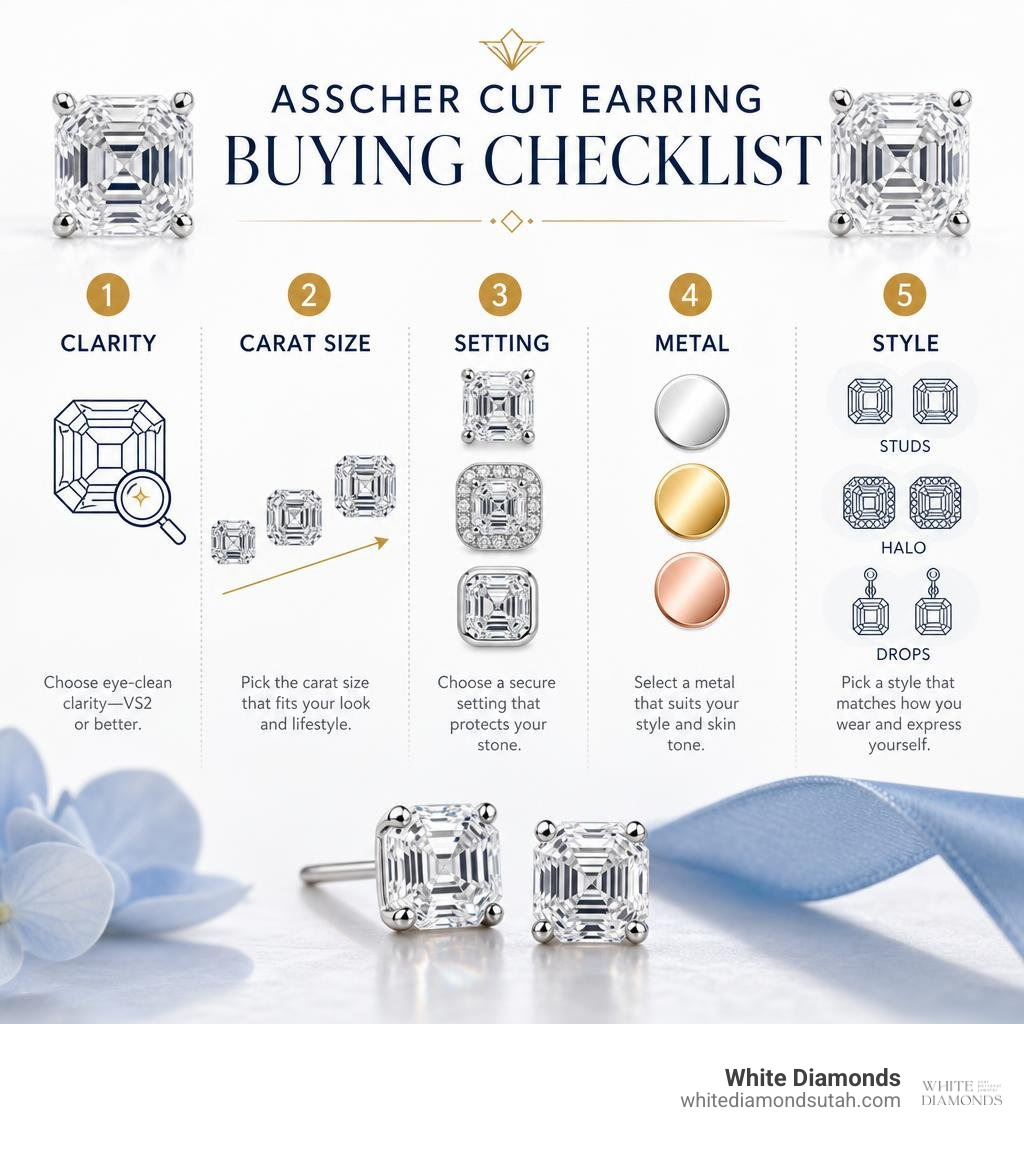
For a polished, vintage-inspired look, choose Asscher cut earrings with well-matched square stones, cropped corners, and a secure setting. Prioritize eye-clean clarity - usually VS2 or better - because the cut's broad, open facets can make inclusions easier to see. Then select a style that fits how you will wear them: simple studs for every day, halos for extra size and sparkle, or drops for more movement.
Asscher diamonds are often called square emerald cuts. Their step-cut facets create a calm, geometric pattern rather than the glittery sparkle of a round or princess cut. The result is the distinctive "hall of mirrors" look: deep, clean flashes of light that suit both modern minimalism and Art Deco-inspired jewelry.
First created by the Asscher brothers in 1902, this cut has more than 120 years of design history. Its 58 facets, high crown, and clipped corners give each stone an architectural shape that looks especially striking in pairs.
At White Diamonds, we create custom rings and wedding bands and provide professional jewelry cleaning services. We use that hands-on fine-jewelry experience to help shoppers select asscher cut earrings that balance beauty, durability, and budget.
Understanding the Asscher Cut: Geometry, History, and Fascination
The Asscher cut represents a fascinating intersection of diamond history and cutting-edge geometry. Developed in 1902 by Joseph Asscher of the Royal Asscher Diamond Company in Amsterdam, the cut quickly became a sensation. It reached peak cultural popularity during the 1920s Art Deco movement, where bold lines, clean symmetry, and geometric shapes defined luxury design. Today, as we celebrate over 120 years of its architectural beauty in 2026, the cut remains one of the most coveted choices for fine jewelry lovers seeking something distinct from traditional brilliant cuts.
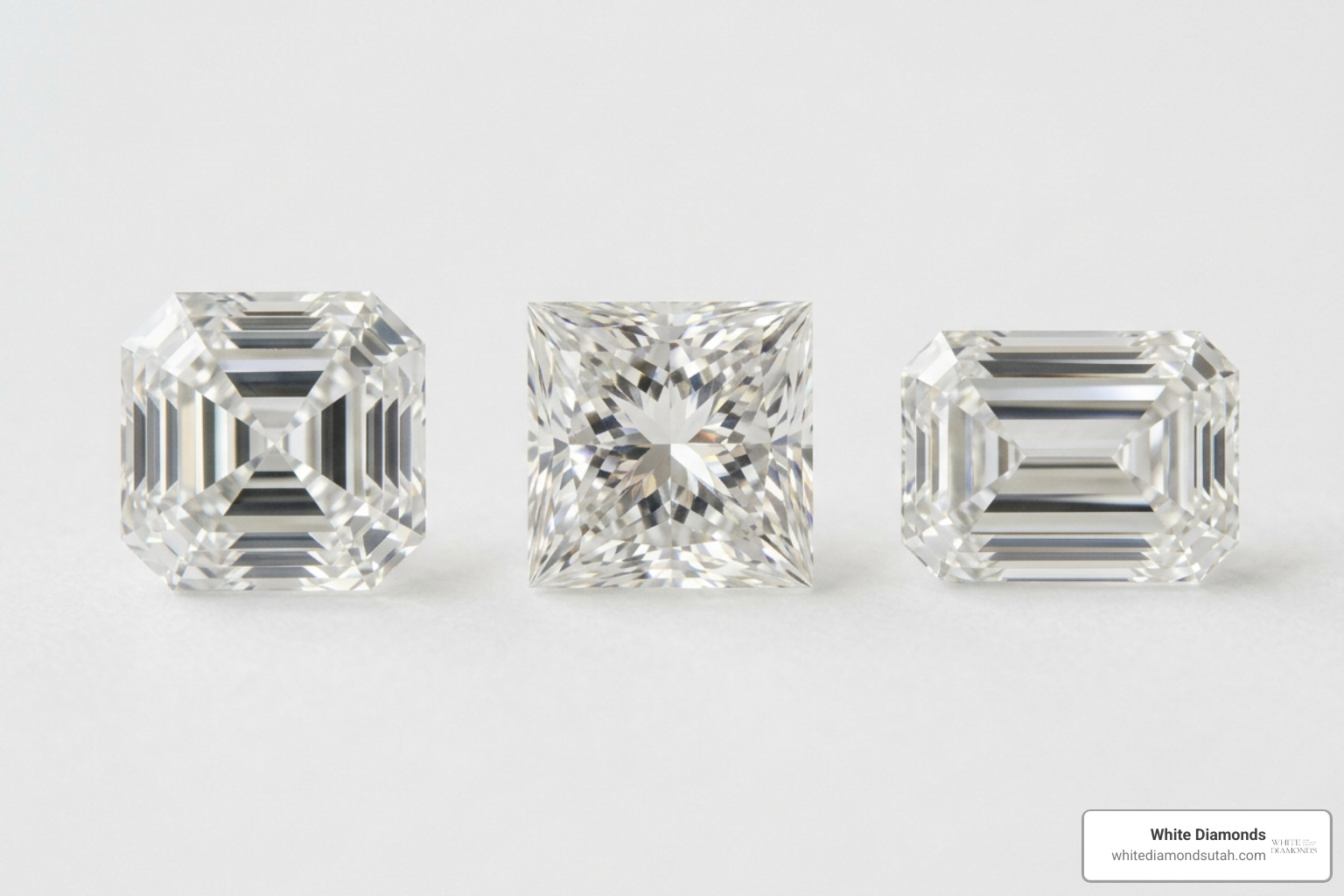
What makes the cut distinct is its profile: a square silhouette featuring dramatically cropped corners, a relatively small table, and a raised crown. This octagonal footprint combines the straight-edged grace of an emerald cut with the balanced symmetry of a square stone. While a classic emerald cut is rectangular—as explored in our 1 Carat Emerald Earrings Guide—the Asscher offers a crisp 1:1 length-to-width ratio.
Unlike brilliant-cut square options, like Princess Cut Diamond Earrings, which disperse light in splintered, chaotic sparkles, the Asscher relies on parallel step cuts that produce clear, dramatic flashes of contrast.
| Feature | Asscher Cut | Princess Cut | Emerald Cut |
|---|---|---|---|
| Shape Outline | Square with cropped corners (Octagonal) | Sharp-cornered square | Rectangular with cropped corners |
| Faceting Style | Step cut (concentric squares) | Brilliant cut (pyramidal faceting) | Step cut (concentric rectangles) |
| Standard Facet Count | 58 facets | Typically 57 to 76 facets | Typically 57 or 58 facets |
| Sparkle Character | Broad flashes, "Hall of Mirrors" | High-frequency, glittering fire | Long, glassy flashes |
| Inclusion Visibility | High (demands VS2 or better) | Low (facets camouflage flaws) | High (demands VS2 or better) |
| Historical Vibe | Art Deco, vintage, architectural | Contemporary, sharp, modern | Vintage, understated, regal |
If you are already drawn to this shape for bridal jewelry, such as an Asscher Cut Diamond Ring in Utah, pairing your ring with matching earrings creates an effortlessly curated, timeless look.
Step-Cut Faceting and the Hall of Mirrors Optical Effect
The visual hallmark of the Asscher cut is its renowned "hall of mirrors" effect. Standard brilliant cuts are faceted to shatter incoming light into thousands of tiny sparks. The Asscher cut, by contrast, acts as an intricate light sculpture.
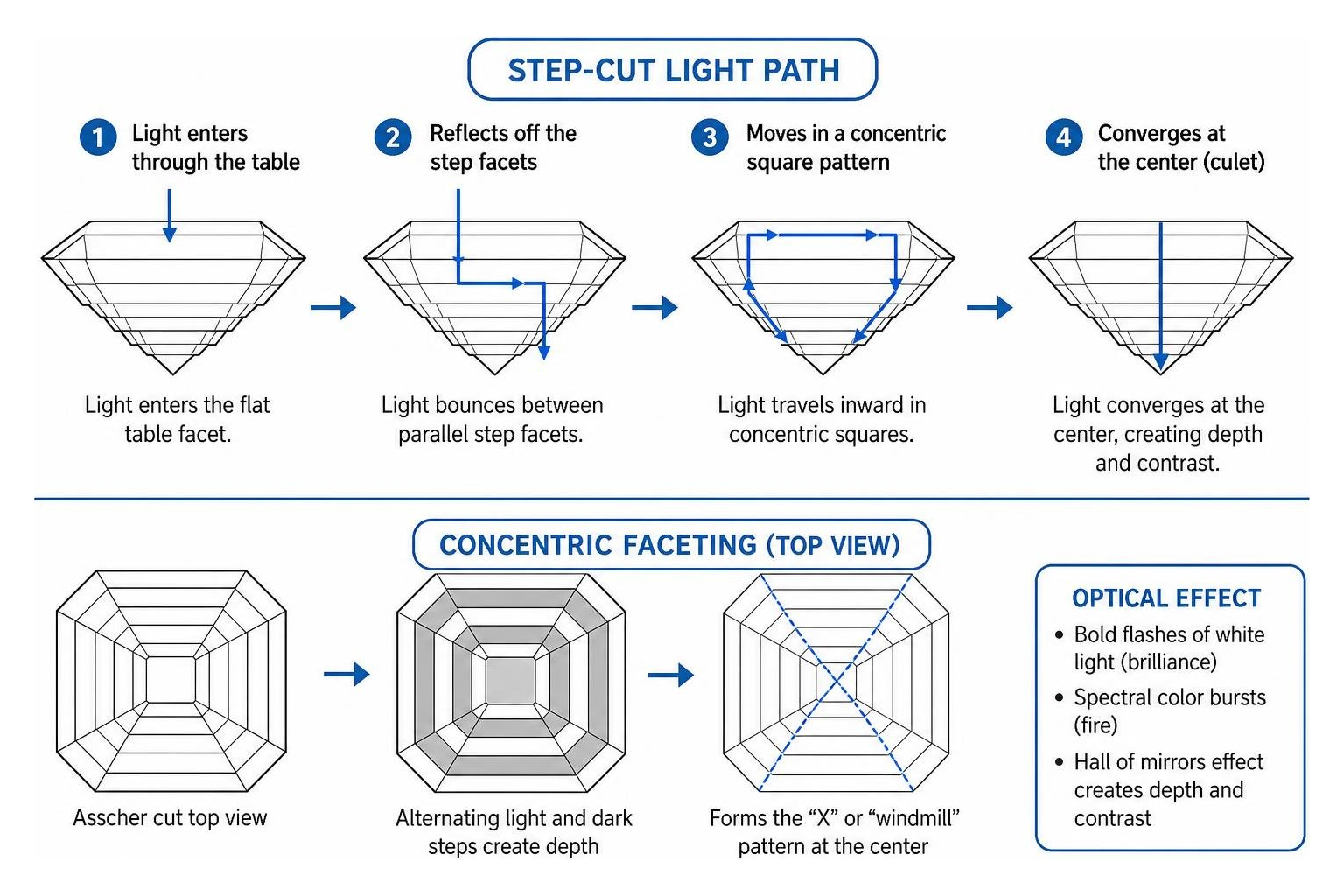
The stone features 58 facets cut in parallel rows, or "steps," that descend into the diamond toward a culet at the center. When viewed from above, these concentric squares create an optical illusion of endless depth. As light enters the diamond's flat table facet, it bounces between the alternating light and dark steps, forming a distinctive "X" or "windmill" pattern that converges at the diamond’s center point.
This faceting style emphasizes:
- Bold flashes of white light (brilliance): Instead of constant glitter, you get dramatic, rhythmic pulses of illumination as you move your head.
- Spectral color bursts (fire): The steep crown angles break white light into vivid, rich flashes of primary colors.
- Architectural symmetry: The perfect alignment of the facet junctions creates an orderly, hypnotic depth unmatched by round stones.
Selecting the Perfect Asscher Cut Earrings: The 4Cs and Metal Pairings
Purchasing diamonds for earrings requires a slightly different strategy than buying a center stone for an engagement ring. For earrings, stone matching and face-up brilliance take center stage. When exploring our broad selection of Diamond Earrings, keeping the 4Cs in mind will help you maximize your investment.
1. Clarity: The Non-Negotiable C for Step Cuts
Because of the Asscher cut’s open, transparent table and large step facets, it cannot hide internal flaws. Inclusions that would be invisible in a brilliant cut will reflect across the mirror-like facets of an Asscher stone.
- Recommended Grade: Aim for a minimum of VS2 clarity for complete eye-cleanliness.
- Budget Strategy: If you want larger stones without stretching your budget, consider Lab Diamond Earrings. High clarity grades such as VVS2 or VS1 become significantly more accessible with lab-grown stones.
2. Color: Clean Whites and Warm Undertones
Step-cut diamonds tend to show color more readily than brilliant cuts because they do not have thousands of tiny sparkles to mask body tint.
- For Platinum or White Gold: Stick to G through I color to ensure the stones face up crisp and ice-white.
- For Yellow or Rose Gold: You can comfortably step down to a J or K color, as the warm tone of the metal naturally complements the diamond's golden warmth.
3. Carat Weight and Proportions
Asscher cuts are inherently deep diamonds. Much of their total carat weight is carried in the pavilion (the lower half of the stone) to create the signature hall of mirrors depth. As a result, a 1-carat Asscher diamond will have a slightly smaller surface area across the top than a 1-carat round brilliant or princess cut.
When choosing a total carat weight (CTW) for a pair of earrings:
- 1.00 CTW (0.50 ct each): Delicate, subtle, and ideal for daily office or casual wear.
- 2.00 CTW (1.00 ct each): The classic benchmark size offering striking architectural presence on the earlobe.
- 3.00+ CTW: Dramatic, red-carpet statement pieces with deep geometric depth.
4. Choosing the Best Metal Pairing
The metal you choose sets the mood for your Asscher earrings:
- Platinum & White Gold: These metals emphasize the clean, cool geometry of the cut, creating an unapologetically modern or authentic Art Deco feel.
- Yellow Gold (14k or 18k): Creates a stunning contrast against crisp white diamonds, highlighting the stone's stepped corners with vintage charm.
- Rose Gold: Adds a romantic, soft warmth that tempers the cut's sharp, modern lines.
Top Styles for Asscher Cut Earrings: Studs, Halos, and Drops
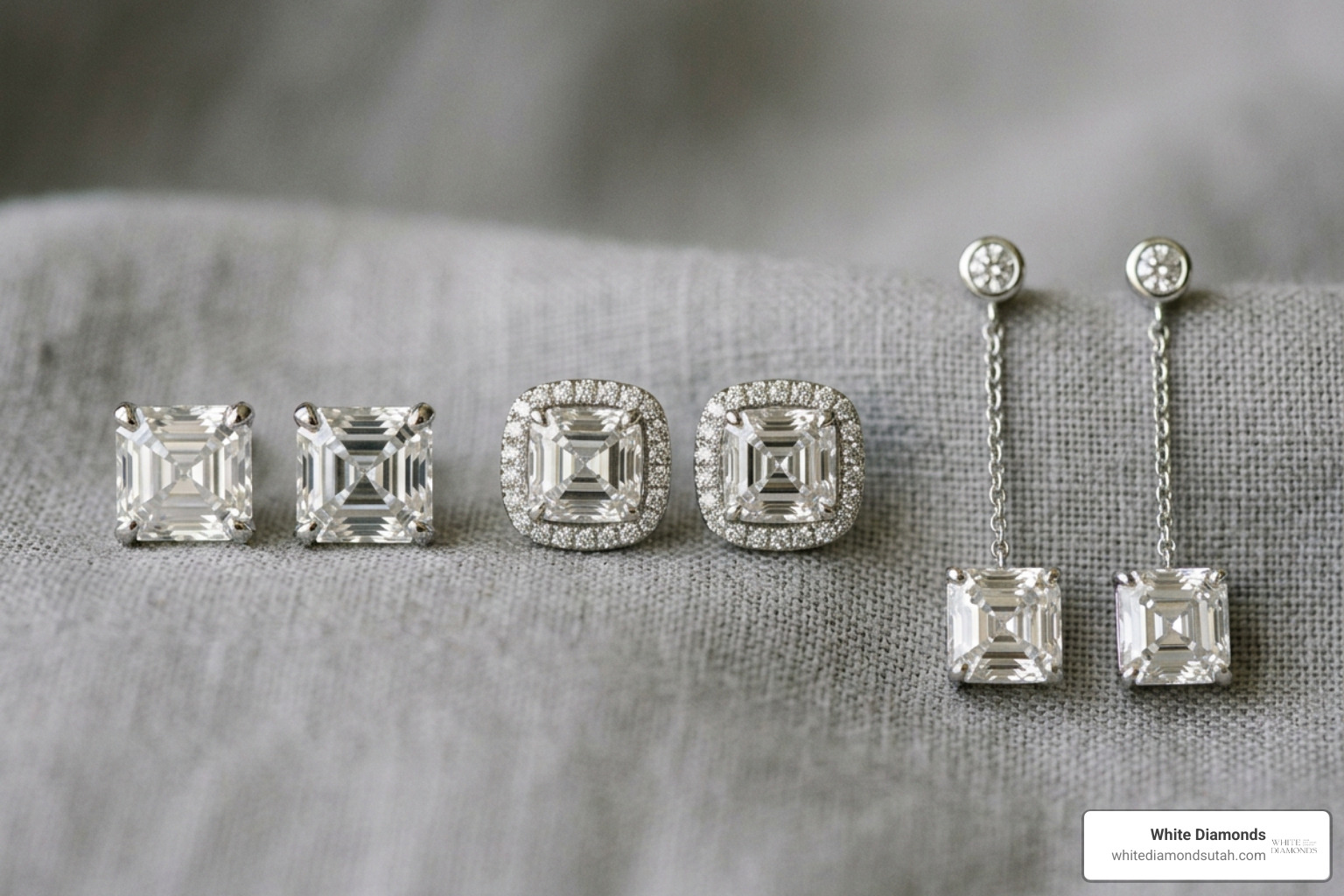
The architectural geometry of the Asscher cut lends itself beautifully to several distinct setting styles, ranging from understated daily studs to show-stopping evening drops.
1. Classic Solitaire Studs
Solitaire studs are the ultimate expression of the Asscher cut’s clean lines.
- Corner-Prong (4-Prong) Settings: Prongs placed precisely on the cropped corners protect the stone's edges while accentuating its unique octagonal shape.
- Bezel Settings: A sleek metal rim completely encases the diamond's perimeter. This not only offers superior stone protection but also highlights the geometric, Art Deco outline. If you love clean daily wear, our curated collection of Lab Diamond Stud Earrings offers an exceptional balance of precision craftsmanship and modern value.
2. Halo Settings
If you want to maximize the apparent size of your earrings, a halo setting is the ideal choice:
- Micro-Pavé Halos: A delicate ring of tiny round brilliant diamonds outlines the cropped square shape, creating a striking textural contrast between step-cut center flashes and brilliant outer sparkle.
- Milgrain Details: Adding beaded milgrain edging around the halo evokes an authentic 1920s antique charm.
3. Drop and Dangle Earrings
Asscher cuts catch the light in rhythmic flashes, making them spectacular in earrings that move with you:
- Station Drops: An Asscher stone suspended from a delicate chain or a leverback clasp swings gracefully, catching light at every angle.
- Multi-Stone Settings: For maximum impact, consider graduated designs. Our 3 Stone Diamond Earrings Guide and 3 Stone Drop Earrings Guide explain how descending diamond arrangements create sophisticated movement and timeless elegance.
Determining the Cost and Value of Asscher Cut Earrings
When shopping for Asscher earrings, pricing is influenced primarily by diamond origin (natural vs. lab-grown), the 4Cs, and the setting complexity.
Because Asscher cuts are relatively rare—representing only a small fraction of all diamonds cut globally—expertly matched pairs carry a modest cutting premium. Jewelers must meticulously match two stones not only by carat weight, color, and clarity, but also by their facet patterns, crown heights, and table percentages so they mirror each other on your ears.
To understand how diamond weights translate to price tags, review our 1 Carat Diamond Solitaire Earrings overview and consult our Complete Guide to 1 Carat Solitaire Earrings Price.
2026 Price Benchmarks for Asscher Cut Diamond Earrings
- 1.00 CTW Lab-Grown Asscher Studs (F-G Color, VS Clarity): $800 – $1,800
- 1.00 CTW Natural Asscher Studs (G-H Color, VS Clarity): $3,200 – $5,500
- 2.00 CTW Lab-Grown Asscher Studs (E-F Color, VVS-VS Clarity): $1,800 – $3,500
- 2.00 CTW Natural Asscher Studs (G-H Color, VS Clarity): $9,000 – $16,000+
Note: Custom settings like hand-crafted bezels, intricate milgrain drops, or platinum mounts will adjust these base estimates.
Proper Care, Cleaning, and Maintenance for Step-Cut Diamonds
Because Asscher cuts have large, flat table facets, everyday residues like hand lotion, hairspray, and natural skin oils will show up faster on them than on brilliant-cut stones. A light film of oil dulls the mirror effect, causing the diamond to look glassy rather than crisp.
Simple At-Home Cleaning Routine
- Soak: Submerge your earrings in a small bowl of warm water mixed with a few drops of mild dish soap for 15 to 20 minutes.
- Gently Brush: Use a soft-bristled baby toothbrush to gently clean the back of the setting, under the pavilion, and around the prongs where debris collects.
- Rinse Thoroughly: Rinse the earrings under lukewarm running water (make sure the sink drain is securely plugged!).
- Dry: Pat dry with a lint-free microfiber cloth to prevent water spots on the broad table facets.
Security and Maintenance Checks
- Earring Backings: Due to the value and weight of quality diamonds, always opt for secure backings. Screw-back posts or locking La Poussette backings provide significantly more security than simple push-backs.
- Prong Inspections: Have your jewelry inspected by a professional bench jeweler once a year. Prongs can snag on scarves or sweaters, and regular checks ensure your stones stay safe and tight in their baskets.
If you are local to Northern Utah, you can visit our showroom for complimentary prong checks and professional steam cleanings. Discover our full selection of fine Earrings in Ogden UT.
Frequently Asked Questions About Asscher Diamonds
Do Asscher cut diamonds look smaller than princess cuts of the same carat weight?
Yes, Asscher cuts generally have a slightly smaller face-up surface area than princess cuts of identical carat weight. Asschers carry more of their diamond weight in their deep pavilion and high crown to produce their signature optical depth. For comparison, see our guide on 1 Carat Princess Cut Earrings. However, the Asscher's bold flashes and clipped corners give it an architectural quality that many find more distinctive than sheer surface spread.
What clarity grade is best for step-cut earring stones?
We recommend a minimum of VS2 clarity for Asscher cut earrings. Because the step-cut faceting does not scatter light to mask inclusions, lower clarity grades (like SI1 or SI2) may have visible dark spots or feathering reflecting through the open table facet. VS1 and VS2 grades ensure the stones are eye-clean, letting the concentric windmill pattern shine unimpeded.
Why choose an Asscher cut over a standard round brilliant for earrings?
While round brilliant diamonds maximize traditional glitter and sparkle, Asscher cuts offer quiet confidence, clean geometry, and vintage sophistication. They stand out in a crowd because they are far less common, making them an ideal choice for anyone who appreciates Art Deco heritage, architectural symmetry, and understated elegance.
Conclusion
Asscher cut earrings bring an unmatched sense of vintage sophistication and geometric harmony to any fine jewelry collection. Whether you choose a minimalist bezel stud set in yellow gold or a dramatic drop setting with micro-pavé accents, the mesmerizing "hall of mirrors" faceting ensures your earrings will turn heads for decades to come.
At White Diamonds, we take pride in offering personalized, pressure-free consultations to help you design the perfect piece within your budget and timeline. Whether you are exploring natural diamonds or high-grade lab-grown stones, our team can help you select matched pairs that capture your personal style.
Ready to find your ideal pair? Explore our comprehensive Diamond Earrings Buying Guide 2026 or reach out to us today to begin crafting your custom diamond earrings.