Step-by-Step Guide to Jewelry Repair
Why Jewelry Repair Matters More Than You Think
Jewelry repair is the process of restoring broken, worn, or damaged pieces — from resizing a ring to replacing a lost stone or fixing a snapped chain.
Quick answers to common jewelry repair questions:
| Question | Quick Answer |
|---|---|
| How much does it cost? | Simple repairs start around $25–$44; complex work runs $50–$250+ |
| How long does it take? | Most repairs: 2–5 business days; simple fixes often same-day |
| What repairs are most common? | Ring resizing, prong retipping, chain soldering, stone resetting, clasp replacement |
| Can I do it at home? | Minor cleaning yes, but most repairs need a professional |
| In-store or mail-in? | Both are safe options; in-store allows face-to-face consultation |
A snapped necklace or a loose stone on an engagement ring can feel devastating — especially when the piece carries real sentimental weight. The good news is that most fine jewelry damage is completely fixable with the right hands and tools.
Whether your ring no longer fits, a prong has worn thin, or a beloved chain finally gave out, understanding the repair process helps you make smart, confident decisions — without overpaying or handing your piece to the wrong person.
At White Diamonds, we're a custom jewelry studio specializing in rings and wedding bands, with hands-on experience in jewelry repair and professional cleaning services. This guide walks you through everything you need to know, step by step.
Signs Your Fine Pieces Need Professional Jewelry Repair
Many jewelry owners don't realize their favorite pieces are on the verge of breaking until a diamond falls out or a clasp snaps during a night out. Catching these warning signs early can save you from losing priceless gemstones or facing massive restoration bills.
Here are the most common indicators that your jewelry needs immediate professional attention:
- Loose Stones: If you gently tap your gemstone with a fingernail or hold it near your ear and shake it, do you hear a faint clicking sound? Any movement, no matter how microscopic, means the setting has loosened.
- Worn or Flattened Prongs: Prongs are the tiny metal claws that hold your stones in place. Over years of daily wear, they rub against clothing and skin, eventually flattening out or wearing paper-thin. If a prong looks snagged, bent, or completely worn down, your stone is at high risk of falling out.
- Broken or Weak Clasps: If your necklace or bracelet clasp doesn't spring back shut immediately when you release it, the tiny internal spring is worn out.
- Deep Scratches and Metal Wear: Over time, even the most durable bands show wear. If you are wondering Can Diamond Rings Get Scratched, the answer is yes—while the diamond itself is highly scratch-resistant, the precious metal band holding it certainly can get scratched, scuffed, and thin.
- Damaged or Chipped Gemstones: Many people believe diamonds are completely indestructible. However, when clients ask us Can Diamonds Break or Can a Diamond Chip or Break, we must explain that while they are the hardest natural substance on Earth, a hard blow at just the right angle can absolutely chip, fracture, or break a diamond. If you notice a chip, it must be evaluated immediately to prevent the fracture from spreading.
Common Types of Repairs and Metal Handling
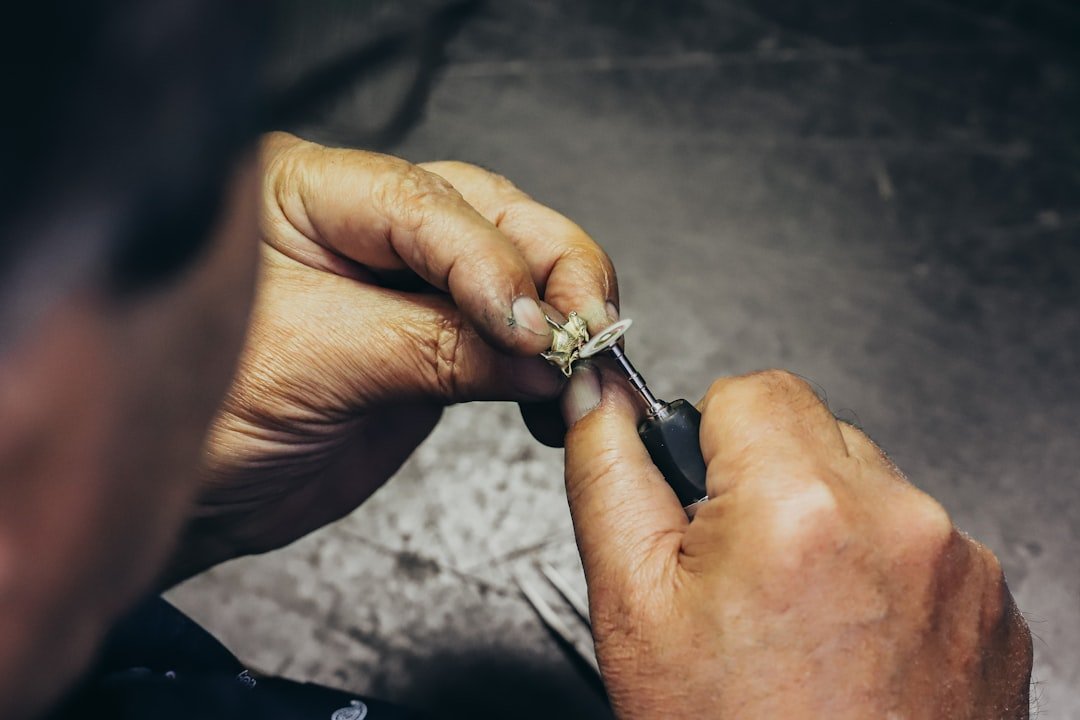
Modern jewelry repair is an art form that merges old-world metallurgy with cutting-edge technology. When we take in a piece for repair, we don't just patch it up; we analyze its structural integrity to ensure the fix lasts for decades.
Two of the most important technological advancements in our industry are laser welding and micro-soldering. Unlike traditional torch soldering, which heats the entire piece of jewelry and can damage heat-sensitive gemstones like opals or emeralds, laser welding allows us to direct a highly focused beam of light at a microscopic area. This lets us perform trace-free repairs directly adjacent to delicate stones without risking heat damage.
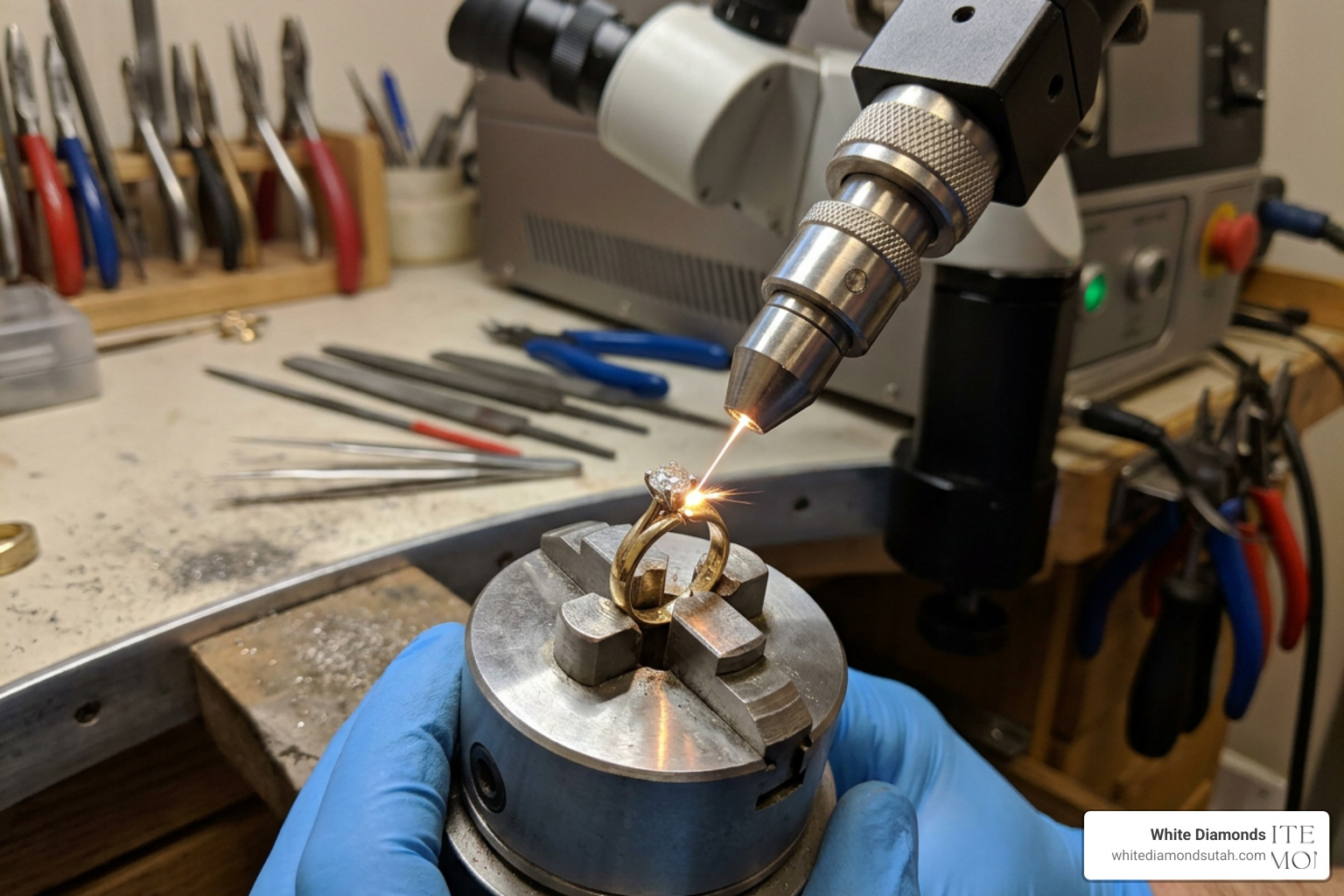
Ring Resizing and Prong Retipping
Rings are the most frequently repaired jewelry items because they live on our hands, constantly colliding with doors, steering wheels, and desks.
- Ring Resizing: Whether your finger size has changed or you inherited a family heirloom, resizing is a routine procedure. When you ask Can Engagement Rings Be Resized, the answer is almost always yes, though the method depends on whether we are sizing up or down. Sizing down involves cutting out a small portion of the band and fusing the ends back together. Sizing up involves stretching the metal (for very minor adjustments) or cutting the band and adding a matching piece of precious metal.
- Prong Tightening and Retipping: If your prongs are worn but not entirely broken, we can perform "prong retipping." This involves adding a small droplet of matching gold or platinum to the top of the existing prong to rebuild its height and security.
- Shank Replacement: If the back of your ring band (the shank) has worn incredibly thin from decades of wear, we can perform a partial or full shank replacement. This involves cutting away the thin metal and welding a sturdy, brand-new band onto your original ring head. This is highly common in Mens Wedding Band Repair where active lifestyles lead to bent or cracked shanks.
Chain Repair and Clasp Replacement
A snapped chain is another incredibly common issue, often caused by a toddler's stray hand or a snag on a heavy winter sweater.
- Chain Soldering: To fix a broken chain, we carefully clean the broken ends, align them under a microscope, and use micro-soldering or a laser welder to fuse the links back together.
- Jump Ring Repair: The jump ring is the small, circular ring that connects your chain to the clasp. Because these are often left unsoldered for safety (so the chain breaks before hurting your neck), they can slowly pull open over time. We can easily close and solder these shut.
- Clasp Replacement: If your lobster clasp, spring ring, or box clasp is broken beyond repair, we simply cut it away and solder a brand-new, matching clasp onto the chain.
- Pearl Restringing: Fine pearl necklaces are strung on delicate silk thread with individual knots between each pearl. Over time, this silk stretches, gets dirty, and weakens. We recommend restringing pearls every few years to prevent the thread from snapping.
Working with Gold, Platinum, and Sterling Silver
Different precious metals require vastly different approaches during the jewelry repair process:
- Yellow Gold (10K, 14K, 18K): Gold is highly malleable and a joy to work with. However, we must carefully match the exact karat and alloy color of the solder to ensure the repair joint is completely invisible.
- White Gold: White gold gets its bright, reflective look from a surface plating of rhodium (a precious metal in the platinum family). Whenever we solder white gold, the heat burns off this plating, meaning we must completely polish and re-apply the rhodium plating to restore its mirror-like finish.
- Platinum: Platinum has a much higher melting point than gold and does not oxidize when heated. It requires specialized high-heat torches or laser welders. It is a dense, durable metal, making platinum repairs incredibly long-lasting.
- Sterling Silver: Silver is an excellent conductor of heat, which means the entire piece warms up rapidly when a torch is applied. This requires a delicate hand to avoid melting nearby design details.
When wearing these metals, customers often ask Can Diamond Rings Get Wet or Can a Diamond Ring Be Worn in the Shower. While clean water won't hurt diamonds, gold, or platinum, frequent exposure to hard water, body washes, and harsh cleaning chemicals can leave a dull soapy film on your stones and slowly degrade the metal alloys over time. It is always best to remove your rings before showering or swimming.
The Professional Repair Process: From Drop-Off to Pickup
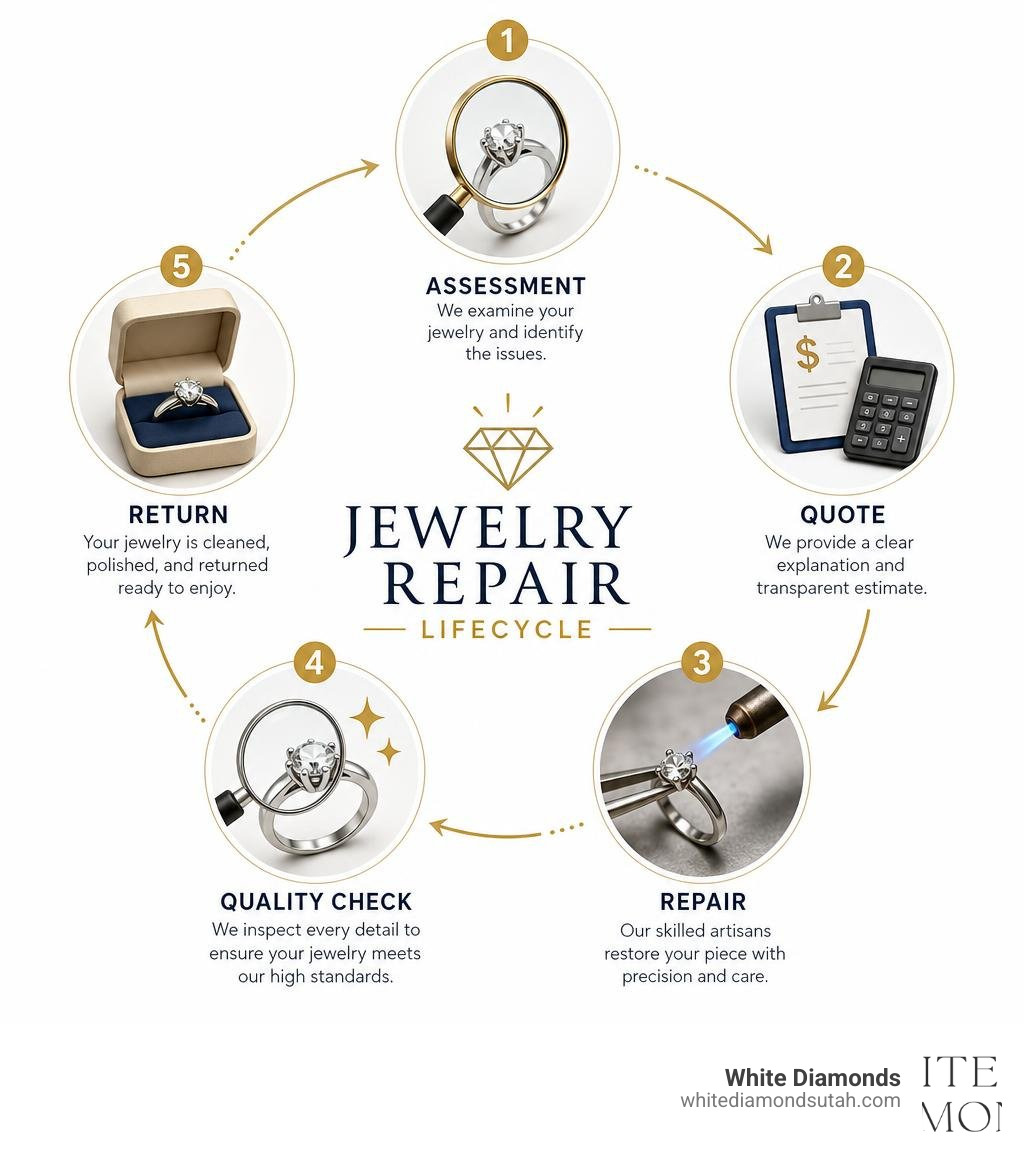
When you bring a piece of jewelry to a professional studio, you shouldn't just hand it over and hope for the best. A reputable jeweler follows a strict, transparent intake process to guarantee the safety of your valuables.

- The Intake Inspection: Your jeweler will inspect your piece under a gemological microscope or high-powered loupe right in front of you. They will note the exact condition of the metal, identify any chipped or loose stones, and record the unique characteristics of your center diamond.
- Detailed Documentation: An intake form is generated, detailing the metal type, stone measurements, and the exact work to be performed. This serves as your receipt and our contract.
- Secure Storage: While waiting for the bench jeweler, your piece is stored securely in a heavy-duty, fireproof vault.
- The Repair Work: Our master craftsmen perform the required repairs using precision tools, followed by a thorough cleaning, polishing, and quality-control check.
- Pickup and Final Inspection: When you collect your item, your jeweler should show you the completed work under magnification to prove the repair was done correctly and that your original stones are secure.
Understanding the Cost of Jewelry Repair
The cost of jewelry repair depends entirely on the metal type, the complexity of the design, and the extent of the damage. Here is a general breakdown of what to expect in terms of pricing and turnaround times as of June 2026:
| Repair Type | Estimated Cost Range | Typical Turnaround Time |
|---|---|---|
| Basic Clean & Polish | $25 – $50 | Same-day to 24 Hours |
| Ring Resizing (Sizing Down) | $50 – $150 | 2 – 5 Business Days |
| Ring Resizing (Sizing Up) | $80 – $250+ | 2 – 5 Business Days |
| Prong Retipping (Per Prong) | $30 – $75 | 3 – 5 Business Days |
| Stone Resetting (Melee / Small) | $35 – $80 | 2 – 4 Business Days |
| Chain Soldering / Repair | $44 – $90 | 1 – 3 Business Days |
| Clasp Replacement | $40 – $120+ (metal dependent) | 1 – 2 Business Days |
| Pearl Restringing (Per Inch) | $5 – $10 per inch | 5 – 10 Business Days |
What to Expect During Your Consultation
When you walk into our studio, your consultation should be completely pressure-free. We will provide a free estimate and an upfront quote before any work begins, so there are never any surprise charges when you return to pick up your piece.
Additionally, we believe in standing behind our craftsmanship. Most reputable jewelers offer a repair warranty (typically 6 months) guaranteeing that the specific repair work will hold up under normal wear and tear.
To keep your jewelry looking its best between repairs, we recommend visiting Jewelry Cleaning Utah Experts for regular professional checkups and cleanings, which can catch minor wear before it turns into a costly repair.
How to Choose a Reputable Repair Service
Your jewelry is both financially valuable and emotionally irreplaceable. Choosing the right repair shop is critical. Look for these key trust factors when evaluating a jeweler:
- In-House Master Jewelers: Ask if the repairs are done on-site or sent out to a third-party mass facility. In-house repairs mean less transit risk and better quality control.
- Professional Credentials: Look for jewelers associated with respected industry organizations like the Jewelers of America or the Gemological Institute of America (GIA).
- Stellar Local Reviews: Check online platforms for authentic customer feedback. If you are looking for local services, you can browse listings like THE BEST 10 JEWELRY REPAIR IN OGDEN, UT - Yelp or THE BEST 10 JEWELRY REPAIR IN SALT LAKE CITY, UT - Yelp to see what neighbors say about their experiences.
- Established Local Expertise: Choose a business with deep roots in your community. Local jewelers who have spent years serving regional clients understand the importance of building long-term trust and providing personalized care.
Choosing Between In-Store and Mail-In Jewelry Repair
For those who do not live near a trusted local bench jeweler, national mail-in repair services have become increasingly popular. Let's look at how they compare:
- In-Store Repairs: This option offers unmatched local convenience and personalized face-to-face consultations. You can speak directly with the jeweler, look through the microscope yourself, and walk away with a physical receipt. Visiting a dedicated local shop allows you to build a personal relationship with the team handling your heirlooms.
- Mail-In Services: Highly specialized mail-in facilities use secure, fully insured shipping with real-time tracking to service clients nationwide. While highly convenient for rural areas, you lose the face-to-face interaction and immediate, hands-on control over your piece. While established remote centers safely handle shipping, local service remains the gold standard for immediate peace of mind.
Beyond the Basics: Custom Design and Restoration Services
A premier jewelry studio does far more than just fix broken chains. When you work with a full-service custom jeweler, you gain access to a suite of advanced creative services:
- Custom Design & Upcycling: If you have inherited estate jewelry that isn't your style, we can extract the precious gemstones and design a completely custom, modern piece around them.
- Precision Engraving: Personalize wedding bands or keepsake pendants with laser-etched dates, coordinates, or handwritten messages.
- Heirloom Restoration: For antique pieces that are heavily worn, we can meticulously rebuild hand-engraved details, filigree, and milgrain borders.
- Jewelry Appraisals: We provide certified appraisals for insurance purposes, documenting the replacement value of your fine jewelry.
Frequently Asked Questions
Can I perform jewelry repairs safely at home?
We strongly advise against DIY repairs on fine jewelry. While it might be tempting to use jewelry adhesive or household needle nose pliers to fix a broken jump ring or glue a gemstone back into its setting, these temporary fixes often cause permanent damage.
Household glues can coat the back of a gemstone, destroying its brilliance, and are incredibly difficult for a jeweler to clean off later. Furthermore, craft pliers lack the polished, non-marring jaws of professional jewelry tools, meaning they will easily gouge, scratch, and warp precious metals.
How do jewelers protect heirloom and sentimental pieces?
We treat every sentimental piece with the absolute highest level of care. To maintain a flawless chain of custody, we photograph and weigh each item during intake, printing these details directly on your receipt.
For incredibly rare or irreplaceable family heirlooms, advanced studios can use 3D scanning technology to create a digital replica of the piece. This "digital vault" ensures that if the physical piece is ever lost or stolen, we can replicate its design down to the exact millimeter.
What is the difference between a jewelry warranty and insurance?
It is common to confuse these two protective measures, but they serve completely different purposes:
- Jewelry Warranty: A warranty is offered by the jeweler or manufacturer. It covers the quality of the craftsmanship itself (e.g., ensuring a solder joint doesn't fail or a newly set stone doesn't fall out under normal wear). It does not cover accidental damage, loss, or theft.
- Jewelry Insurance: Specialized jewelry insurance (such as policies through Jewelers Mutual) is a separate premium you pay to protect your investment. It covers accidental damage (like dropping your ring on a tile floor), mysterious disappearance, theft, and total loss. We highly recommend insuring any piece of jewelry that would be financially difficult to replace out-of-pocket.
Conclusion
At White Diamonds, we believe that jewelry is more than just sparkling metal and stone—it is a wearable collection of your most cherished memories. Keeping your pieces in pristine condition is our passion. Whether you need a simple polish, a complex ring resizing, or a complete heirloom restoration, our team in Ogden, Utah, is here to provide personalized, pressure-free service within your budget and timeline.
If you are ready to give your favorite jewelry the professional care it deserves, explore our complete guide on Jewelry Repair in Utah: What to Expect & Where to Go or stop by our studio today to speak with our master jewelers.