Can Diamond Rings Get Scratched
Short answer: yes—under the right circumstances. Diamonds are the hardest natural material, but hardness isn’t the same as indestructible. Daily life can leave films, faint abrasions, or edge nicks—and certain contacts can create true scratches. Here’s how to tell what you’re seeing, what causes it, and how to keep your diamond ring looking brilliant.
Quick Answer
Can diamond rings get scratched?
The diamond itself is extremely hard and resists scratching by most things. True scratches typically come from another diamond.
Your metal setting (gold or platinum) can scratch and scuff because metals are softer.
Everyday residue (soap, lotion, sunscreen) can mask sparkle, making a diamond look scratched when it’s just dirty.
What Counts As A “Scratch” On A Diamond?
A scratch is a permanent, visible line on the diamond’s surface that doesn’t rinse away. Two other lookalikes are common:
-
Film: Cloudy haze from soaps, lotions, or hard water. (Cleans off.)
-
Abrasion: Micro-wear at facet edges from diamond-to-diamond contact—looks like dulled edges rather than a single line. (Often polishable.)
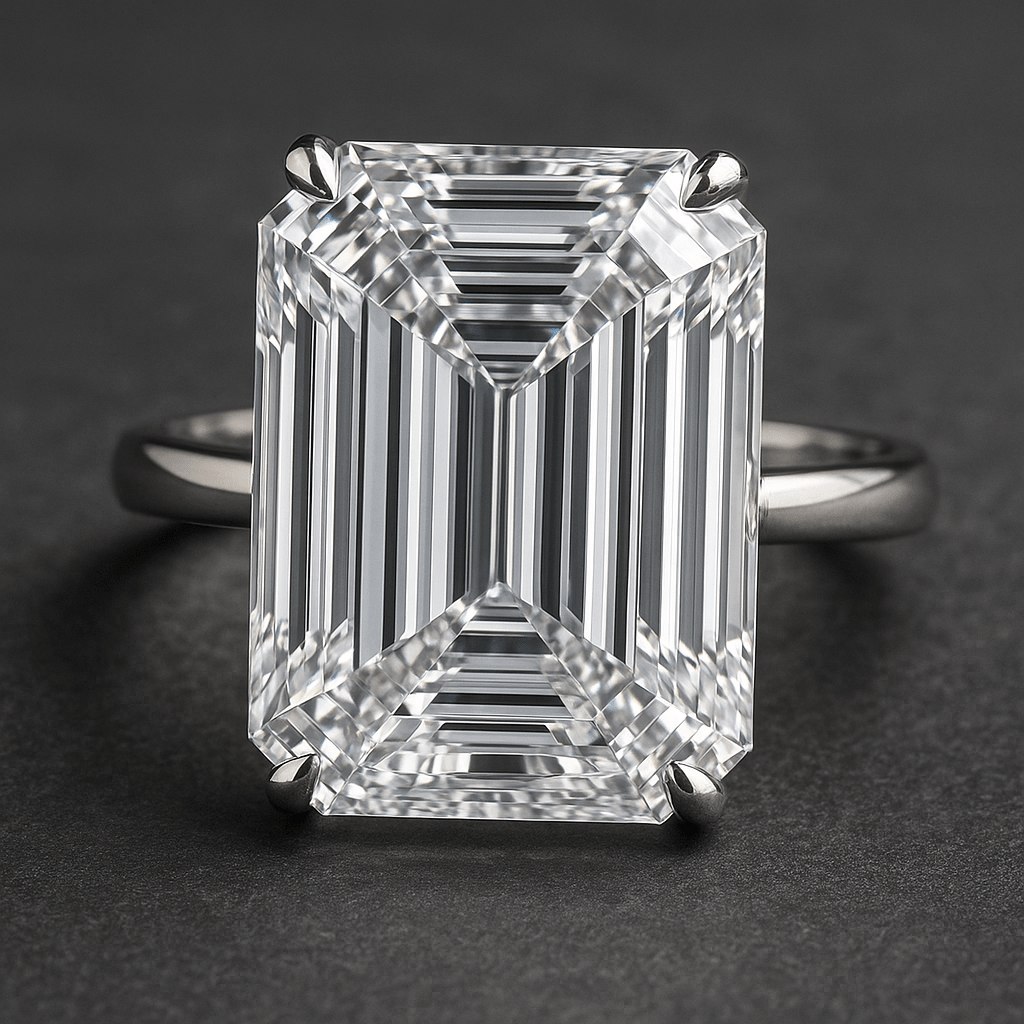
Design Insight: Diamonds are “hard” (resist scratching) but not unbreakable. A diamond can chip on a sharp impact—especially at corners (princess, marquise, pear).
Why Diamonds Aren’t Invincible: Hardness vs. Toughness
-
Hardness (Mohs 10): Resists scratching. Only another diamond can reliably scratch a diamond.
-
Toughness: Resistance to breaking or chipping. Diamonds are hard, yet only moderately tough—thin edges and points are vulnerable to knocks.
-
Durability in real life: Excellent—if you avoid diamond-on-diamond contact and hard impacts.
What Can Mark Or “Scratch” A Diamond?
1) Another Diamond
Most likely source of a true scratch or edge abrasion. Rings jostling together in the same pouch—or diamond bands stacked tightly—can cause micro-wear.
2) Grit Containing Diamond Dust/Industrial Abrasives
Rare in everyday life, but possible in specific environments (certain workshops, abrasive compounds).
3) Hard Impact At Vulnerable Points
Not a scratch, but a chip—often at corners (princess, marquise) or girdle edges if the ring takes a sharp hit.
What Usually Gets Scratched: Your Setting
Even if your stone is pristine, the metal shows life fast:
-
Gold (yellow/white/rose): Picks up hairline scuffs from desks, door handles, and gym equipment.
-
Platinum: Shows a soft patina; can appear “brushed” over time.
-
Prongs: Can flatten or pull slightly on impact, exposing more of the diamond edge.
From the Jeweler’s Bench: When we inspect “scratched” rings, nine times out of ten we find film on the diamond and scuffs on the metal—not a diamond scratch. A quick ultrasonic (if the setting allows), steam, and a professional polish bring back that crisp fire.
Everyday Scenarios (And What They Do)
-
Showering, lotions, sunscreen: Create a film that dulls brilliance; not a scratch.
-
Stacking multiple diamond bands: Diamonds can rub each other’s edges—micro-abrasion risk.
-
Throwing your ring into a catch-all pouch: Diamond-to-diamond or diamond-to-sand contact can abrade edges.
-
Gym/DIY/impact sports: Knocks can chip thin corners or push prongs out of alignment.
Identifying What You’re Really Seeing

How To Prevent Scratches And Chips
Daily Habits
-
Last on, first off: Put rings on after makeup/sunscreen; remove before workouts and rough tasks.
-
Separate storage: Use individual soft pouches or ring slots—don’t let diamonds touch.
-
Mind the stack: If you stack, consider a spacer band (plain metal) between diamond bands.
Cleaning Rhythm
-
At home, weekly: Warm water + a drop of mild dish soap; soft toothbrush under the stone; rinse and pat dry.
-
In-store, seasonally: Professional clean and prong check to keep edges protected.
Setting Choices (If You’re Shopping)
-
Bezel or semi-bezel can shield edges on active hands.
-
Protective prongs at corners for fancy shapes.
-
Lower profile settings for daily wear.
Customer Q&A
Q: My diamond looks scratched after vacation. Could sand do that?
A: Typical beach sand won’t scratch a diamond, but residue can make it look hazy, and impact can chip edges. Start with a deep clean and inspection.
Q: Can you polish away a scratch on a diamond?
A: Sometimes. Light abrasions may improve with professional polishing. Deeper scratches might require a minor re-polish or recut, which our jewelers evaluate carefully to preserve size and symmetry.
When To See A Jeweler
-
You notice a sharp nick at a corner or along the girdle.
-
The ring snags fabric—often a prong issue.
-
Brilliance doesn’t return after a thorough clean.
-
You’re about to start stacking multiple diamond bands.
A short appointment can save a stone from progressive wear.
Our Friendly, Expert Approach At White Diamonds
Your ring should match your life—sparkle and peace of mind included. We guide you through cut quality, setting protection, and everyday care so your diamond looks stunning every time you glance down.
Explore Engagement Ring Collection Now: Compare solitaire, halo, bezel, and guard bands for protected sparkle.
Start The Design Process: Customize a setting that safeguards edges (great for fancy shapes). Learn More
Book Now: Schedule a cleaning, inspection, or prong check—fast and friendly.
White Diamonds
1638 N Washington Blvd Ste 202, North Ogden, UT 84414
Phone: 801-782-3531 • Email: sales@whitediamondsutah.com
Closing Thought
A diamond is resilient, but it still deserves care. With smart daily habits, thoughtful storage, and periodic checkups, your ring will keep the bright, celebratory light you chose it for—day after day, year after year.