The Complete Guide to Diamond Necklaces
Why Diamond Necklaces Are One of the Most Timeless Jewelry Investments
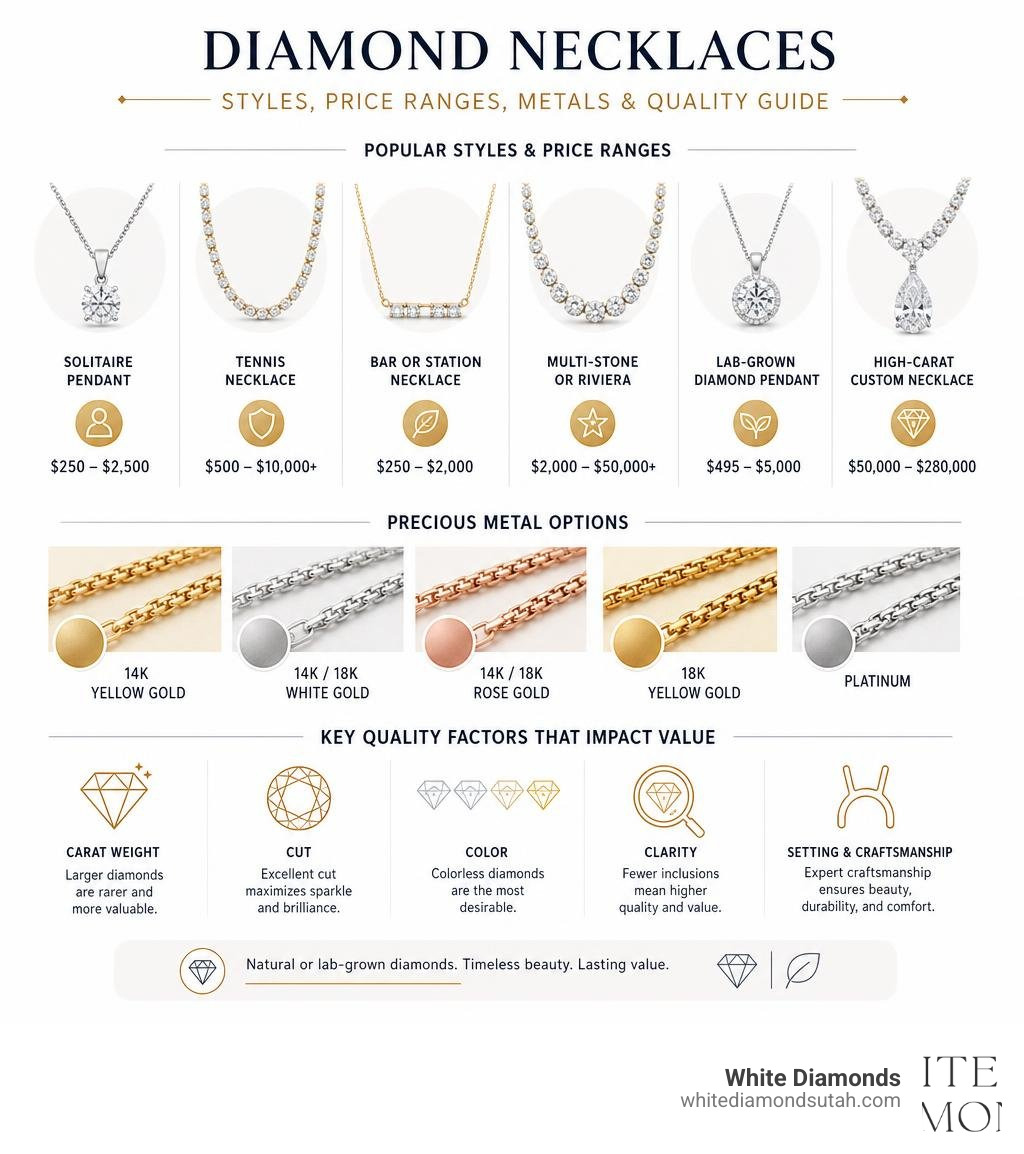
Diamond necklaces sit at the top of the list when it comes to jewelry that combines beauty, meaning, and lasting value. Whether you're shopping for an engagement gift, a milestone anniversary, or simply treating yourself, there's a style and price point for nearly every budget — from delicate pendants under $250 to showstopping multi-carat pieces priced well into six figures.
Here's a quick overview to match your needs:
| What You're Looking For | Best Style | Typical Price Range |
|---|---|---|
| Everyday elegance | Solitaire pendant | $250 – $2,500 |
| Classic and timeless | Tennis necklace | $500 – $10,000+ |
| Minimalist and modern | Bar or station necklace | $250 – $2,000 |
| Bold statement piece | Multi-stone or riviera | $2,000 – $50,000+ |
| Budget-friendly brilliance | Lab-grown diamond pendant | $495 – $5,000 |
| Luxury investment | High-carat custom necklace | $50,000 – $280,000 |
Diamond necklaces are available in natural and lab-grown options, set in metals like 14K gold, 18K gold, rose gold, white gold, and platinum. Prices vary widely based on carat weight, diamond cut, metal type, and the retailer you choose.
At White Diamonds, we specialize in custom rings and wedding bands — but our deep knowledge of diamond quality and fine jewelry craftsmanship extends directly to helping clients understand and select diamond necklaces with confidence. If you're already navigating custom jewelry, this guide will make the process feel a whole lot less overwhelming.
Popular Styles and Designs of Diamond Necklaces
When stepping into diamond necklaces, the sheer variety of designs can be beautifully dizzying. The right style depends entirely on how you (or your loved one) plan to wear it. Is it an everyday signature piece, or is it reserved for candlelit dinners and grand celebrations?
The Solitaire Pendant
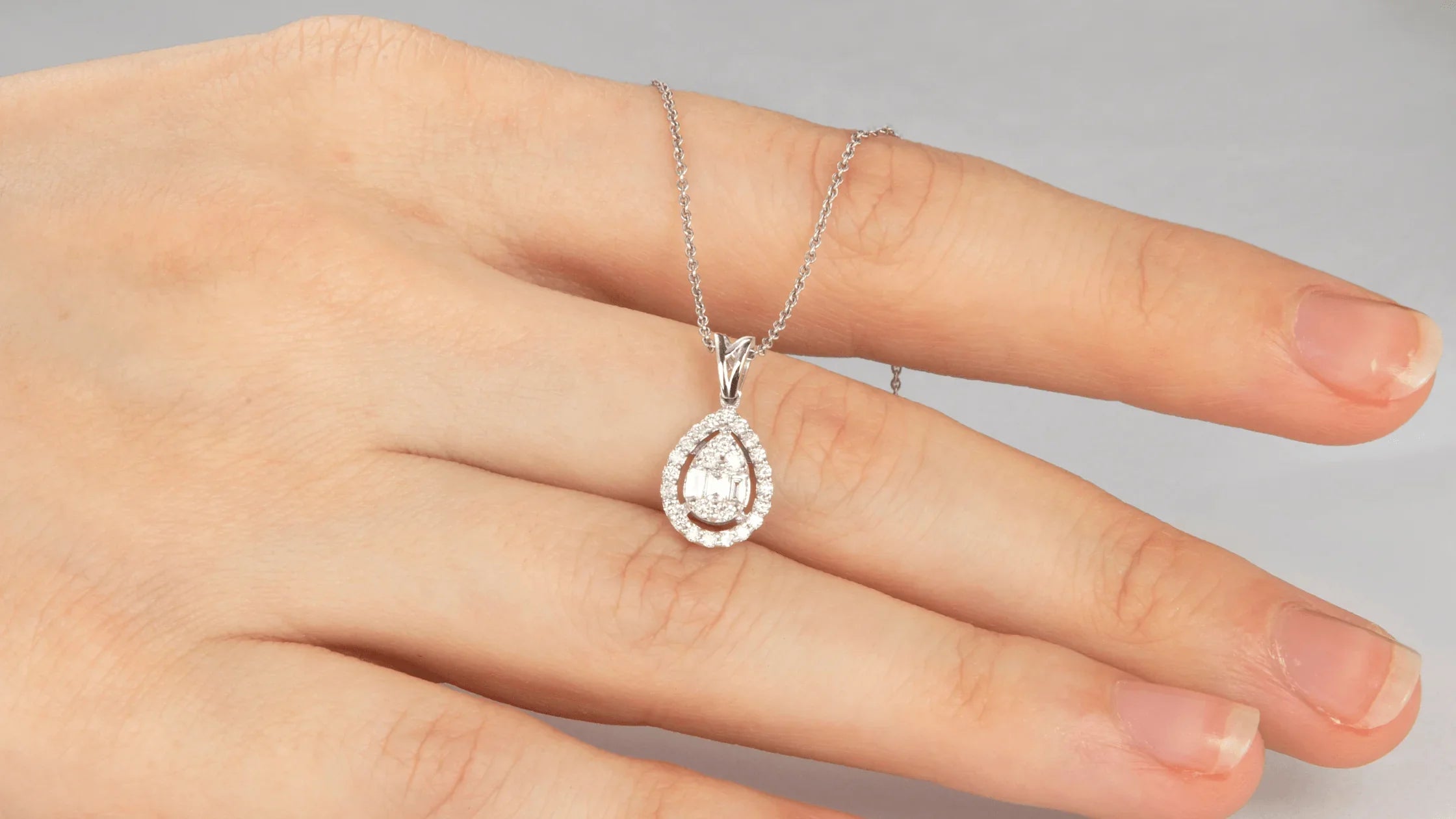
The undisputed queen of versatility, the solitaire pendant features a single, stunning diamond suspended from a delicate metal chain. It draws the eye directly to the stone's brilliance. Popular setting styles include the classic four-prong setting (which maximizes light entry) and the modern bezel setting (which wraps the diamond in a protective metal rim for a sleek, contemporary look).
The Tennis Necklace
A tennis necklace features a continuous, unbroken line of diamonds wrapping entirely around the neck. Historically associated with high society, modern styling has made the tennis necklace a surprising favorite for elevating casual wear. You can find them in graduated designs (where the diamonds get progressively larger toward the center) or uniform designs (where every diamond is the exact same size).
For those looking to make a serious statement, ultra-luxury versions of these necklaces can feature astronomical carat weights. Across the high-end jewelry market, massive pieces containing anywhere from 14.70 to nearly 40 carats of diamonds can command prices from $48,000 up to $280,000.
The Lariat Necklace
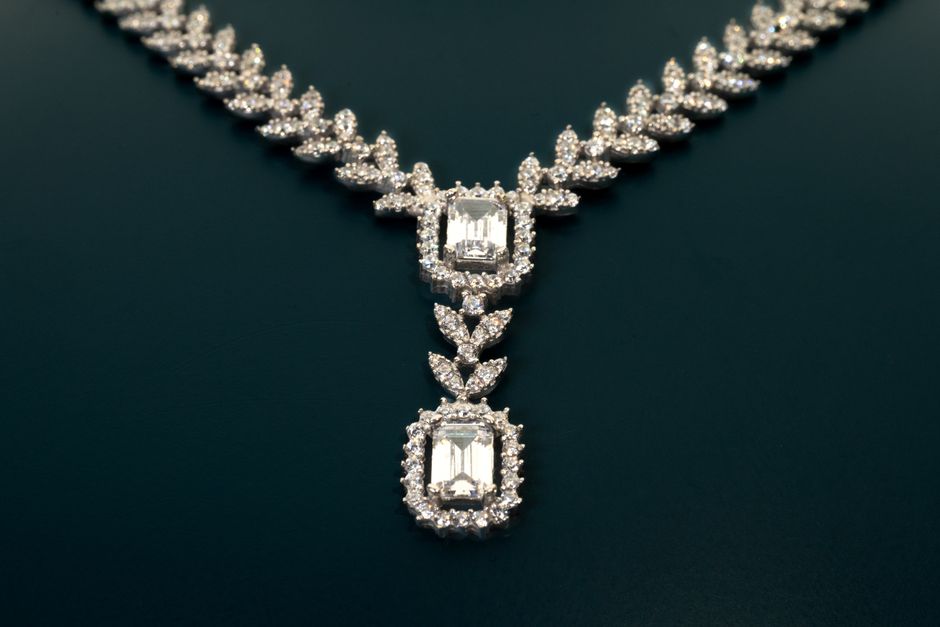
If you love a drop-style silhouette, the lariat necklace is an exquisite choice. Lariats feature a Y-shaped design where a vertical strand of diamonds drapes down toward the chest, often terminating in a larger drop diamond or geometric accent. It is a highly expressive style that pairs beautifully with plunging necklines and evening wear.
The Station Necklace
The classic station necklace features small diamonds (often bezel-set or princess-cut) placed at measured intervals along a delicate gold or platinum chain. This style is incredibly lightweight, comfortable, and perfect for layering. Because the diamonds are spaced out, it offers a subtle, twinkling effect rather than a solid beam of light, making it a stellar option for daily wear.
The Three-Stone Design
Symbolizing a couple's past, present, and future, the three-stone diamond necklace (often arranged vertically or in a gentle curve) is one of the most romantic gifts you can give. It offers a beautiful balance of sparkle and symbolism, often chosen for milestone anniversaries.
Whether you are exploring national collections or seeking a bespoke creation, understanding these core silhouettes is your first step. For those who want to skip the retail markups and work with true jewelry experts in Utah, visiting us at White Diamonds in Ogden can help you design a custom piece that fits your exact vision.
Diamond Quality, Grading, and Sourcing Options
Choosing a diamond necklace isn't just about picking a design; it's about understanding the stones that give the piece its fire. Just like engagement rings, the diamonds in necklaces are graded using the classic "4Cs": Cut, Color, Clarity, and Carat Weight. However, how you prioritize these factors changes slightly when the diamond is worn around the neck rather than on the hand.
| Diamond Cut | Brilliance Level | Best Suited For |
|---|---|---|
| Round Brilliant | Excellent (Maximum Fire) | Solitaires, Tennis Necklaces, Halo Pendants |
| Princess Cut | Very High (Modern Sparkle) | Station Necklaces, Geometric Pendants |
| Emerald Cut | High (Elegant "Hall of Mirrors") | Vintage Solitaires, Art Deco Designs |
| Pear & Marquise | Very High (Elongating Effect) | Lariat Necklaces, Drop Pendants |
| Cushion Cut | High (Soft, Romantic Glow) | Halo Pendants, Three-Stone Necklaces |
Color and Clarity Considerations for Diamond Necklaces
Here is a little insider secret from our expert jewelry services: you can often compromise slightly more on color and clarity for a necklace than you can for an engagement ring. Why? Because people rarely inspect a necklace with a jeweler's loupe from three inches away!
While an engagement ring diamond should ideally sit in the colorless to near-colorless range (D-H) and have eye-clean clarity (VS1-SI1), a diamond pendant can easily look absolutely flawless to the naked eye even if it is graded as "near colorless" (G-H or even I-J) and has a VS2 to SI2 clarity rating.
What you should not compromise on is the cut. A poorly cut diamond will look dull and lifeless, no matter how white or clean it is. To ensure maximum light performance and head-turning sparkle, always prioritize an "Excellent" or "Very Good" cut grade.
Natural vs. Lab-Grown Diamonds
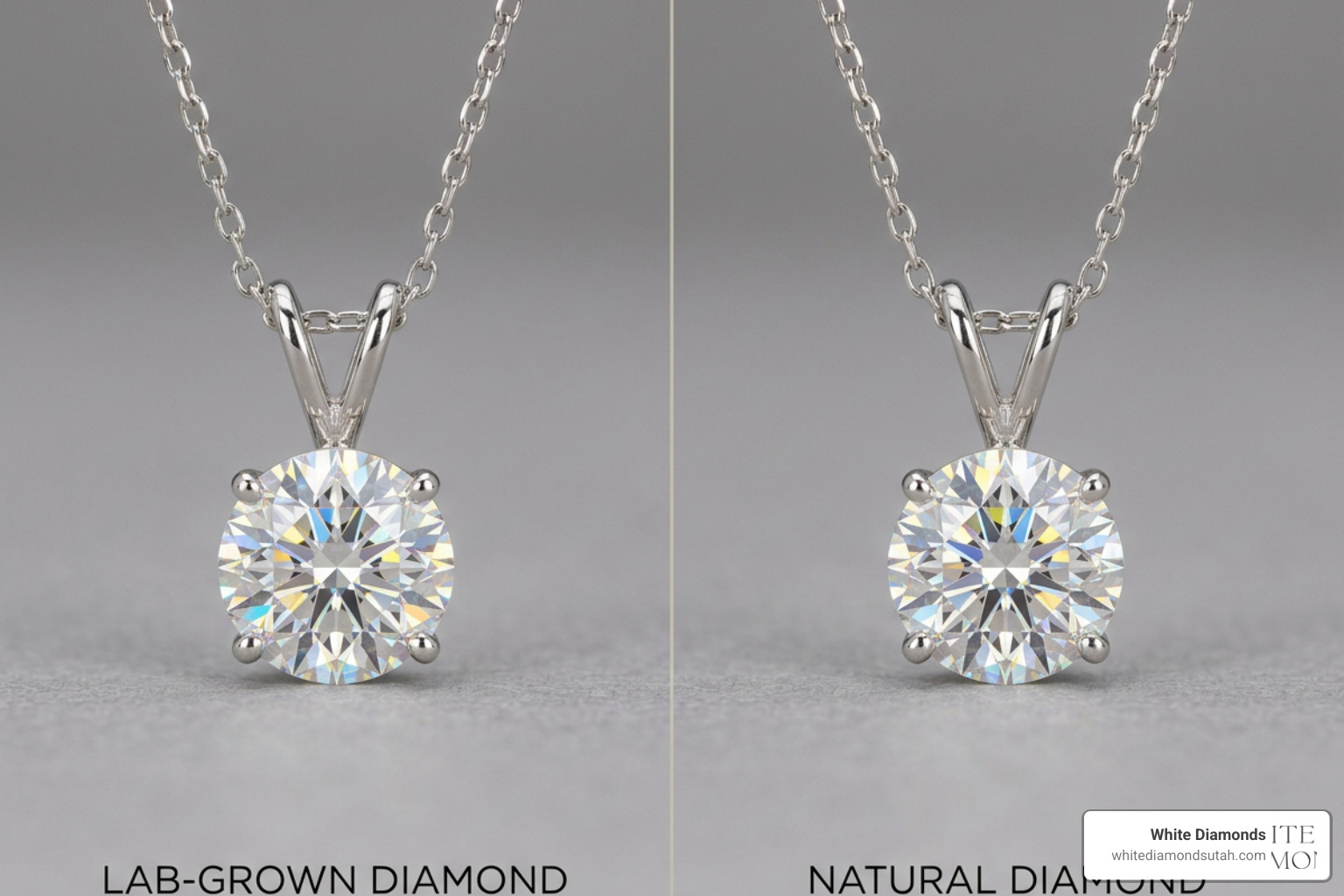
One of the biggest decisions modern buyers face is choosing between natural (mined) diamonds and lab-grown diamonds.
Let's clear up the biggest myth first: lab-grown diamonds are not fake. They have the exact same chemical composition, physical properties, optical characteristics, and durability as natural diamonds. They are made of pure carbon and are graded on the exact same 4Cs scale by major gemological laboratories. To learn more about how they are created, check out our guide on What Are Lab Grown Diamonds.
To help you decide which path is right for you, let's look at how they compare:
- Price and Value: Lab-grown diamonds offer incredible savings, often costing 70% to 80% less than natural diamonds of equivalent quality. This allows you to get a much larger carat weight or a higher color/clarity grade within your budget. If you are shopping for a holiday gift, we weigh the pros and cons of both in Lab Grown Diamond vs Mined Diamond Which Makes a Better Holiday Gift.
- Long-Term Value Retention: Natural diamonds are a finite geological resource, meaning they hold a higher resale and heirloom value over time. If you view your jewelry as a financial asset or want to pass down a piece of Earth's history, natural is the way to go. We break down these market dynamics in our comparison of Lab vs Mined Diamonds.
- Sparkle and Appearance: Side-by-side, even a professional jeweler cannot tell the difference without highly specialized laboratory testing equipment. If you want to see how this plays out in other jewelry pieces, read about How Lab Diamond Stud Earrings Compare to Natural Diamonds.
- Sourcing and Peace of Mind: For eco-conscious buyers, lab-grown diamonds represent a modern, traceable alternative with a highly transparent supply chain. If you're ready to explore this modern option, we have curated a list of the Best Places to Buy Lab Grown Diamonds.
Metals, Pricing, and Care Guidelines
The metal you choose for your necklace acts as the frame for your diamond's fire. It affects not only the style and color of the piece but also its weight, durability, and price.
Choosing the Right Metal for Diamond Necklaces
- 14K White Gold: The most popular choice for diamond jewelry. White gold has a bright, mirror-like finish that makes diamonds look larger and more seamless. It is highly durable and offers the luxurious look of platinum at a more accessible price point.
- 18K Yellow Gold: Yellow gold brings a timeless, rich warmth to a necklace. It contrasts beautifully with white diamonds, making the stones pop.
- Rose Gold: Known for its romantic, vintage blush, rose gold is an incredibly flattering metal that looks stunning on all skin tones.
- Platinum: The ultimate luxury metal. Platinum is naturally hypoallergenic, incredibly dense (it feels heavier around the neck), and does not require replating over time. It is highly secure for holding precious gemstones.
- Sterling Silver: A budget-friendly option often used for fashion jewelry or lightweight pendants. While beautiful, it requires more frequent polishing to prevent tarnish.
For those who love the ultimate expression of gold luxury, you might wonder about higher purities. While pure 24K gold is generally too soft for setting diamonds securely, it remains highly sought after for solid chains. You can read more about this in our 24k Gold Necklace Mens style guide.
Best Practices for Cleaning and Maintenance
Diamonds are the hardest natural substance on Earth, but they are also absolute magnets for grease, lotion, and dust. A dirty diamond will lose its sparkle instantly because light cannot enter the stone to bounce back to your eye. Fortunately, keeping your necklace sparkling like new in June 2026 is incredibly simple.
The At-Home Cleaning Ritual:
- Soak: Fill a small bowl with warm water and add a few drops of mild, detergent-free dish soap. Let your necklace soak for 20 to 30 minutes.
- Brush: Gently brush the diamond and the metal setting with a clean, ultra-soft toothbrush. Pay special attention to the back of the setting where skin oils and lotions accumulate.
- Rinse: Rinse the necklace thoroughly under warm running water (make sure the sink drain is closed!).
- Dry: Pat dry with a soft, lint-free microfiber cloth. Avoid paper towels, which can scratch softer metals.
Professional Jewelry Care
While at-home cleaning keeps your necklace bright, we highly recommend bringing your jewelry into our custom showroom at White Diamonds once a year for a professional inspection. A jeweler will check the integrity of your prongs under a microscope to ensure your diamonds are completely secure, giving you ultimate peace of mind.
Frequently Asked Questions
What do diamond necklaces symbolize?
A diamond necklace is a powerful symbol of eternal love, strength, and purity. Because diamonds are virtually indestructible, they represent unbreakable bonds and enduring commitment. This makes them incredibly popular as milestone gifts for major life events, such as graduations, births, landmark birthdays, and wedding anniversaries.
Can you wear a diamond necklace every day?
Yes, absolutely! Solid 14K gold, 18K gold, and platinum are highly durable and completely waterproof, making them excellent for daily wear. However, to protect your investment, we recommend removing your necklace before swimming in chlorinated pools (which can weaken gold alloys), applying heavy lotions or perfumes, or engaging in intense workouts. It is also wise to take off your necklace before sleeping to prevent the delicate chain from tangling or catching on bedsheets.
How can I tell if a diamond necklace is real?
The only 100% reliable way to verify a diamond's authenticity is to have it evaluated by a professional jeweler using a specialized diamond tester or a microscope. When purchasing, always buy from a trusted jeweler and ensure your necklace comes with a grading report or certificate of authenticity from a reputable gemological lab (such as the GIA or IGI).
Conclusion
A diamond necklace is more than just a beautiful accessory; it is a wearable piece of art that holds memories, celebrates milestones, and can be passed down through generations. Whether you prefer the classic simplicity of a solitaire pendant or the modern architecture of a custom design, finding the perfect piece is a journey of education and personal style.
At White Diamonds in Ogden, Utah, we believe that shopping for fine jewelry should be an exciting, pressure-free experience. We specialize in custom jewelry design, offering personalized consultations where you can explore model rings, custom settings, and high-quality diamonds that fit perfectly within your budget and timeline.
Ready to find or design your dream necklace? Dive deeper into your options with our 24k Diamond Necklace Complete Guide, or book a consultation with our Utah-based team today to bring your custom jewelry vision to life!