The Ultimate Guide to Choosing Your Dream Bridal Rings and Diamonds
What You Need to Know Before Buying Bridal Rings and Diamonds
Choosing bridal rings diamond styles and settings is one of the most meaningful purchases you'll ever make - and also one of the most confusing. With hundreds of shapes, metals, settings, and diamond types to consider, it's easy to feel overwhelmed before you've even started.
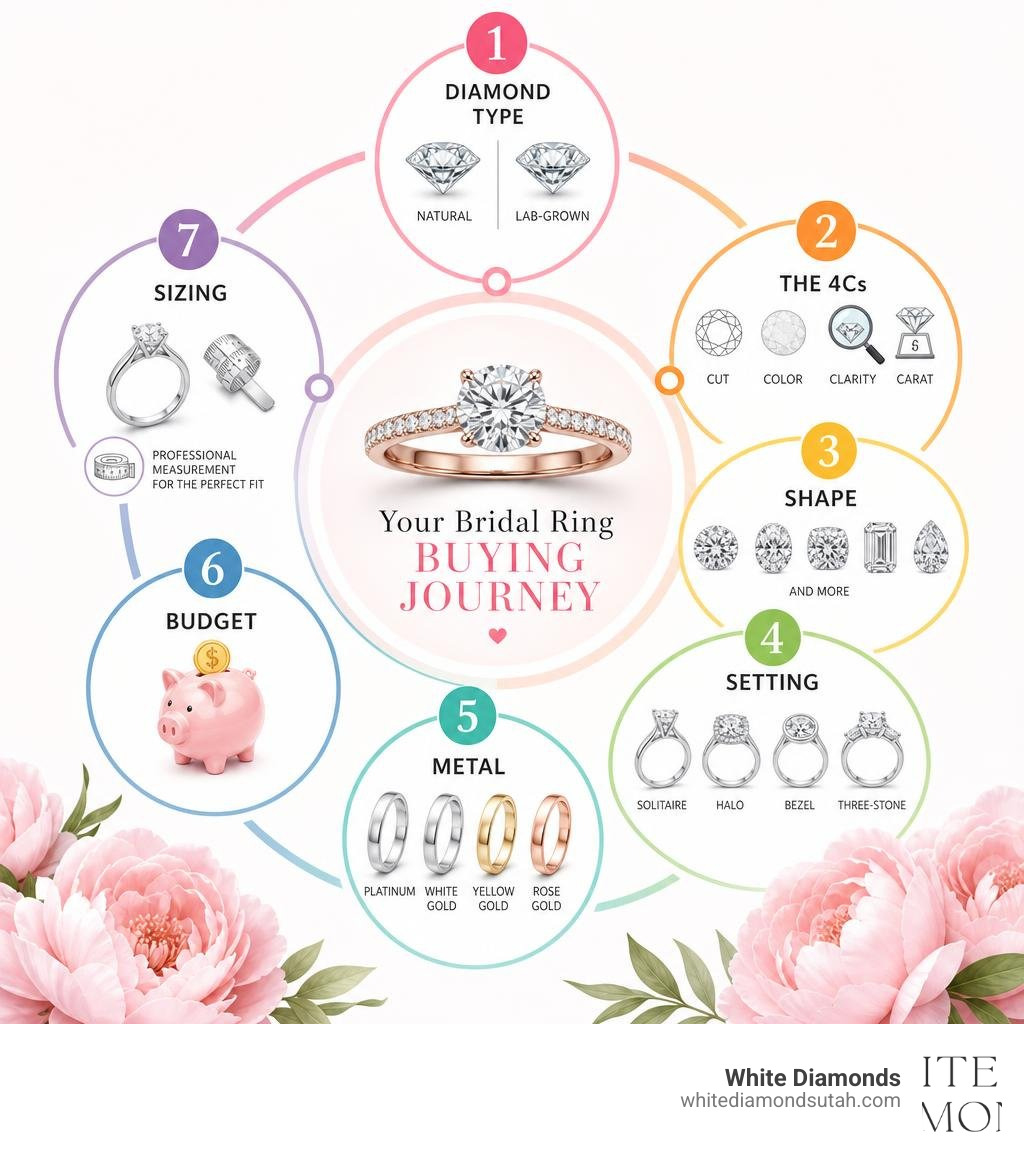
Here's a quick overview of the key decisions every buyer faces:
| Decision | Your Main Options | Quick Tip |
|---|---|---|
| Diamond type | Natural vs. lab-grown | Lab-grown costs 20-40% less for the same size |
| Diamond quality | Cut, Color, Clarity, Carat (4Cs) | Prioritize cut above all else for sparkle |
| Diamond shape | Round, oval, cushion, emerald, pear, more | Fancy shapes cost 20-30% less than round |
| Ring setting | Solitaire, halo, bezel, vintage, three-stone | Match the style to your partner's daily life |
| Metal type | Platinum, white gold, yellow gold, rose gold | Platinum is most durable; 14K gold is practical |
| Budget | $4,000 entry-level -> $25,000+ for 1-2ct natural | Lab-grown or fancy shapes stretch your budget |
| Ring size | Measured at room temperature, end of day | Get sized by a professional for accuracy |
If you are brand-new to diamond terminology, the Gemological Institute of America offers a helpful independent overview of the 4Cs of diamond quality before you start comparing stones.
The average engagement ring diamond in the U.S. weighs between 1.08 and 1.2 carats. But the "right" ring has nothing to do with averages - it's about what fits your style, your partner's preferences, and your budget.
This guide walks you through every decision, step by step, so you can shop with confidence and zero pressure.
At White Diamonds, we're a personal jewelry studio specializing in custom bridal rings diamond design, wedding bands, and ring cleaning services - built around helping couples create something truly their own. We'll be sharing our hands-on expertise throughout this guide to help you make the best choice for your love story.
Natural vs. Lab-Grown: Selecting Your Centerpiece
One of the first and most significant decisions you will make when shopping for a bridal rings diamond centerpiece is choosing between a natural diamond and a lab-grown diamond. This choice shapes your budget, the size of the stone you can acquire, and the story your ring tells.
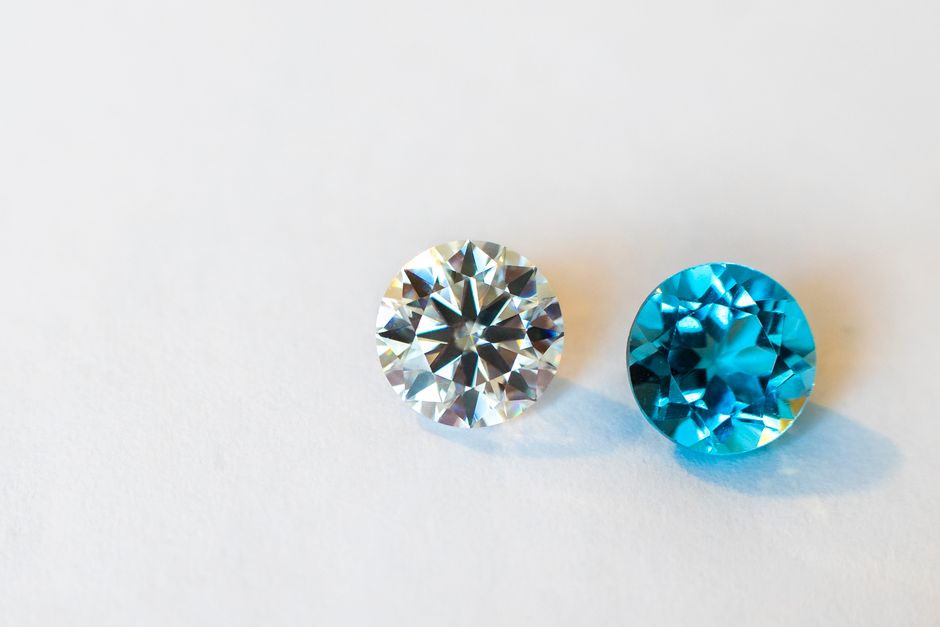
Regardless of their origin, both options are physically, chemically, and optically identical. Under a jeweler’s loupe, they display the exact same fire, scintillation, and structural hardness (a perfect 10 on the Mohs scale). To help you determine which path matches your values and budget, it is helpful to look at how they differ in origin, value retention, and cost. If you are still on the fence, you can read our detailed breakdown on Which Engagement Ring Should I Get.
Natural Diamonds: Timeless and Rare
Natural diamonds are geological miracles. Formed deep within the Earth's mantle over one to three billion years ago under unimaginable heat and pressure, these stones are pushed to the surface by volcanic activity. Because they are a finite resource, they possess a distinct sense of rarity and history.
For many couples, the appeal of a natural diamond lies in its heirloom value. There is a romantic sentiment in knowing that your stone survived a journey of billions of years before arriving on your partner's finger. Furthermore, natural diamonds retain a higher percentage of their resale and trade-in value over time. If you view your bridal jewelry as a long-term financial asset or a physical legacy to be passed down through generations, a natural diamond remains the traditional gold standard.
Lab-Grown Diamonds: Modern and Accessible
Lab-grown diamonds are real diamonds grown in highly controlled laboratory environments that replicate the natural conditions of the Earth’s mantle. Using advanced methods like Chemical Vapor Deposition (CVD) or High Pressure High Temperature (HPHT), scientists can grow a gem-quality diamond crystal in a matter of weeks.
The primary benefit of lab-grown diamonds is their affordability. Because the supply chain is shorter and highly efficient, lab-created diamonds typically cost 20% to 40% less than natural diamonds of equivalent size, color, and clarity. This price difference allows you to maximize your budget, making larger carat sizes or premium settings far more accessible.
Additionally, lab-grown diamonds appeal to environmentally and socially conscious couples. Because they do not require open-pit mining, they offer a transparent, modern alternative.
How to Choose the Perfect Bridal Rings Diamond Centerpiece
Evaluating a diamond involves looking past its surface sparkle to understand the specific elements that dictate its quality, beauty, and overall value. To help you balance your budget against your visual goals, we have outlined how the classic "4Cs" interact with one another:
| The 4Cs | What It Measures | Impact on Sparkle & Beauty | Smart Buying Strategy |
|---|---|---|---|
| Cut | The precision of the diamond's facets and shape | Extremely High. Dictates the stone's fire, brilliance, and scintillation. | Never compromise here. Choose an "Excellent" or "Ideal" cut. |
| Color | The presence of yellow or brown tints (D to Z scale) | Moderate. D-F is colorless; G-H is near-colorless and looks white. | Opt for G or H. It looks colorless to the naked eye but saves you thousands. |
| Clarity | The presence of internal flaws (inclusions) or surface marks | Moderate. Measures rarity, but many flaws are microscopic. | Look for VS2 or SI1 "eye-clean" stones where flaws aren't visible without a loupe. |
| Carat | The physical weight of the diamond | High Visual Impact. Larger stones are rarer and exponentially costlier. | Buy just under major thresholds (e.g., 0.95ct instead of 1.0ct) to save. |
Before making a final purchase, always verify that your diamond is certified by a reputable, independent gemological laboratory. The Gemological Institute of America (GIA) is the global benchmark for natural diamonds, while the International Gemological Institute (IGI) is widely regarded as the leader in grading lab-grown stones. To learn more about navigating these grades, explore our Guide To Buying Diamond Engagement Rings In Utah.
Understanding the 4Cs of a Bridal Rings Diamond
To get the most out of your purchase, it helps to dive deeper into how each of the 4Cs affects a diamond's live performance on the hand:
- Diamond Cut: This is the most critical factor of all. A diamond with perfect color and clarity will still look dull and lifeless if it is cut too shallow or too deep, allowing light to leak out of the sides. An Excellent cut ensures that light enters through the top, bounces off the interior facets, and reflects back out in a dazzling display of rainbow fire and white brilliance.
- Diamond Color: Diamond color is graded on a scale from D (completely colorless) to Z (light yellow or brown). While D-grade diamonds command a premium, near-colorless diamonds in the G to J range offer an exceptional visual compromise. When set in yellow gold or rose gold, even a J-color diamond will look bright and white.
- Diamond Clarity: Clarity grades run from Flawless (FL) down to Included (I3). Most diamonds have tiny natural birthmarks called inclusions. The secret is finding an "eye-clean" diamond—usually in the VS2 or SI1 range—where the inclusions cannot be seen by the naked eye. This allows you to get a beautiful stone without paying the premium associated with flawless clarity.
- Carat Weight: Carat is a measure of weight, not physical size. Because diamond prices rise exponentially at full-carat marks (like 1.0ct, 1.5ct, or 2.0ct), you can find incredible value by shopping for "under-sizes." A 1.9-carat diamond will look virtually identical to a 2.0-carat diamond but can cost significantly less.
Selecting the Ideal Diamond Shape
The shape of your diamond is the ultimate expression of your partner's personal style. While the round brilliant cut remains the most classic choice, fancy shapes offer distinct aesthetic and financial advantages. In fact, fancy shapes like oval, pear, or cushion cuts typically cost 20% to 30% less than round diamonds of equal carat weight.
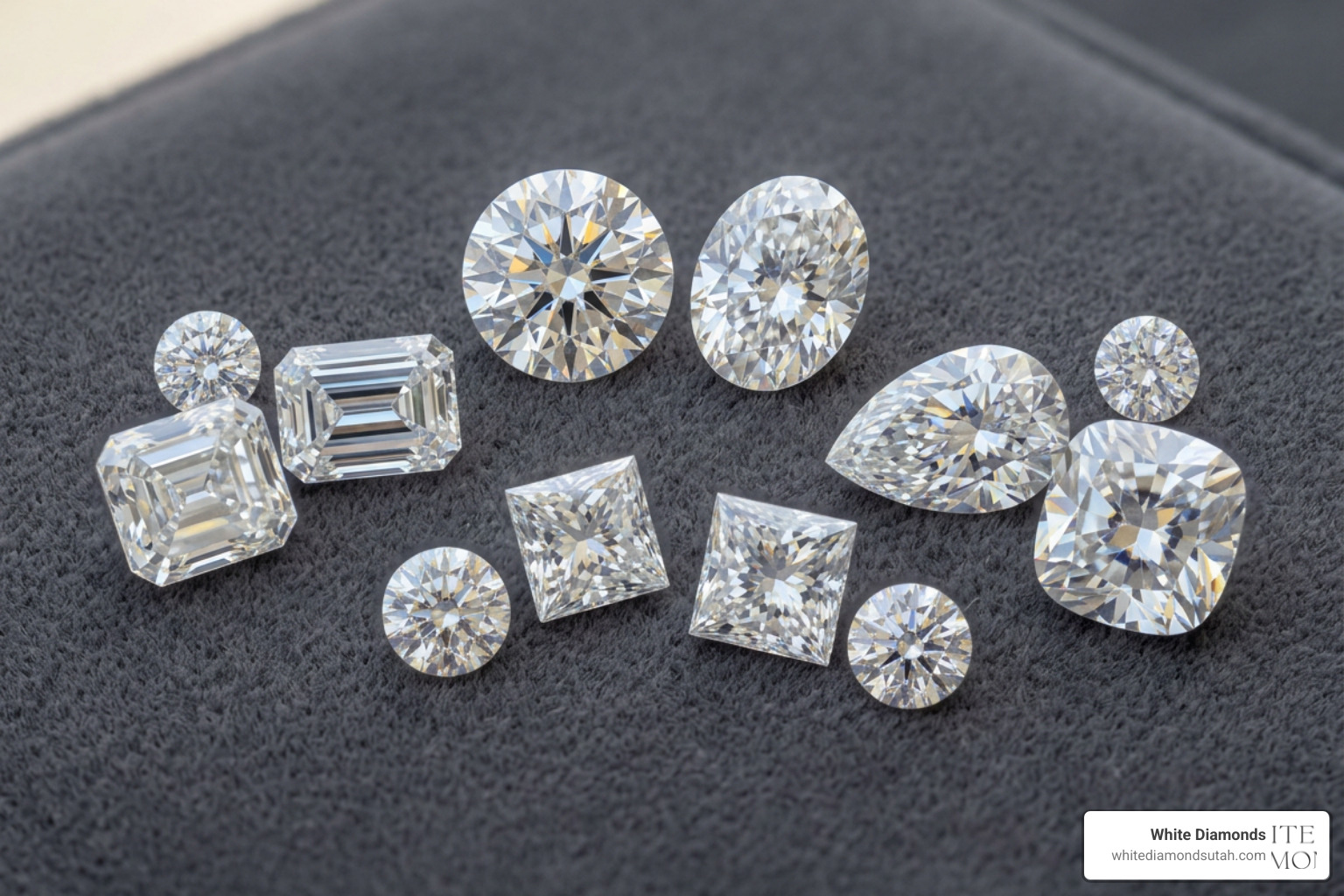
- Round Brilliant: Featuring 58 facets mathematically engineered to reflect the maximum amount of light, this is the most brilliant and timeless shape available.
- Oval Cut: A modern favorite that combines the brilliance of a round cut with an elongated shape that flatters the finger and makes the stone appear larger than its actual carat weight.
- Emerald Cut: A rectangular shape with step-cut facets that create a "hall-of-mirrors" effect. This sophisticated, vintage-style shape highlights the clarity of the diamond.
- Cushion Cut: A soft square shape with rounded corners that blends classic elegance with incredible fire and scintillation.
- Pear Shape: Often called a teardrop, this shape combines round and marquise cuts for a dramatic, elongating look that stands out.
- Radiant Cut: A rectangular or square shape with trimmed corners and brilliant-cut facets, offering the clean outline of an emerald cut but with maximum sparkle.
Popular Engagement Ring Styles and Settings
Once you have selected your diamond, the next step is finding a setting that protects the stone while showing off its unique beauty. The setting you choose defines the overall aesthetic of the ring and determines how well it integrates with a busy lifestyle.
To explore the latest design options and trends, check out our guide on How To Choose A Diamond Ring Setting or see what local couples are loving in our review of the Top 5 Engagement Ring Styles Trending In Utah This Year.
Classic Solitaire and Halo Settings
For those who love clean lines and traditional elegance, the solitaire setting is an unbeatable choice. This style features a single, stunning center stone held aloft by delicate prongs, allowing light to enter the diamond from all angles. It is simple, timeless, and pairs beautifully with almost any wedding band.
If maximum sparkle is your goal, a halo setting wraps the center diamond in a micro-pavé border of smaller diamonds. This not only adds a spectacular layer of brilliance but also creates the optical illusion of a larger center stone, making a 1-carat diamond look closer to 1.5 or 2 carats.
Vintage-Inspired and Modern Bezel Designs
Vintage-inspired rings are perfect for partners who appreciate historical romance, intricate craftsmanship, and unique design details. These settings often feature delicate milgrain detailing (tiny metal beads), hand-carved filigree, and floral patterns reminiscent of the Edwardian, Victorian, or Art Deco eras.
On the other end of the design spectrum is the modern bezel setting. Instead of holding the diamond in place with prongs, a bezel setting wraps a thin collar of precious metal entirely around the edge of the stone. This provides a clean, contemporary, low-profile look that offers unmatched protection for the diamond, making it the perfect choice for doctors, nurses, athletes, or anyone with an active, hands-on lifestyle.
Precious Metals and Band Selection
The metal you choose for your ring band does more than set the color palette; it affects the ring's weight, durability over time, and how it feels against the skin. When deciding on a precious metal, you must balance visual preferences with practical considerations like maintenance and hypoallergenic properties. For a detailed look at local options, read our Wedding Rings Utah Guide 2026.
Platinum vs. White Gold
While platinum and white gold look identical at a glance, they are entirely different metals with distinct physical properties:
- Platinum: Platinum is a naturally white, dense, and heavy precious metal. It is hypoallergenic, making it ideal for those with sensitive skin or metal allergies. Platinum does not wear away over time; instead, daily wear causes the metal to shift slightly, developing a warm, satin finish known as a patina. While it requires very little maintenance, platinum carries a higher upfront cost due to its purity and density.
- White Gold: White gold is created by alloying pure yellow gold with white metals like nickel, silver, or palladium. To give it a bright, reflective shine, it is coated in a thin layer of rhodium. Over time, this plating will naturally wear away, revealing the faint yellow undertones of the gold underneath. To keep white gold looking brand new, it will need to be re-plated with rhodium every few years. However, white gold is highly durable, scratch-resistant, and more budget-friendly than platinum.
Yellow Gold and Rose Gold
For those who prefer a warm, traditional aesthetic, yellow gold and rose gold offer beautiful alternatives:
- Yellow Gold: This classic choice has enjoyed a massive resurgence in recent years. It provides a striking, high-contrast backdrop for bright white diamonds. We generally recommend 14K yellow gold for everyday wear, as the higher alloy content makes it more scratch-resistant than 18K yellow gold, while still retaining a rich, buttery hue.
- Rose Gold: Created by mixing pure gold with a copper alloy, rose gold offers a warm, romantic, vintage-inspired pink tone. It is exceptionally durable and looks beautiful on all skin tones.
Budgeting and Smart Shopping Strategies
When shopping for bridal rings diamond centerpieces, the price tag is influenced by a complex web of factors: diamond origin (natural vs. lab-grown), carat weight, metal type, and design complexity.
To put pricing in perspective, entry-level luxury engagement rings featuring smaller natural diamonds, lab-grown diamonds, or simpler settings typically start around $4,000 to $7,000. Classic centerpiece designs featuring natural 1- to 2-carat diamonds with premium clarity and color generally range from $10,000 to $25,000, while high-luxury designs with massive natural stones or fully custom settings can easily exceed $50,000. To plan your budget effectively, read our guide on How Much To Spend On An Engagement Ring.
Balancing the 4Cs for Maximum Value
To get the most visual impact out of your budget, we recommend prioritizing the 4Cs in this order:
- Cut: Spend the majority of your budget here. An Excellent cut makes a diamond look brighter, larger, and livelier, disguising lower color and clarity grades.
- Color: Drop down to a G, H, or I grade. These stones look completely white to the untrained eye but offer massive savings over D-F colorless grades.
- Clarity: Look for an "eye-clean" VS2 or SI1 diamond. There is no visual benefit to paying for a Flawless grade if the differences can only be seen under a high-powered microscope.
- Carat: Once you have secured a great cut, near-colorless tone, and eye-clean clarity, select the largest carat weight that fits within your remaining budget.
Customizing Your Bridal Rings Diamond Design
If you want a ring that is truly personal, custom design is the ultimate path. Customization allows you to bypass the limitations of pre-made jewelry, giving you complete control over every millimeter of the design while ensuring the final piece fits your exact budget and timeline.
At White Diamonds, our custom design process is built to be fun, collaborative, and entirely pressure-free. We start by listening to your ideas, sketching concepts, and showing you physical model rings so you can see how different elements look on the hand. From there, we use state-of-the-art 3D CAD modeling to create a digital blueprint of your ring, allowing you to make adjustments before we cast the metal and hand-set your chosen stones.
Whether you want to incorporate a personalized engraving, replicate a vintage family heirloom, or build a matching bridal set from scratch, our team is here to bring your vision to life. Ready to explore the possibilities? You can schedule a Custom Ring Consultation Free with us today.
Frequently Asked Questions about Bridal Rings
How do I determine the correct ring size?
Determining the correct ring size is crucial to ensure comfort and prevent the ring from slipping off. The most reliable method is to have your partner’s finger measured by a professional jeweler using a set of metal sizing rings.
When measuring, keep in mind that finger size changes throughout the day based on temperature, physical activity, and hydration levels. For the most accurate reading, measure the finger at the end of the day when the hands are warm. If you are planning a surprise proposal, you can discreetly borrow a ring your partner regularly wears on their ring finger and bring it to our studio for measurement. If the fit isn't perfect on the first try, don't worry—most rings can be easily adjusted. To learn more about how this works, see our guide on Can Engagement Rings Be Resized.
What is the difference between an engagement ring and a wedding band?
While they are often worn together, these two rings serve different symbolic and practical purposes:
- Engagement Ring: Traditionally presented during the proposal, this ring usually features a prominent center stone (like a diamond or gemstone) and is designed to be eye-catching and ornate.
- Wedding Band: Exchanged during the wedding ceremony, the wedding band is typically a simpler metal band, sometimes accented with pavé diamonds or channel-set stones.
Many modern couples choose to buy these rings together as a matching bridal set, ensuring that the wedding band contours perfectly around the engagement ring's center setting. Others enjoy creating a unique "stack" of rings, mixing different metals and styles over time to celebrate anniversaries and milestones.
How should I care for and maintain my diamond ring?
To keep your bridal rings diamond centerpiece sparkling like new, follow these simple care guidelines:
- Keep It Clean: Clean your ring at home once a week by soaking it in a bowl of warm water mixed with a few drops of mild dish soap. Use a soft-bristled baby toothbrush to gently scrub away dirt, lotion, and oils from behind the diamond, then rinse thoroughly and dry with a lint-free cloth.
- Avoid Harsh Chemicals: Always remove your ring before swimming in chlorinated pools, using household cleaning products, or applying heavy lotions, perfumes, and hairsprays.
- Store It Safely: When you aren't wearing your ring, store it in a fabric-lined jewelry box or a soft pouch. Store it separately from other jewelry to prevent harder diamonds from scratching softer precious metals.
- Get Professional Inspections: Bring your ring to a professional jeweler twice a year for a deep clean and inspection. A jeweler can check that the prongs are secure, ensuring you never have to worry about a loose stone.
Conclusion
Choosing the perfect bridal rings diamond combination is an exciting journey of love, art, and personal expression. Whether you are drawn to the rare, ancient history of a natural diamond or the modern, accessible luxury of a lab-grown stone, the most important factor is that the ring reflects your unique bond and personal values.
At White Diamonds in Ogden, UT, we believe that shopping for an engagement ring should be a joyful, pressure-free experience. We specialize in custom jewelry design, helping you select the perfect diamond, metal, and setting to fit your exact budget and timeline. If you are ready to take the first step, check out our guide on How To Start Engagement Ring Shopping or visit our studio to begin designing the ring of your dreams.