One Simple Way to Resize Engagement Rings & Know Their Limits
Can Engagement Rings Be Resized? Start With the Band
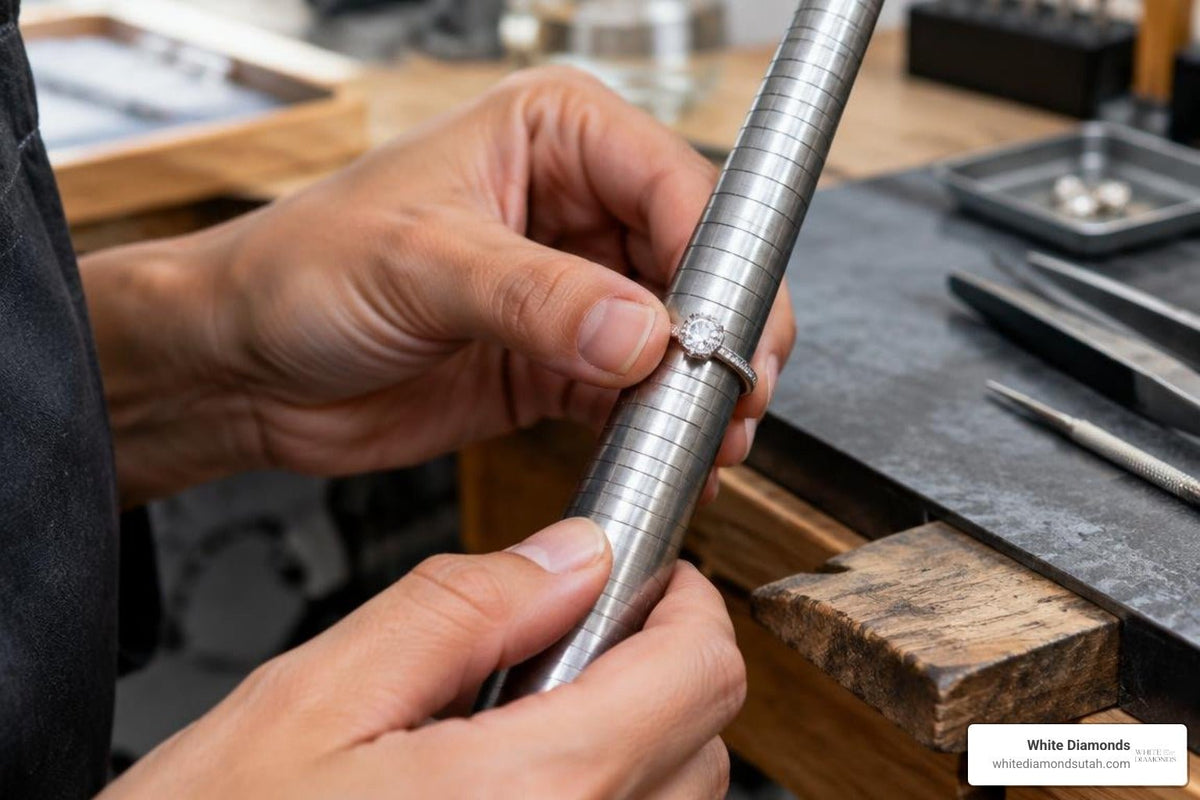
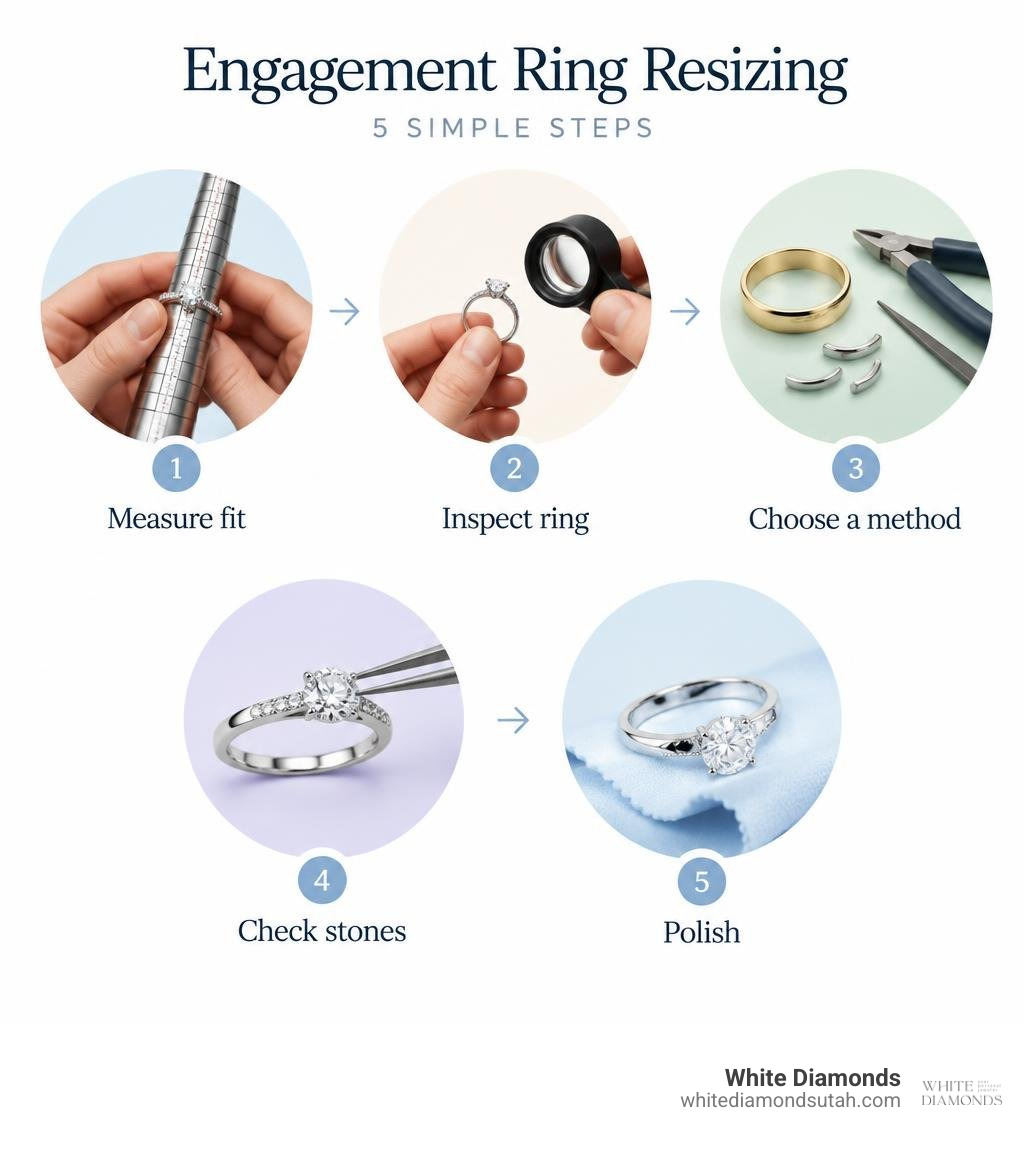
Yes, many engagement rings can be resized. A jeweler can usually make a gold or platinum band smaller by removing metal or larger by adding metal. First, get your finger measured and have a jeweler inspect the band and stone settings. Rings with stones all the way around, tension settings, or certain alternative metals may need another solution.
At White Diamonds, we craft custom rings and wedding bands and offer ring cleaning. That experience helps us answer a common question: can engagement rings be resized? The next step is to look at the ring's metal, design, and fit.
Can Engagement Rings Be Resized? Key Factors and Feasibility
When you slip that dream ring onto your finger, you want it to feel comfortable and secure. However, life happens—temperatures fluctuate, knuckles change over time, or the initial proposal surprise meant taking an educated guess at your partner's exact finger size. Determining whether an engagement ring can undergo sizing adjustments comes down to its core architecture and engineering.
A jeweler must evaluate several structural elements before performing any work:
- Shank Thickness and Width: The shank—the bottom and sides of the ring band—needs sufficient thickness. If a band is already paper-thin from decades of wear, cutting or stretching it could compromise its structural integrity.
- Shoulder Stones and Pavé Settings: Tiny accent diamonds lining the shoulders of the band rely on precise metal tension and microscopic prongs. When the curvature of the band is altered, those stone seats shift.
- Center Stone Tension and Mounting: Solitaire mountings are generally straightforward, but intricate cathedral or tension settings require extra care to prevent the main diamond from shifting out of alignment.
- Equipment Used: Modern jewelers often utilize advanced laser welding technology. Laser welding delivers pinpoint heat, allowing jewelers to join precious metals seamlessly without exposing nearby delicate accent stones to intense torch flame.
When building bespoke engagement ring designs, we build the band with future adjustments in mind, ensuring adequate metal depth along the lower shank so your piece remains sturdy for decades.
| Ring Style / Metal Type | Resizing Feasibility | Common Limitations & Notes |
|---|---|---|
| Yellow & White Gold Solitaire | Highly Feasible | Standard cut-and-solder; white gold requires fresh rhodium plating. |
| Platinum Solitaire | Highly Feasible | Requires high-heat platinum solder or laser welding to avoid visible seams. |
| Rose Gold Band | Moderately Feasible | Prone to cracking if bent quickly; requires gentle annealing and heat control. |
| Side-Stone / Pavé Band | Moderately Feasible | Sizing limited to 1–1.5 sizes; side stones require post-sizing retightening. |
| Full Eternity Band | Not Feasible | Gems encircle the entire shank; resizing requires rebuilding or swapping. |
| Tungsten / Titanium / Cobalt | Not Resizable | Metals are too hard or brittle to cut and solder; requires band replacement. |
Which Metals and Settings Can Engagement Rings Be Resized On?
The metal type and setting style dictate what is possible at the jeweler's bench:
- Precious Metals: Traditional fine jewelry metals—14k gold, 18k gold, and platinum—are malleable and ideal for resizing. Yellow gold is the most forgiving. White gold requires an electroplated rhodium finish after sizing to restore its mirror-like, bright white luster. Platinum has a remarkably high melting point, requiring specialized platinum solder or laser welding so the joint does not develop a dark gray seam over time. Rose gold contains copper alloys that make it slightly more brittle, meaning it must be heated (annealed) and handled gently to prevent stress fractures.
- Setting Configurations: Classic prong settings are simple to adjust because the center gem sits elevated above the band. Bezel settings—where a rim of metal fully encircles the gemstone—can tolerate modest sizing adjustments, though drastic shifts can warp the metal bezel holding the gem. Channel settings, where diamonds sit suspended between two parallel metal tracks, are sensitive to bending; curving the band too sharply can squeeze the stones together or widen the tracks, causing gems to come loose.
How Many Sizes Can Engagement Rings Be Resized?
As a general benchmark, most standard rings can be safely adjusted up or down by up to two full sizes.
Attempting to change a ring by three, four, or five sizes places extreme stress on the metal. Sizing a ring down drastically can cause "ovaling," where the circular ring transforms into an egg shape, distorting side baskets and loosening prongs. Going up several sizes stretches the metal too thin or requires a large metal bridge insertion that alters the ring's visual balance.
Can a ring be resized multiple times? Yes, but each intervention introduces heat and physical stress to the metal. If a family heirloom has already been sized three or four times, repeated cutting and soldering will thin the shank. In these cases, an experienced jeweler will recommend adding a half-shank replacement to restore uniform thickness.
Professional Methods Used to Resize an Engagement Ring

Professional bench jewelers employ distinct techniques depending on whether you need extra breathing room or a snugger fit. When you bring your piece in for expert ring sizing, your ring will undergo one of several time-tested methods.
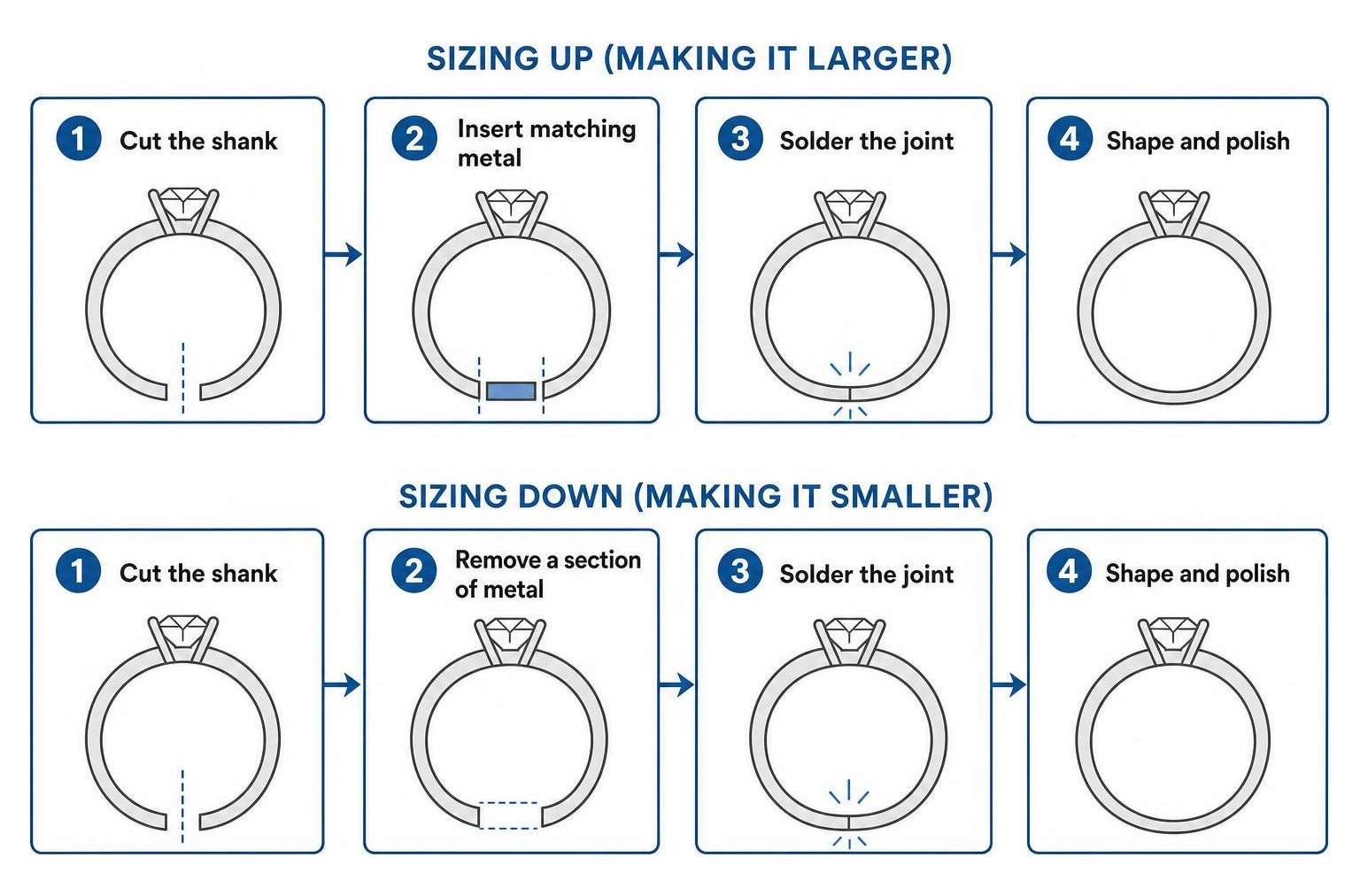
Sizing Up vs. Sizing Down
The approach varies depending on whether your band needs to expand or contract:
- Sizing Down (Making It Smaller): The jeweler cuts through the bottom center of the shank, removes a measured segment of metal, and brings the two open ends together. Using a jeweler's torch or laser welder, they solder the joint with matching precious metal alloy, smooth out the seam, shape the ring back into a circle on a steel mandrel, and polish it to a flawless shine.
- Sizing Up (Making It Larger): The preferred approach for sizing up involves cutting the bottom of the shank, carefully pulling the band open to the exact required millimeter measurement, and inserting a matching piece of precious metal ("a bridge"). The jeweler solders both connection points, shaping and polishing the ring so the bridge blends imperceptibly into the original band.
- Mechanical Stretching (Minor Sizing Up): For plain metal bands without stones, jewelers can occasionally use a mechanical ring expander. This machine stretches the metal outward without cutting. However, stretching should only be used for adjustments of a half-size or less, as over-stretching creates internal stress points and thins the metal shank.
Non-Permanent Ring Adjustments
If your ring fits well over your knuckle but spins loosely at the base of your finger, or if your finger size fluctuates between summer and winter, permanent metal alterations might not be necessary. Reversible solutions include:
- Sizing Beads: Two tiny precious metal spheres soldered to the inside lower half of the band. They stabilize the ring against top-heavy spinning and let the ring glide over wider knuckles while gripping the narrower finger base.
- Speed Bumps (Inner Bridges): A smooth, curved metal insert placed on the inner shank that provides a snug grip without altering the exterior look of the ring.
- Silicone Adjusters and Ring Guards: Inexpensive, clear silicone coils or temporary clip-on guards that wrap around the bottom of the shank. These are perfect for pregnancy-related swelling or temporary seasonal adjustments.
Non-Resizable Engagement Rings and Practical Alternatives
While most traditional rings adapt easily to sizing adjustments, certain modern styles and contemporary materials cannot be cut, soldered, or bent:
- Full Eternity Bands: Because diamonds or colored gemstones encircle the entire circumference of the band, there is no bare metal section to cut into. Attempting to resize a full eternity band disrupts the stone seats and risks shattering the gems.
- Tension-Set Rings: These designs hold the center diamond using physical spring-force pressure from the band itself. Cutting the band releases that calibrated tension, compromising the setting.
- Alternative Metals: Modern metals such as tungsten carbide, titanium, ceramic, and cobalt chrome are exceptionally hard and cannot be melted or soldered with standard jewelry torches. If you purchase an alternative metal band, it cannot be traditionally altered.
Couples often look for community discussions on resizing constraints when exploring unconventional materials. When selecting matching wedding bands crafted from contemporary metals, verifying accurate sizing upfront is essential because exchange policies usually replace the ring rather than alter it. Many people also rely on alternative travel rings while their fingers adjust during pregnancy, travel, or post-surgery recovery.
Ring Resetting and Custom Remounting
If your beloved ring cannot be physically resized—or if you have inherited a vintage heirloom that is four sizes away from your measurement—custom remounting offers a reliable path forward.
A jeweler can safely unset your original center diamond and accent stones, melt down or trade in the original metal, and rebuild a new custom shank matched precisely to your finger. This protects your center diamond while giving you a secure, comfortable ring built for lifelong wear.
Costs, Turnaround Times, and Potential Risks to Consider

How much does it cost to resize an engagement ring, and how long does it take? On average, professional ring resizing ranges from $50 to $180 for standard adjustments, though complex projects involving intricate pavé diamonds, platinum alloy work, or wide-band bridge additions can reach $200 to $350+.
Turnaround times typically range between 2 to 7 business days, depending on whether the jeweler operates an on-site shop or routes work out to third parties.
Several variables influence the final price:
- Metal Type: Platinum and 18k gold require higher solder temperatures and more expensive materials than 14k or 10k gold.
- Band Width & Thickness: Adding metal to a thick 6mm band requires significantly more gold alloy than sizing up a delicate 1.8mm band.
- Stone Resetting & Tightening: If moving the band causes side diamonds to shift, the jeweler must spend bench time tightening every prong under a microscope.
Whenever metal is altered, understanding the risk of stone loosening or breaking helps you appreciate why professional care matters. Choosing trusted jewelry repair services ensures your ring is handled by experienced bench jewelers who check every prong before returning the piece to you.
Evaluating Risks to Gemstones and Hallmarks
Resizing involves physical manipulation and thermal energy, which introduces specific considerations:
- Heat Sensitivity: While diamonds handle jeweler torch heat well, colored gemstones like emeralds, opals, tanzanite, and pearls are sensitive to thermal shock and can crack or discolor. A skilled jeweler will either protect heat-sensitive stones with thermal shielding pastes, remove the stone prior to sizing, or use a pinpoint laser welder.
- Hallmarks and Inscriptions: If your ring features custom laser engravings, maker marks, or purity stamps (like "14K" or "PLAT") on the bottom inside of the shank, cutting through that area may erase parts of the lettering. Always ask your jeweler to re-stamp or preserve your internal engravings.
- Prong and Claw Wear: Bending the band outward or inward shifts the angle of side-stone prongs. A thorough bench jeweler will always perform claw re-tipping or prong tightening as part of the resizing service.
Step-by-Step Guide: How to Get Your Ring Resized Safely
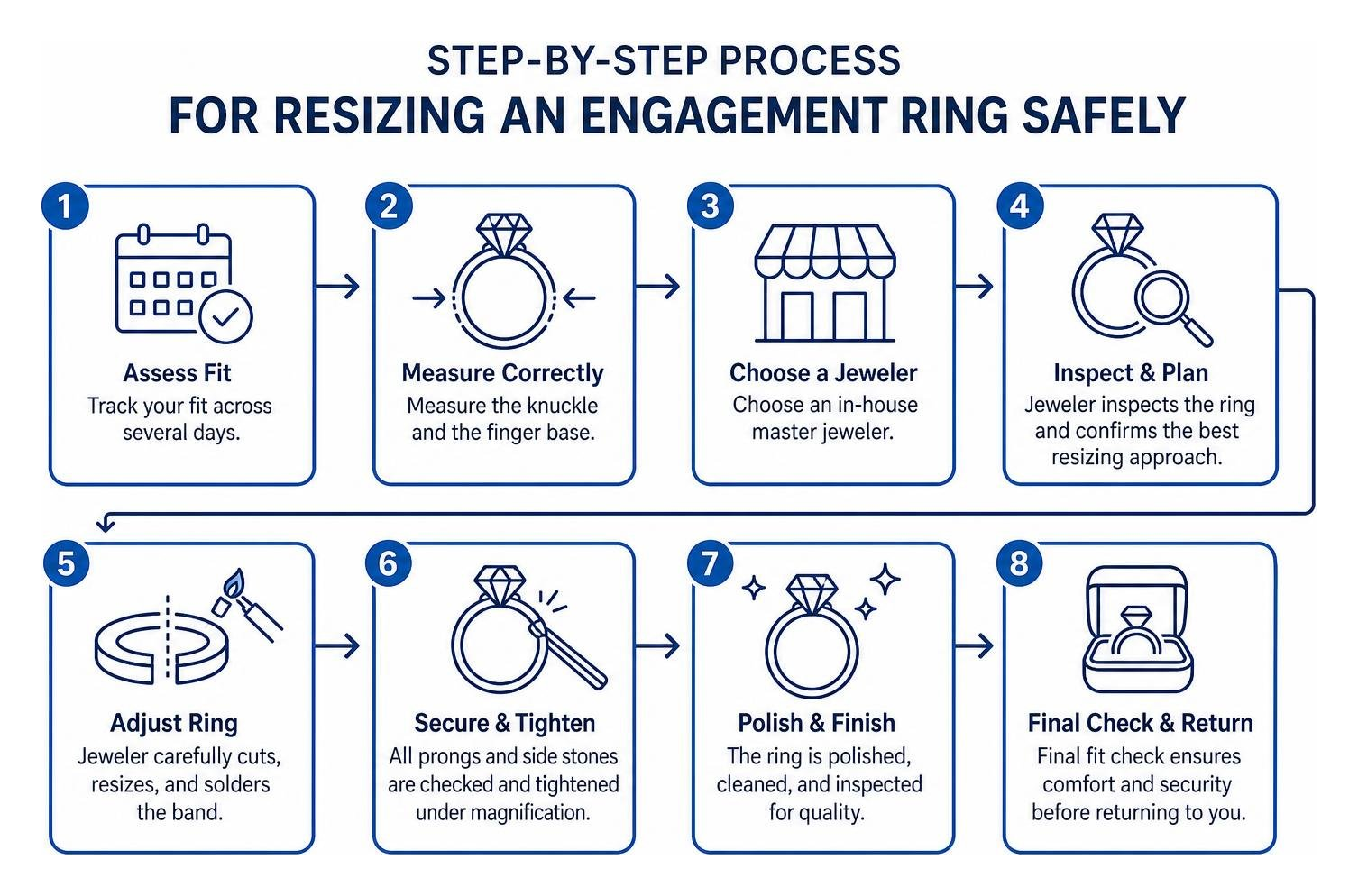
Follow these steps to ensure your ring adjustment goes smoothly:
- Track Your Fit Across Several Days: Do not rush to resize based on a single hot afternoon. Your hands naturally expand and contract due to humidity, intense workouts, sodium intake, and winter chill. Wear the ring across several routines to verify the pattern.
- Measure the Knuckle and the Finger Base: If you have prominent knuckles, standard sizing rings may feel deceptive. Use wide sizing gauges if your ring band is broad, and ensure the ring slides over the knuckle with slight resistance while sitting stable at the base.
- Choose an In-House Master Jeweler: Seek out jewelers with master bench craftsmen on site rather than retailers who ship fine jewelry across state lines via commercial freight. Gaining a better understanding of professional jewelry repair will help you spot reputable, skilled shops.
- Invest in Ongoing Jewelry Care: After adjusting your ring, maintain regular inspection schedules. Expanding your diamond and metal care education helps protect your ring from everyday wear and tear.
Questions to Ask Your Jeweler Before Sizing
Before leaving your ring at the counter, ask these essential questions:
- “Do you perform the resizing work right here on-site, or do you ship items to an off-site facility?”
- “Will you inspect, tighten, and secure all side diamonds and accent prongs after adjusting the curve of the band?”
- “Do you use laser welding or a traditional torch for this metal and setting style?”
- “Will my original metal purity stamps or custom interior engravings be protected or re-applied?”
- “Does this sizing work include a complimentary professional ultrasonic cleaning, steam, and polish?”
Frequently Asked Questions About Engagement Ring Resizing
Does resizing weaken the band of an engagement ring?
When performed correctly by a skilled bench jeweler, resizing does not weaken the band. A properly soldered seam or laser weld is as strong as the surrounding cast metal. However, stretching a band mechanically or resizing a ring more than three or four times can introduce microscopic weak points and thin the lower shank over time.
How can you tell if your engagement ring fits properly?
A properly fitted engagement ring should slide smoothly over your knuckle with light friction, sit flat at the base of your finger without pinching or causing bulging ("muffin-topping"), and resist sliding off when you wash your hands or shake your wrist. It should require a gentle twist and pull to remove.
Will ring resizing make pavé side stones fall out?
Resizing can loosen pavé diamonds if the jeweler fails to inspect and adjust the settings after bending the metal. Bending a band into a tighter or wider circle shifts the tiny prongs and channels holding accent gems. A professional jeweler will inspect every stone under magnification and tighten all prongs prior to final polishing.
Conclusion
Getting the right fit for your engagement ring should be an exciting and stress-free milestone. Whether you need a simple half-size adjustment, sizing beads to counter a spinning stone, or a custom remount for an heirloom design, our team at White Diamonds is here to help. We provide pressure-free consultations, transparent pricing, and meticulous on-site craftsmanship to keep your fine jewelry comfortable and secure for a lifetime of memories.