
Why Larger Emerald Cut Solitaires Demand Flawless Step Cuts
How to Choose a 3 ct Emerald Cut Diamond Solitaire
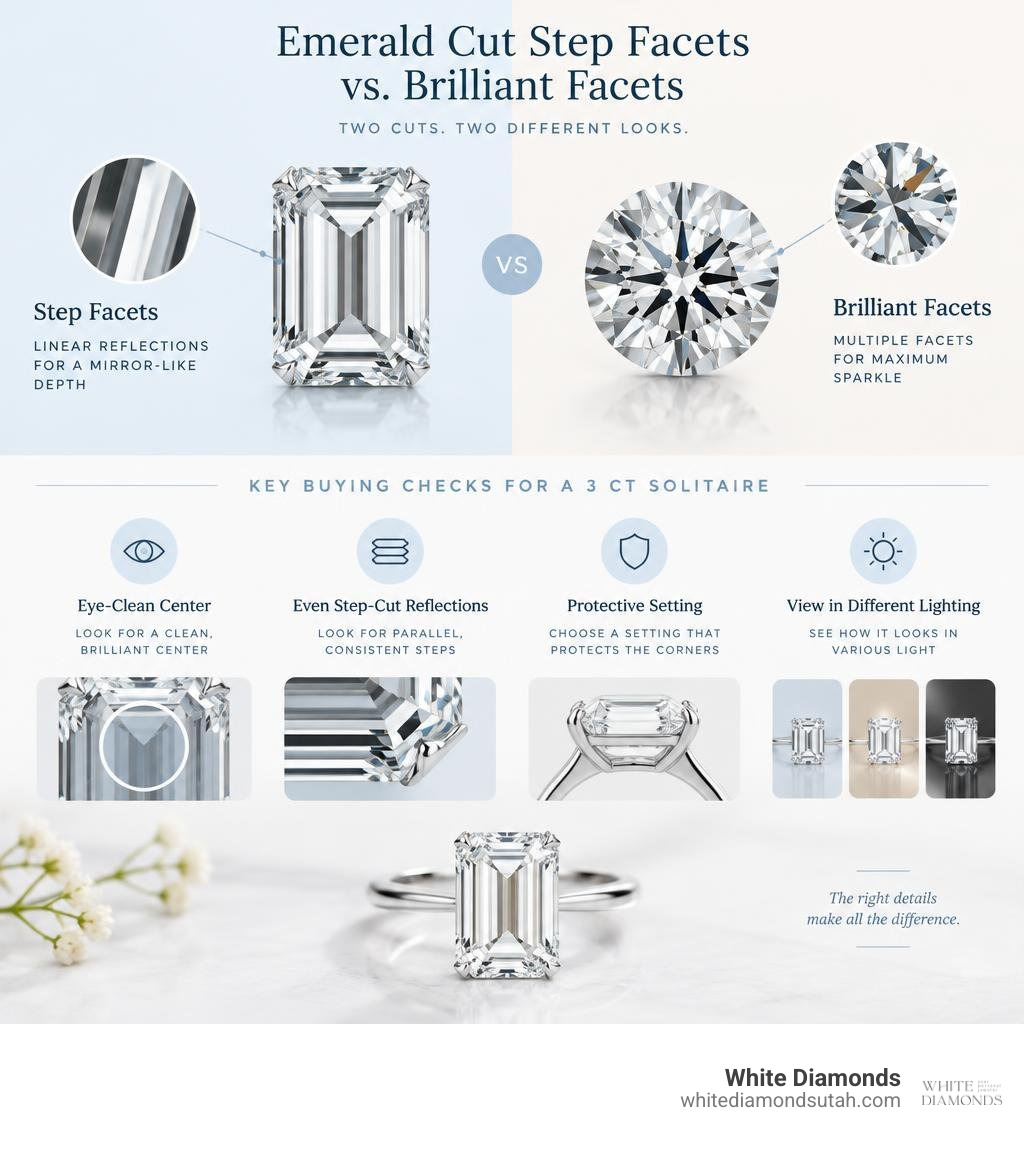
For a 3 ct emerald cut diamond solitaire, look for an eye-clean center, even step-cut reflections, and a setting that protects the corners. View the diamond in different lighting before you decide. Its wide, open top makes flaws easier to spot, while its long shape gives it a bold look on the finger.
An emerald cut creates broad flashes of light rather than the sparkle of a brilliant cut. When its steps line up well, they produce the mirror-like depth that makes this shape so striking.
We're White Diamonds, a Utah-based personal jeweler with experience designing custom rings and wedding bands and caring for rings through cleaning services. We help shoppers weigh the diamond, setting, and budget for a 3 ct emerald cut diamond solitaire without pressure.
Anatomy and Appeal of a 3 ct Emerald Cut Diamond Solitaire
The allure of an emerald cut lies in its understated architectural elegance. Unlike round or cushion shapes that rely on hundreds of tiny sparkling facets, an emerald cut diamond is crafted with elongated, rectangular facets arranged in parallel steps. These step cuts descend from the diamond’s expansive upper surface—known as the table—down through its pavilion.
When cut with high optical precision, these parallel facets produce the signature "hall-of-mirrors" effect. Looking directly into the stone feels like peering into an endless series of reflective glass steps alternating between silvery brightness and deep, contrasting shadows.
A 3 carat emerald cut offers significant finger coverage. On average, a well-proportioned 3 ct stone measures approximately 9.5 mm in length by 7.5 mm in width. Because emerald cuts distribute much of their carat weight across their top surface rather than hiding it in a heavy, rounded base, a 3 carat stone appears noticeably larger on the finger than many other cuts of identical weight.
However, this massive surface area comes with an important caveat: windowing. If the step cut’s pavilion angles are cut too shallow or too steep, light travels straight through the center of the diamond instead of bouncing back to your eye. The stone then resembles a clear windowpane rather than a reflective gem. The Gemological Institute of America outlines these historical cut nuances in their guide to The Emerald Cut Engagement Ring, emphasizing that precise facet geometry is critical for step cuts.
Step-Cut Optics vs. Brilliant Cuts
Understanding the visual difference between cutting styles helps set expectations. Traditional cuts, such as round diamond engagement rings, use triangular and kite-shaped facets engineered for fire (colored light scatter) and high-frequency sparkle (scintillation).
By contrast, emerald cuts offer flash scintillation: dramatic, broad beams of white and colored light that sweep across the stone as your hand moves. While emerald cut diamonds typically show 30% to 50% less overall brilliance than round brilliants, their bold, clean flashes and high facet contrast deliver a refined, vintage-modern aesthetic that only about 2% of diamond buyers choose.
| Optical Characteristic | Emerald Step Cut | Round Brilliant Cut |
|---|---|---|
| Primary Visual Effect | Hall-of-mirrors, broad light flashes | Continuous, high-frequency sparkle |
| Facet Arrangement | Long, parallel rectangular steps | Triangular and kite-shaped radiant facets |
| Inclusion Concealment | Low (flaws are easily visible) | High (facets mask natural inclusions) |
| Face-Up Size Appearance | Large table area, elongated reach | Balanced, circular spread |
| Relative Market Rarity | High (~2% of all diamonds) | Common standard (~50%+ of all diamonds) |
Why Larger Carat Weights Expose Clarity Flaws
The larger an emerald cut diamond grows, the more unforgiving its open table becomes. In a smaller 1 carat stone, micro-inclusions might hide behind small corner facets or near the outer girdle. But at 3 carats, the flat top table turns into an expansive picture window directly into the heart of the gem.
Brilliant cuts use chaotic light patterns to mask carbon pinpoints, feathers, and clouds. Emerald cuts offer nowhere for those imperfections to hide. Any inclusion resting beneath the center table will reflect across the parallel internal facets, multiplying its appearance throughout the stone. For a 3 carat solitaire, maintaining high optical symmetry, clean step alignment, and zero light leakage is vital to achieving a crisp, eye-clean center.
Essential Buying Factors: Clarity, Color, and Proportions
Navigating the 4Cs for large step cuts requires a different strategy than shopping for typical brilliant shapes. With certified loose diamonds, balancing proportions, clarity thresholds, and color retention ensures you get optimal visual appeal and value.
Proportions define the ring's overall silhouette. The classic length-to-width (L/W) ratio for an emerald cut ranges between 1.35 and 1.50, creating a balanced, rectangular profile. Ratios closer to 1.30 look blockier and wider, while ratios above 1.55 yield an elongated, slender look. Polish and symmetry grades on your grading certificate should ideally be Excellent or Very Good to guarantee that every step facet meets its opposite at precise angles.
Choosing the Ideal 4Cs for a 3 ct Emerald Cut Diamond Solitaire
When selecting your stone, prioritize clarity and cut precision over absolute color perfection:
- Clarity: We recommend a baseline of VS1 for a 3 carat emerald cut to guarantee the stone is 100% eye-clean to the naked eye. While you can find eye-clean VS2 stones, every VS2 must be evaluated individually to verify that inclusions are located along the outer step edges rather than right in the center of the table. SI1 clarity grades in a 3 ct emerald cut rarely pass eye-clean standards.
- Color: Step cuts hold body color more noticeably than brilliant cuts. If you prefer a crisp, ice-white appearance in platinum or white gold, look for colors F to G. If you plan to set your solitaire in yellow or rose gold, stones in the H or I color range offer warm appeal and significant cost savings without looking overly tinted.
- Depth and Table Percentages: Aim for a depth percentage between 60% and 67% and a table percentage between 61% and 69%. Stones cut too shallow will leak light through the center, while overly deep stones hide carat weight below the girdle where it can't be seen.
Pricing and Budgeting for a 3 ct Emerald Cut Diamond Solitaire
The typical market price for a natural 3 carat emerald cut diamond solitaire ranges from $15,000 to $60,000, depending on cut precision, certification, color, and clarity.
One major financial advantage of this shape is cutting efficiency. Because the natural crystalline shape of rough diamonds matches an emerald cut closely, diamond cutters lose less raw material during the cutting process. As a result, emerald cuts are generally 20% to 30% more affordable per carat than round brilliant diamonds of matching weight and quality. This allows buyers to achieve a substantial 3 carat look within a practical fine jewelry budget.
Setting Styles to Maximize Solitaire Step Cuts

A solitaire mounting places uninterrupted focus on the geometric precision of the center stone. When exploring solitaire engagement rings in Utah, look for settings that balance structural stability with minimalist aesthetics.
A classic 3 carat solitaire must be set securely without overwhelming the diamond’s clean lines. Delicate wire baskets, tapered cathedral shanks, and open gallery profiles allow light to enter the side profiles of the stone while maintaining a comfortable balance on the wearer's hand.
Modern Trends: East-West, Bezel, and Hidden Details
Contemporary jewelry design has introduced fresh twists on classic solitaire mountings:
- East-West Orientation: Setting the 3 carat emerald cut horizontally across the finger creates an eye-catching, modern aesthetic that emphasizes the finger's width rather than length.
- Full and Half Bezels: A low-profile metal rim wrapped around the stone creates a sleek, industrial frame while offering maximum protection for the diamond's edges.
- Hidden Details: Adding a hidden diamond halo beneath the center basket or setting secret accent stones along the bridge adds subtle sparkle visible only from the profile view.
Exploring custom engagement rings in Utah gives you the freedom to fine-tune band widths, bridge heights, and profile details to match your daily lifestyle and design preferences.
Metal Choices and Corner Protection
The four corners of an emerald cut diamond are beveled (cut flat) to reduce point vulnerability, but they remain the most delicate part of the gemstone. Choosing the right metal and prong structure ensures the stone stays secure for decades.
- Platinum: Highly recommended for large solitaires. Platinum's natural density and strength hold heavy center stones securely with minimal wear over time.
- 14k or 18k Gold: Yellow and rose gold provide warm contrast against white step-cut flashes, while white gold offers a classic look.
- Prong Styles: Opt for sturdy four-prong corner baskets or double-claw prongs. Double claws split the hold across both sides of each beveled corner, distributing pressure evenly while adding an elegant vintage touch.
Ethical Sourcing and Long-Term Ring Care
Every diamond should be sourced responsibly through established, conflict-free channels. When visiting local engagement ring stores Utah shoppers should confirm that stones carry independent lab grading (such as GIA) and adhere to strict Kimberley Process standards.
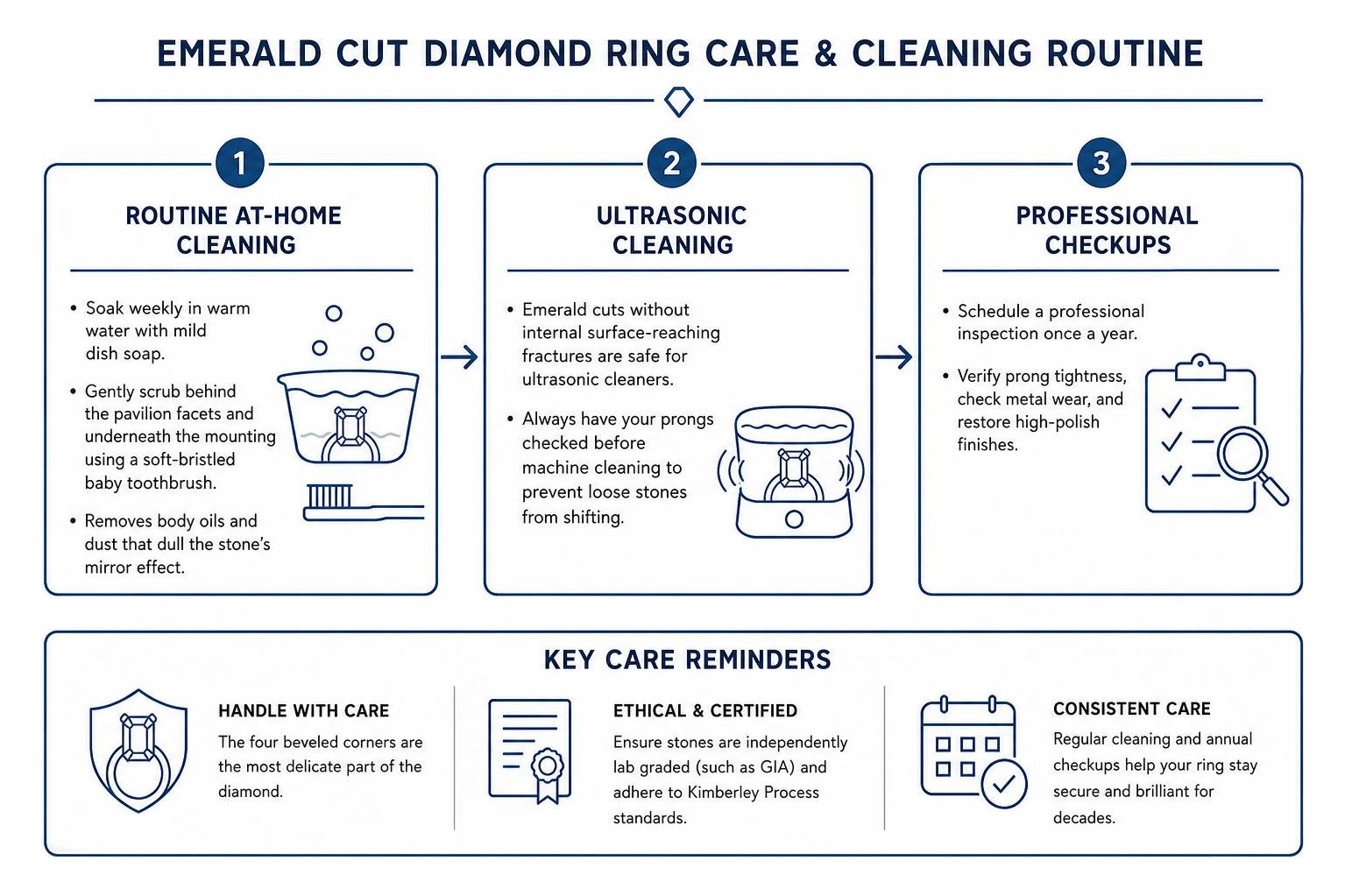
Maintaining a 3 carat emerald cut requires regular care:
- Routine At-Home Cleaning: Soak your ring weekly in warm water with mild dish soap. Gently scrub behind the pavilion facets and underneath the mounting using a soft-bristled baby toothbrush to remove body oils and dust that dull the stone's mirror effect.
- Ultrasonic Cleaning: Emerald cuts without internal surface-reaching fractures are safe for ultrasonic cleaners. However, always have your prongs checked before machine cleaning to prevent loose stones from shifting.
- Professional Checkups: Schedule a professional inspection once a year to verify prong tightness, check metal wear, and restore high-polish finishes.
Frequently Asked Questions About Emerald Cut Solitaires
Is a 3 carat emerald cut diamond suitable for everyday wear?
Yes. Diamonds rank at a 10 on the Mohs hardness scale, making them exceptionally durable for daily wear. To protect a 3 carat stone during active routines, choose a lower-profile cathedral or bezel setting that minimizes snagging on clothing.
What is the minimum recommended clarity for a 3 carat emerald cut?
We recommend a minimum clarity grade of VS2, provided the stone has been inspected to ensure it is completely eye-clean. For guaranteed transparency across a wide table, VS1 remains the industry gold standard for larger carat weights.
Why are emerald cut diamonds priced lower than round diamonds?
Rough diamond crystals naturally form in boxy, octahedral shapes. Cutting an emerald cut preserves up to 80% of the original rough diamond crystal, compared to round diamonds which lose up to 50% or more of the rough crystal during polishing. Those manufacturing efficiencies translate to lower per-carat costs for consumers.
Conclusion
Choosing a 3 carat emerald cut solitaire is a celebration of clarity, symmetry, and architectural grace. Because this striking step cut leaves no room to hide flaws, prioritizing precise proportions and high clarity ensures a lifetime of dramatic light play.
At White Diamonds, we guide you through every facet of the selection process with personalized, pressure-free consultations at our Utah showroom. Whether you want to view loose stones under magnification or design a custom heirloom mounting, explore our collection of classic emerald cut diamond engagement rings to bring your vision to life.